The Complicated Business of Being Twenty-Five
Read Time:9 Minute, 37 Second
MOVIE REVIEW
Quarter
 –


Genre: Comedy, Drama, Coming-of-Age
Year Released: 2026
Runtime: 1h 36m
Directors: Kelsey Bascom, Arnon Manor
Writer: Kelsey Bascom
Cast: Kelsey Bascom, Ali Wentworth, Brooke Shields, Raven-Symoné, Breckin Meyer, Tati Gabrielle, Brec Bassinger, Nick Creegan, Eric Roberts, Dot-Marie Jones, Mindy Sterling, Matty Cardarople, Derek Theler, Arden Myrin, Gavin Lewis
Where to Watch: releasing theatrically beginning November 13, 2026 at Cinema Village in New York, timed to World Diabetes Day on November 14th
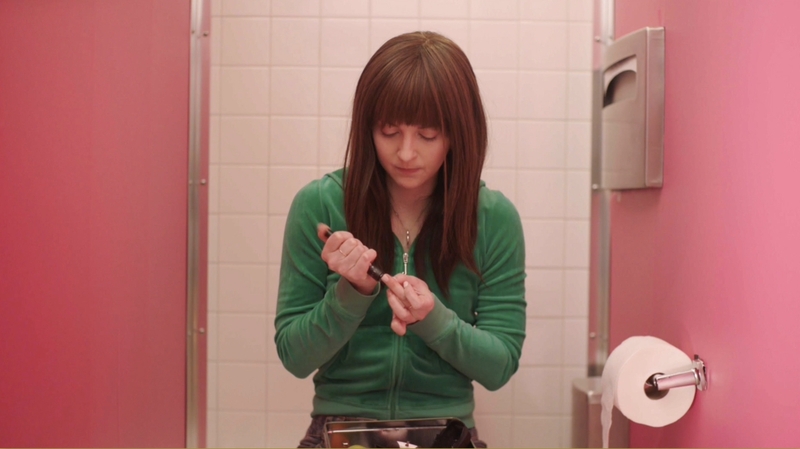
RAVING REVIEW: What does turning twenty-five mean when you've already spent years dealing with the responsibilities most people your age haven't even had to consider? For Kelly (Kelsey Bascom), the milestone brings questions about relationships, independence, and what she's supposed to have accomplished by this point in life. There's also the reality of living with type 1 diabetes. QUARTER takes that mix and builds a coming-of-age comedy-drama around a young woman whose life is bigger than her diagnosis, even when managing it demands all her attention. Written and co-directed by Bascom alongside co-director Arnon Manor, the film draws on her own experiences.
Kelly's twenty-fifth birthday is a natural starting point because that age, for a lot of people, is an uncomfortable middle ground. She's old enough to feel pressure to have her life figured out, yet young enough to know that much of what she's doing involves making decisions without knowing whether they're right. Add a lifelong medical condition to that, and the anxieties of growing older become considerably more complicated. Kelly isn't trying to become an extraordinary person. She's trying to build the life she wants while managing a condition that can't be set aside until everything else settles down.
When type 1 diabetes appears in fictional stories, it's frequently introduced as a danger, a medical explanation delivered through hurried dialogue, or an obstacle that exists primarily to create tension. Those situations can occur, but reducing an entire condition to its most frightening possibilities leaves little room for the ordinary lives of people who live with it every day. QUARTER approaches the subject from a different angle. Kelly's diabetes is an ongoing part of her existence, affecting choices and adding responsibilities. It doesn't eliminate her ability to have a personality or make decisions unrelated to her health.
Bascom has spoken openly about the screenplay's history. She spent years keeping her diagnosis private, partly because of concerns about how other people might perceive her. That experience helps explain Kelly's difficulty finding her voice. When someone becomes accustomed to concealing an important part of their life, speaking openly can become a much bigger step than outsiders might realize. Sometimes it's about reaching a point where an ordinary conversation no longer requires you to decide which parts of yourself you're comfortable letting another person see.
The story places a serious medical crisis at the center of Kelly's birthday, when an episode of dangerously low blood sugar forces her to confront the way she's been living. It's an important development, but the significance goes beyond the health emergency. The experience becomes a moment of reassessment, pushing Kelly to change how she manages her personal life. The film's interest in self-expression connects the realities of a chronic condition with the emotional work of adulthood. Kelly has a strong internal voice, but there's a difference between knowing what you want to say and actually saying it to the people around you.
Humor offers a way to address subjects that can become exhausting when approached only through seriousness, and living with a chronic illness doesn't mean every day is defined by tragedy. People still have awkward relationships, embarrassing encounters, unreasonable expectations, and their own questionable decisions to deal with. Sometimes those experiences intersect with medical concerns, and sometimes they're simply part of being human. QUARTER's choice to make Kelly a young woman navigating an ordinary, complicated personal life matters because it refuses to place her outside her peers' everyday experiences.
There's an important distinction between making a comedy about someone with type 1 diabetes and making diabetes itself the joke. The former lets the character exist in a world with frustration and ridiculous situations without asking the audience to laugh at her condition. It also makes room for the misconceptions that people with chronic illnesses encounter, including assumptions about what they can do and how they arrived at their diagnosis. Bascom discussed incorporating the kinds of comments that stayed with her over the years. That autobiographical element gives the writing a personal source that a more conventional style might overlook.
The distinction between type 1 and type 2 diabetes is also worth understanding. Type 1 is an autoimmune condition in which the body produces little or no insulin, requiring ongoing insulin treatment and careful management. It isn't caused by eating too much sugar or failing to maintain a particular lifestyle. Those misunderstandings can be more than irritating when they're directed at someone already responsible for managing the condition. A film like QUARTER offers an opportunity to challenge those assumptions. The human consequences of being misunderstood can be just as revealing as the clinical facts.
Bascom's isn't simply lending her personal history to another performer's interpretation. She shapes the story and places herself at its center, with Manor sharing directing responsibilities. A story about a young woman learning to speak for herself gains additional significance when the person behind it has a similar experience of gradually becoming more comfortable discussing her condition.
The supporting ensemble brings some recognizable faces into Kelly's world, including Ali Wentworth, Brooke Shields, Raven-Symoné, Breckin Meyer, and Tati Gabrielle. Shields portrays Dr. Wright, Raven-Symoné appears as Dr. Anderson, and Eric Roberts plays Dr. Miller. Including several medical professionals reflects the reality that managing a chronic condition often involves an ongoing relationship with healthcare providers. Kelly exists within a network of personal relationships, and those connections are essential to making her story about a person instead of a diagnosis.
Brooke Shields' involvement adds another connection to the subject through her family. Her daughter Rowan Henchy lives with type 1 diabetes, making the film's arc personal to the executive producer as well. That relationship doesn't determine a film's quality, but it does add an interesting aspect. The project attracted collaborators with reasons to care about how it portrays the condition. Representation becomes more meaningful when the people involved understand that the experiences being dramatized belong to real people whose lives continue beyond the ending of a movie. More than thirty members of the cast and crew either live with type 1 diabetes or have a loved one with the condition. People who know the subject personally can inform the countless smaller choices that shape a production.
The quarter-life crisis is a familiar subject, but chronic illness changes it in ways that deserve attention. Someone can feel uncertain about a career or relationship while also being required to make medical decisions every day. A person can be knowledgeable about managing an illness and still feel lost when it comes to dating or communicating with friends. There's something human about recognizing that contradiction, rather than assuming hardship automatically makes someone feel like they have everything figured out.
The film's emphasis on female empowerment feels personal, not like a slogan. Finding your voice isn't necessarily about becoming fearless or developing the confidence to confront everyone around you. It can mean acknowledging what you need, setting boundaries, and accepting that others may not understand your circumstances. For someone who has spent years deciding how much of herself to reveal, those choices carry additional weight. Kelly's move toward directness has a concrete reason, making the subject more specific than the familiar instruction to believe in yourself.
Twenty-five is often treated as the beginning of an exciting period when independence finally becomes the main goal in your life. In reality, adulthood can involve understanding that freedom exists alongside responsibilities that don't disappear. For Kelly, maintaining her health is one of those responsibilities, and the film places it beside the pressures of becoming an adult. The combination acknowledges that a person can appreciate the life they have and still feel exhausted by what it demands. Those feelings aren't mutually exclusive.
QUARTER has more on its mind than explaining the challenges of diabetes, and that's why it works so well as a coming-of-age story. It explores the uncomfortable process of learning who you are when others' expectations compete with your own priorities. The medical aspect gives Kelly's experience a distinctive foundation, but the questions about independence and self-expression reach beyond that aspect of her life. The film's autobiographical roots make it personal without requiring the narrative to become a literal account of Bascom's history.
I appreciate the purpose behind a project that insists there should be room for laughter in stories about chronic illness. People deserve to see experiences like their own represented without having every fictional counterpart reduced to suffering or a warning about what might go wrong. They also deserve stories that can entertain them rather than constantly explaining their existence to someone else. QUARTER approaches its subject through a young woman whose twenty-fifth birthday becomes an opportunity to reconsider how she wants to live. There's considerable value in letting that journey be funny and emotionally complicated without pretending a medical condition can be resolved in a single moment of growth.
A quarter of a century sounds like a significant accomplishment until you remember how much life remains uncertain at twenty-five. Kelly's birthday isn't a deadline for becoming a finished person, and living with type 1 diabetes doesn't change that. She has the right to make mistakes and discover what matters to her, even as she carries responsibilities that require constant attention. QUARTER understands why those freedoms matter.
Please visit https://linktr.ee/overlyhonestr for more reviews.
Follow me on Letterboxd, Instagram, Twitter, and YouTube. You can also find my social media accounts on most platforms by searching for 'Overly Honest Reviews'.
I’m always happy to hear from my readers; please don't hesitate to say hello or send me any movie questions.
[photo courtesy of CHEMICAL SOUP PRODUCTIONS, QUARTER]
DISCLAIMER:
At Overly Honest Movie Reviews, we value honesty and transparency. Occasionally, we receive complimentary items for review, including DVDs, Blu-rays, CDs, Vinyl Records, Books, and more. We assure you these arrangements do not influence our reviews, as we are committed to unbiased, sincere evaluations. We aim to help you make informed entertainment choices regardless of our relationship with distributors or producers.
Amazon Affiliate Links:
This site also contains Amazon affiliate links. If you purchase through these links, we may receive a commission. This affiliate arrangement does not affect our commitment to honest reviews and helps support our site. We appreciate your trust and support as you navigate these links.


Happy
0 %

Sad
0 %

Excited
0 %

Sleepy
0 %

Angry
0 %

Surprise
0 %
 0
 0



Average Rating