The Scariest Thing Here Is How Familiar It Feels
Read Time:5 Minute, 41 Second
MOVIE REVIEW
Suburban Fury (DVD)
 –
– 


Genre: Documentary, Political, True Crime
Year Released: 2024, 2026 Kino Lorber DVD
Runtime: 1h 58m
Director(s): Robinson Devor
Where to Watch: available June 9, 2026, pre-order your copy here: www.kinolorber.com or www.amazon.com
RAVING REVIEW: There’s something deeply unnerving about a documentary that refuses to reassure the viewer. SUBURBAN FURY never gives the comfort of certainty, conclusions, or emotional closure. Instead, Robinson Devor builds the entire film around instability, specifically the instability of memory, self-mythology, political identity, and personal truth. The result feels less like a conventional documentary and more like sitting across from someone who may be confessing, performing, manipulating, rationalizing, or all four simultaneously.
Sara Jane Moore remains one of the strangest figures attached to modern American political violence. In 1975, just weeks after Lynette “Squeaky” Fromme attempted to assassinate President Gerald Ford, Moore took her own shot at him outside a San Francisco hotel. She missed. History largely reduced her to a bizarre footnote. SUBURBAN FURY argues there’s far more buried beneath that headline, though the film understands that understanding somebody isn’t the same thing as trusting them.
Devor makes a bold choice by allowing Moore to become the film’s primary and nearly exclusive voice. There are no armies of historians explaining context, no parade of talking heads psychoanalyzing her behavior decades later, and no framework designed to guide audiences toward a single interpretation. Moore controls the room, often literally. She interrupts questions, redirects conversations, grows irritated when challenged, and carefully curates which details of her life deserve discussion and which remain off limits. At times, it feels like she’s directing the documentary herself.
That could have easily become frustrating and self-indulgent, but Devor understands the value of letting viewers wrestle with uncertainty. Moore is fascinating because she never settles into a true identity. She presents herself as a patriot, an informant, a radical, a victim, a rebel, a suburban mother, a political actor, and occasionally something closer to a fantasist constructing her own mythology in real time. The film doesn’t flatten those contradictions into a singular psychological profile. It leaves them exposed and unresolved.
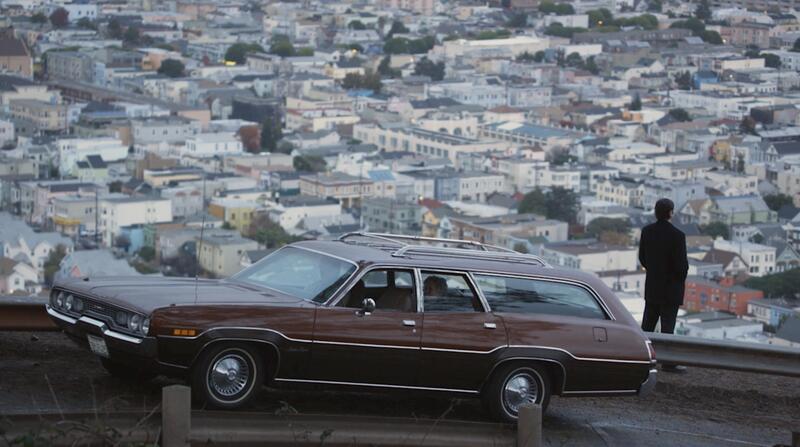
The film also benefits enormously from its atmosphere. Devor approaches the material almost like a paranoid political thriller from the 1970s rather than a modern streaming documentary obsessed with rapid pacing and reveals. Conversations unfold inside cars overlooking San Francisco hillsides. Hotel rooms feel haunted by memory. Secret Service figures linger in the background like ghosts. Archival footage flows through the film without feeling like it was dumped in for historical homework. Instead, it creates the sensation of a country slowly losing its grip on itself. The imagery matters because SUBURBAN FURY isn’t really just about Moore. It’s about the environment that produced her.
The film paints 1970s America as a country saturated with distrust, ideological fragmentation, surveillance, radical politics, and institutional decay (well, that sounds wildly familiar). Nixon’s resignation hangs over everything. The Patty Hearst kidnapping becomes a key turning point. FBI infiltration programs, anti-war anger, Black liberation movements, and political paranoia blur together into an atmosphere where Moore’s transformation starts feeling less absurd than disturbingly plausible.
One of the smartest things the documentary does is avoid framing radicalization as something exclusive to extremists who already exist on the political fringes. Moore didn’t emerge from a cult compound or an isolated militia group. The film repeatedly returns to that discomforting reality. She was middle-aged. A mother. Educated. Respectable on the surface. SUBURBAN FURY understands how unsettling it is when someone who appears ordinary drifts toward political violence while still believing they’re rational. That idea lands especially hard today.
Did Moore actually believe she was helping reshape the country? Was she motivated by ideology, loneliness, resentment, ego, disillusionment, or some impossible combination of all of them? The film never pretends those answers are simple. In fact, one of SUBURBAN FURY’s greatest strengths is acknowledging that some people remain fundamentally mysterious even after two hours spent inside their worldview.
Some viewers will find the documentary frustrating because it refuses to aggressively fact-check Moore in real time or deliver a definitive psychological diagnosis. There are stretches where the film intentionally sits inside uncertainty long enough to become uncomfortable. Devor seems more interested in examining how narratives are constructed than in definitively proving which parts of Moore’s story are true. Personally, I think that’s exactly the right approach.
There’s also something chilling about the film’s depiction of informant culture and state surveillance. Moore describes FBI relationships, manipulations, and intelligence work with a detached matter-of-factness that becomes increasingly unsettling as the film progresses. Whether every detail is accurate almost stops mattering after a while. What matters is how naturally paranoia, performance, and political extremism begin to feed into each other within the system she describes.
By the end, SUBURBAN FURY leaves behind less certainty than it began with. That’s intentional. Robinson Devor isn’t trying to solve Sara Jane Moore. He’s examining how somebody can spend decades shaping their own story while remaining undecipherable. The film becomes a portrait of America’s political fractures, media mythology, and conspiratorial thinking long before those conversations became daily headlines again.
What makes the documentary linger isn’t simply the assassination attempt itself. It’s the realization that Moore never really sounds like somebody standing outside American culture looking in. She sounds like somebody created directly from her contradictions.
Please visit https://linktr.ee/overlyhonestr for more reviews.
You can follow me on Letterboxd, Instagram, Twitter, and YouTube. My social media accounts can also be found on most platforms by searching for 'Overly Honest Reviews'.
I’m always happy to hear from my readers; please don't hesitate to say hello or send me any questions about movies.
[photo courtesy of KINO LORBER]
DISCLAIMER:
At Overly Honest Movie Reviews, we value honesty and transparency. Occasionally, we receive complimentary items for review, including DVDs, Blu-rays, CDs, Vinyl Records, Books, and more. We assure you that these arrangements do not influence our reviews, as we are committed to providing unbiased and sincere evaluations. We aim to help you make informed entertainment choices regardless of our relationship with distributors or producers.
Amazon Affiliate Links:
Additionally, this site contains Amazon affiliate links. If you purchase through these links, we may receive a commission. This affiliate arrangement does not affect our commitment to honest reviews and helps support our site. We appreciate your trust and support as you navigate these links.


Happy
0 %

Sad
0 %

Excited
0 %

Sleepy
0 %

Angry
0 %

Surprise
0 %
 0
0
 0
0

Average Rating