A Slow Burn With Surgical Precision
Read Time:7 Minute, 51 Second
MOVIE REVIEW
Audition (Ôdishon)
 –
– 

Genre: Horror, Psychological Horror, Thriller
Year Released: 1999, 2026 Arrow Video 4K
Runtime: 1h 55m
Director(s): Takashi Miike
Writer(s): Daisuke Tengan, Ryū Murakami
Cast: Ryo Ishibashi, Eihi Shiina, Tetsu Sawaki, Jun Kunimura, Renji Ishibashi, Ren Osugi
Where to Watch: available now, order your copy here: www.arrowvideo.com, www.mvdshop.com, or www.amazon.com
RAVING REVIEW: AUDITION is one of those horror films whose reputation can almost work against it. The shockwave of it has traveled farther than the movie itself, turning certain images, sounds, and twists into the kind of cultural shorthand that makes new viewers feel as if they already know what they’re walking into. That familiarity doesn’t lessen the impact, though. If anything, it makes Takashi Miike’s patience feel even crueler. AUDITION doesn’t survive and thrive because of one infamous stretch. It survives because the entire film is built like a lie someone tells themselves until reality finally pushes back.
Shigeharu Aoyama is a widower, a father, and a man who has allowed grief to settle into routine. Ryo Ishibashi plays him with a restrained loneliness that keeps the character from becoming a villain or fool. He isn’t introduced as a monster. He seems gentle, wounded, maybe even sympathetic. That’s part of what makes the film so uncomfortable. His desire to remarry is understandable. His method is not so much. The audition staged to find a potential wife begins with enough casual and professional detachment that the ugliness of it almost sneaks by. Miike understands how easily bad behavior can look respectful when it’s wrapped in loneliness, respectability, and soft-spoken intention.
That moral imbalance is where the film begins to tighten its grip. Aoyama isn’t simply searching for love. He’s casting a role in his life and pretending that distinction doesn’t matter. The women who arrive for the audition believe they’re being considered for a job, while he and his colleague quietly evaluate them through a private fantasy of availability, youth, obedience, pain, and emotional usefulness. The setup could have been played as satire, and there are traces of absurdity in the process, but AUDITION is more impactful because it doesn’t overstate the critique. It lets the situation remain plausible. That’s far more damning.
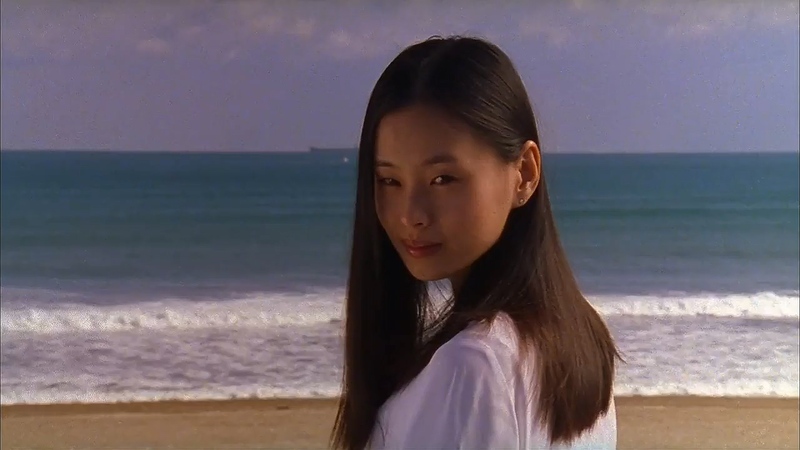
Then Asami appears, and the movie changes without any announcement. Eihi Shiina’s performance is essential to why AUDITION still feels so unnerving. She’s quiet, composed, wounded, and indecipherable in a way that makes Aoyama’s fascination feel believable while making the audience feel uneasy about why he’s so willing to project onto her. She becomes, in his mind, the perfect answer to a question he hasn’t honestly asked. The more he idealizes her, the less real she becomes to him, and Shiina turns that into something frightening. Her stillness doesn’t feel empty. It feels guarded. It feels like someone who has learned that silence can be a weapon long before anyone else realizes they’re in danger.
Miike’s control over tone is remarkable because AUDITION allows the rot to set in from the inside. The early scenes are direct and almost modest in their presentation. Aoyama’s life, his conversations with his son, and his awkward return into romantic life all carry a normal quality that makes the later nightmare feel less like a twist and more like something that had been waiting underneath the floorboards. The movie’s slow pace isn’t an accident or a weakness. It’s the mechanism. Miike gives the viewer time to settle into the wrong expectations, to accept the wrong emotion, and to overlook the same warning signs Aoyama overlooks because the fantasy is more convenient than the truth.
That said, AUDITION’s deliberate structure will still test some viewers. The first half asks for trust, especially from anyone coming in because of the film’s reputation as one of modern horror’s more unpleasant experiences. It withholds the expected release for so long that the tension can feel almost too quiet on a first viewing. Yet that restraint is also why the film’s final act lands with such force. The movie needs that calm. It needs the viewer to feel the distance between Aoyama’s fantasy and Asami’s reality before collapsing in the most punishing way possible.
The horror itself is often remembered in physical terms, and understandably so, but the violence isn’t the only reason the climax is so hard to shake. AUDITION hurts because the film has spent so much time studying performance, selection, control, and self-deception. By the time the movie reaches its peak, the body horror feels connected to everything that came before it. It isn’t random punishment dropped in from nowhere. It’s the extreme endpoint of a story about people turning each other into symbols. Aoyama turns Asami into an answer to his loneliness. Asami turns Aoyama into a target for pain, betrayal, and revenge.
The supporting cast gives the film a grounded frame that helps the relationship feel more disturbing. Jun Kunimura brings an uneasy practicality to Yoshikawa, the colleague whose warning signs are sharper than Aoyama’s but whose ethics aren’t pure. Tetsu Sawaki gives Aoyama’s son enough warmth to make the father’s loneliness feel human rather than purely predatory. Renji Ishibashi and Ren Osugi add to the film’s strange, damaged atmosphere without drawing attention away from everything else.
Arrow’s 4K presentation gives AUDITION another reason to be revisited, especially because this is not a film that benefits from being treated like a grimy dare. The cleaned-up presentation reinforces how carefully constructed it was. The image has room to breathe; the quieter early scenes hold their shape; and the restored audio matters because so much of the film’s fear lies in pauses, tone, movements, and sounds that arrive with horror. For physical media collectors, this release feels less like another upgrade and more like a proper placement of the film among the defining horror works of its era.
AUDITION remains a brutal experience, but its greatness has less to do with endurance than design. Miike takes a premise built on deception and lets the entire film become infected by it. The romance is dishonest, the audition is dishonest, Aoyama’s self-image is dishonest, and the viewer’s sense of safety is dishonest. By the time AUDITION reveals what kind of movie it has been all along, the trap has already been set. More than twenty-five years later, it’s still elegant, vile, patient, and psychologically sharp enough to make its most infamous moments feel earned rather than merely notorious. It’s not just one of the essential J-horror films. It’s one of the clearest examples of how horror can weaponize expectation, politeness, and desire until every soft surface starts to feel dangerous.
Bonus Materials:
4K ULTRA HD LIMITED EDITION CONTENTS
Brand new 4K restoration from the original Super 16mm camera negative by Arrow Films, approved by director of photography Hideo Yamamoto
4K (2160p) UHD Blu-ray™ presentation in Dolby Vision (HDR10 compatible)
Newly restored original lossless stereo and 4.0 audio, plus optional DTS-HD MA 5.1 surround audio
Optional English subtitles
Introduction by director Takashi Miike
Audio commentary by director Takashi Miike and screenwriter Daisuke Tengan
Audio commentary by Miike biographer Tom Mes
Callback, a brand new interview with actor Ryo Ishibashi
Ties that Bind, an interview with director Takashi Miike
Damaged Romance, an appreciation by Japanese cinema historian Tony Rayns
Archive interviews with stars Ryo Ishibashi, Eihi Shiina, Renji Ishibashi, and Ren Osugi
Deeper Deeper Into Audition, an audio essay by author and critic Alexandra Heller-Nicholas
Trailers
Image gallery
Collectors’ booklet featuring new writing on the film by Anton Bitel, Jennie Kermode, and Jamie Graham
Reversible sleeve featuring newly commissioned artwork by Dark Inker – Sampson and original UK artwork by Graham Humphreys
Please visit https://linktr.ee/overlyhonestr for more reviews.
You can follow me on Letterboxd, Instagram, Twitter, and YouTube. My social media accounts can also be found on most platforms by searching for 'Overly Honest Reviews'.
I’m always happy to hear from my readers; please don't hesitate to say hello or send me any questions about movies.
[photo courtesy of ARROW VIDEO, MVD ENTERTAINMENT]
DISCLAIMER:
At Overly Honest Movie Reviews, we value honesty and transparency. Occasionally, we receive complimentary items for review, including DVDs, Blu-rays, CDs, Vinyl Records, Books, and more. We assure you that these arrangements do not influence our reviews, as we are committed to providing unbiased and sincere evaluations. We aim to help you make informed entertainment choices regardless of our relationship with distributors or producers.
Amazon Affiliate Links:
Additionally, this site contains Amazon affiliate links. If you purchase through these links, we may receive a commission. This affiliate arrangement does not affect our commitment to honest reviews and helps support our site. We appreciate your trust and support as you navigate these links.


Happy
0 %

Sad
0 %

Excited
0 %

Sleepy
0 %

Angry
0 %

Surprise
100 %
 1
1
 0
0

Average Rating