Talent, Ego, and an Awkward Reunion
Read Time:7 Minute, 21 Second
MOVIE REVIEW
I'll Do Anything
 –
– 


Genre: Comedy, Drama, Romance
Year Released: 1994, 2026 Blu-ray
Runtime: 1h 55m
Director: James L. Brooks
Writer: James L. Brooks
Cast: Nick Nolte, Whittni Wright, Albert Brooks, Julie Kavner, Joely Richardson, Tracey Ullman, Ian McKellen
Where to Watch: available August 18, 2026, pre-order your copy here: www.moviezyng.com or www.amazon.com
RAVING REVIEW: I’LL DO ANYTHING has the restless structure of a movie that remembers being something else. Scenes carry more energy than they can release, characters seem prepared to express emotions that never surface, and some of the transitions feel as though they were built around material that was never there. That impression isn’t imagined. James L. Brooks originally filmed the project as an elaborate musical before negative test screenings led him to remove nearly every song, write additional scenes, and reshape the remaining footage into a conventional comedy-drama. It’s a film that’s unique and intriguing, but also feels like you’re watching a puzzle with missing pieces.
The reconstruction is an impressive act of professional endurance, though it never completely disguises the damage. Brooks didn’t merely delete several production numbers and hope the story held together. He attempted to rebuild the movie’s emotional arcs after removing the device meant to connect its characters, ideas, and tonal variations. Enough remains to create a coherent narrative, but coherence isn’t the same as confidence. I’LL DO ANYTHING often feels like several promising movies sharing the same two hours without agreeing on which one should take control.
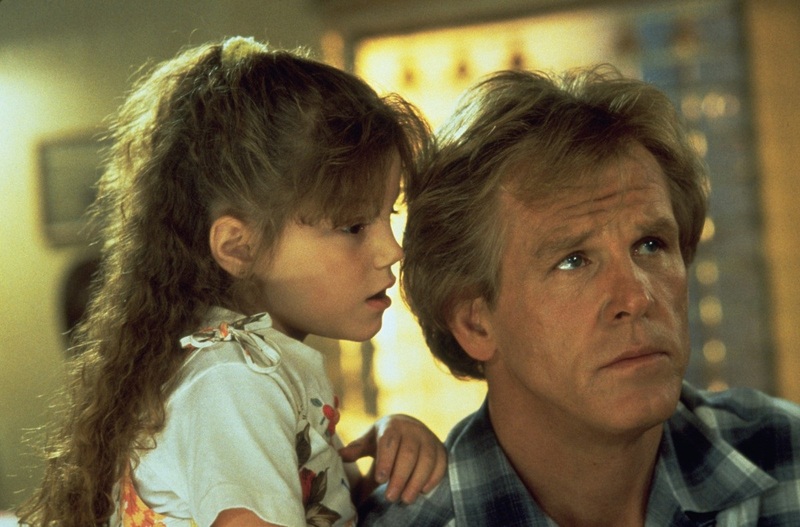
Nick Nolte plays Matt Hobbs, a talented actor whose career has stalled while his frustration has hardened into resignation. An unexpected custody situation leaves him responsible for Jeannie, the six-year-old daughter he barely knows. Matt must suddenly care for a child accustomed to getting her way while continuing to push his way through auditions, humiliation, and a Hollywood culture that treats desperation as another form of currency. Nolte’s roughness gives Matt more credibility than the screenplay always earns for him. He looks tired before the story has explained why, and his discomfort around Jeannie feels rooted in panic rather than cruelty. Matt isn’t presented as a perfect father waiting for the right opportunity. He’s impatient, selfish, embarrassed, and often overwhelmed. Nolte allows affection to develop without turning the transformation into a performance designed to reassure the audience.
Whittni Wright commits to Jeannie’s theatrical outbursts, manipulation, and relentless demands. The character is intentionally exhausting, although Brooks occasionally pushes that beyond what the surrounding scenes can support. Jeannie’s behavior clearly comes from instability, neglect, and a need to control everything before someone else can leave her. The screenplay understands those causes but doesn’t always give Wright enough material to show the seams.
The father-daughter relationship improves whenever Brooks stops forcing conflict and allows Matt and Jeannie to study one another. Their most effective exchanges aren’t the major arguments or sentimental declarations. They’re the smaller moments when Matt notices that his daughter is observing him as closely as he’s observing her. Matt auditions because he needs employment, while Jeannie turns every conversation into a production because attention has become her only reliable form of protection. Surrounding that relationship is a deep pool of Hollywood insecurities. Matt is judged according to his age, appearance, availability, and perceived marketability, with talent treated as only one variable among many. Casting meetings become casual exercises in humiliation. Producers discuss creative integrity until an audience threatens their investment. Everyone claims to value honesty, provided honesty doesn’t interfere with the result they already wanted.
The irony surrounding those test-screening scenes is impossible to ignore. I’LL DO ANYTHING criticizes an industry that reshapes art according to preview audiences while existing in its form because preview audiences rejected its original identity. That contradiction could have made the movie unusually revealing, especially if Brooks had pushed harder into his own creativity. Instead, the satire frequently retreats before becoming genuinely uncomfortable. Hollywood receives a few bruises, but the people responsible for its worst habits remain amusingly neurotic rather than destructive.
Albert Brooks comes closest to giving those compromises a face as producer Burke Adler. Burke can identify truth in a screenplay while remaining incapable of practicing it in his own life. Albert Brooks delivers every complaint, negotiation, and self-defense with an awareness that Burke considers anxiety a sign of intelligence. His scenes with Julie Kavner have a sharper adult feeling than the rest of the movie, giving both actors room to be difficult without reducing their relationship to another lesson about becoming better people.
Kavner’s Nan understands the absurdity around her but participates in it anyway, which makes her more interesting than the characters who merely complain about the system. Her connection with Burke contains affection, resentment, dependence, and mutual irritation. Their exchanges suggest a stronger comedy that might have existed alongside Matt’s story. Instead, they periodically disappear while the movie turns toward Jeannie, Matt’s career, or his tentative romance with Cathy Breslow.
Joely Richardson gives Cathy a directness, though the romantic subplot never really gets enough space to matter. Cathy often seems positioned as evidence that Matt’s life could improve rather than as someone with a developed stake in that improvement. Tracey Ullman faces a different problem as Matt’s former wife, Beth. The writing uses Beth mainly to create the custody crisis and then exaggerates her selfishness until little room remains for anything human. Jeannie’s emotion would carry more weight if her mother weren’t treated primarily as an obstacle to remove.
Those incomplete relationships contribute to the movie’s strangely unsettled pulse. A domestic comedy gives way to industry satire, which moves into romance before returning to drama. The individual sections contain excellent observations, but they rarely build upon one another. Matt’s disappointments and new responsibilities should feel inseparable, especially when the story forces him to choose between opportunity and family. The eventual conflict instead feels arranged to produce the required decision rather than arising naturally from everything preceding it.
Knowledge of the abandoned musical makes the gaps easier to explain, though it doesn’t repair them. The missing songs may have been poorly executed, but they were intended to carry changes that dialogue now has to accomplish on short notice. Certain reactions appear too large for the scenes containing them, while other developments feel oddly muted. The surviving movie keeps checking into places without showing the entire journey.
I’LL DO ANYTHING isn’t the disaster its production history might suggest. Nolte keeps the father-daughter material grounded, Wright brings a fearless energy to a difficult role, and Albert Brooks and Kavner supply the comedy surrounding them. James L. Brooks remains observant about disappointment, insecurity, and the humiliating gap between ambition and commercial reality. His writing contains too many details for the movie to become anonymous.
Its arrival on Blu-ray offers a welcome opportunity to reconsider one of the stranger studio productions of the 1990s. Preservation doesn’t require pretending that every overlooked movie is a lost classic, and I’LL DO ANYTHING remains more fascinating as an object of reconstruction than the finished feature. Warmth survived the overhaul, along with several strong performances and flashes of pointed Hollywood commentary. The movie around them never stops showing the faint outline of everything that was removed.
Please visit https://linktr.ee/overlyhonestr for more reviews.
You can follow me on Letterboxd, Instagram, Twitter, and YouTube. My social media accounts can also be found on most platforms by searching for 'Overly Honest Reviews'.
I’m always happy to hear from my readers; please don't hesitate to say hello or send me any questions about movies.
[photo courtesy of MOVIE ZYNG, AV ENTERTAINMENT, SONY]
DISCLAIMER:
At Overly Honest Movie Reviews, we value honesty and transparency. Occasionally, we receive complimentary items for review, including DVDs, Blu-rays, CDs, Vinyl Records, Books, and more. We assure you that these arrangements do not influence our reviews, as we are committed to providing unbiased and sincere evaluations. We aim to help you make informed entertainment choices regardless of our relationship with distributors or producers.
Amazon Affiliate Links:
Additionally, this site contains Amazon affiliate links. If you purchase through these links, we may receive a commission. This affiliate arrangement does not affect our commitment to honest reviews and helps support our site. We appreciate your trust and support as you navigate these links.


Happy
0 %

Sad
0 %

Excited
0 %

Sleepy
0 %

Angry
0 %

Surprise
0 %
 0
0
 0
0


Average Rating