Redefining What Independence Means
Read Time:5 Minute, 28 Second
MOVIE REVIEW
Possibilities
 –
– 

Genre: Documentary
Year Released: 2024, 2026
Runtime: 1h 39m
Director(s): Bill Sarine
Where to Watch: available on VOD platforms June 27, 2026
RAVING REVIEW: Before getting into the review itself, I want to acknowledge and appreciate that POSSIBILITIES is presented with open audio description throughout. As someone who doesn’t personally rely on audio description, I recognize how meaningful that access can be for blind, low-vision, and visually impaired viewers, while also making the film’s commitment to inclusion part of the experience for everyone watching. Most people know the first act of Helen Keller’s life, and far too little about everything that followed. POSSIBILITIES works to fill in that gap with a documentary that isn’t interested in retelling the familiar story. It uses Keller’s legacy as a starting point, then moves toward the blind and low-vision artists, professionals, advocates, performers, educators, technologists, and everyday adults whose lives speak to a larger idea of independence.
The film isn’t a biography, and that choice gives it a clearer purpose. Keller is present throughout as a historical starting point, an advocate, an author, a public figure, and a longtime member of the American Foundation for the Blind. POSSIBILITIES keeps returning to her because her life opened doors that many people now walk through in ways she never got to witness. The documentary doesn’t freeze her in childhood or treat her as a museum exhibit. It lets her legacy breathe through present-tense lives.
The timing gives the film an added clarity. Releasing near Independence Day and America’s 250th anniversary could’ve turned into an easy marketing hook. However, POSSIBILITIES earns the connection by asking what independence actually means when access has been and remains unevenly distributed. Independence isn’t framed as a sentimental abstract. It’s transportation, employment, art, communication, education, autonomy, technology, public design, and the right to move through the world.
POSSIBILITIES gathers a wide range of voices, and that breadth helps push back against any single, flattened idea of blindness. The participants don’t serve as examples of a single message. They’re people with different careers, personalities, frustrations, senses of humor, creative ambitions, and relationships to advocacy. Some sections focus on public-facing accomplishments, while others focus on the daily indignities and barriers that sighted people may never notice unless forced to confront them.
The exploration in the film isn’t about whether blind people can live independent lives, because that would already place the burden in the wrong direction. The stronger argument is that independence is often restricted by design, assumption, policy, laziness, or fear masquerading as concern. A blind person being denied proper service, underestimated in professional spaces, or treated as incapable isn’t evidence of limitation. It’s evidence of a society that keeps confusing access with charity.
POSSIBILITIES doesn’t separate its subject from its form. The open audio description isn’t treated as an add-on or an afterthought tucked away for a portion of the audience. It’s part of the movie itself. Sighted viewers hear the descriptive language as well, which changes the viewing experience in a way that feels straightforward at first and becomes more revealing as the film continues. The technique makes accessibility audible and impossible to ignore. Rather than asking blind audiences to adapt to a movie made without them in mind, the movie asks everyone else to enter a version of what cinema can be.
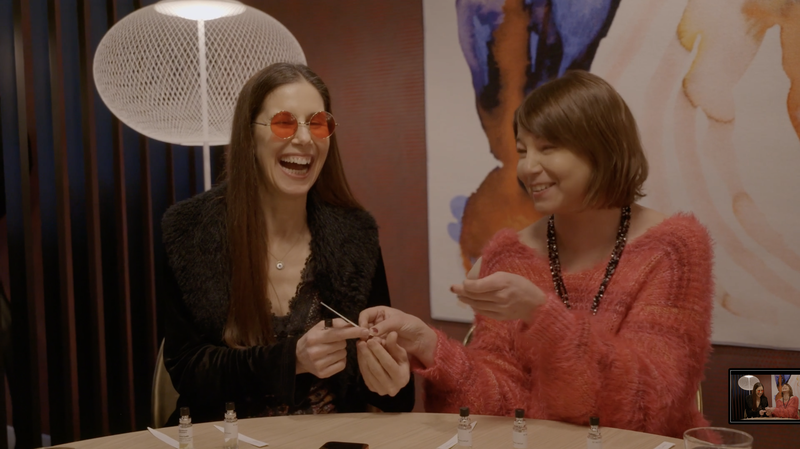
Tony Stephens brings a personal and historical bridge to Keller’s legacy, connecting memory with lived experience. Leona Godin’s presence adds an artist’s understanding of performance, perception, and storytelling. Lachi’s sections bring a unique energy and cultural immediacy, especially in how they connect disability visibility to music, public identity, and creative authorship. Krystle Allen’s story is a reminder that discrimination often arrives through systems that congratulate themselves on professionalism while failing people in basic human ways.
Helen Keller’s presence could easily have overwhelmed the modern stories, given that her name carries such cultural recognition. POSSIBILITIES avoids that imbalance by treating Keller less as a landmark and more as a door. The film recognizes how severely the public version of her life has been narrowed down. It reminds viewers that Keller lived for 87 years, traveled the world, wrote, spoke, advocated, received major honors, and helped shape disability rights conversations long after the childhood breakthrough that pop culture keeps returning to. The documentary’s frustration with that reduction is justified.
POSSIBILITIES works because its sense of hope is practical rather than just sentimental. It’s not promising a world where barriers vanish because a documentary asked nicely. It’s pointing to a world already being built by people who have been working, creating, advocating, teaching, and living inside these conversations for years. Keller’s legacy isn’t presented as a finished chapter. It’s an unfinished demand.
As a film, POSSIBILITIES is thoughtful, accessible by design, and emotionally persuasive without leaning too hard on easy sentiment. As a cultural document, it has a stronger reason to exist than many documentaries built around famous historical names. It understands that honoring Helen Keller means moving past a certain version of her story and listening to the people carrying that message forward. The title isn’t just aspirational. It’s corrective. The possibilities were always there. The question is whether the world is willing to make room for them.
Please visit https://linktr.ee/overlyhonestr for more reviews.
You can follow me on Letterboxd, Instagram, Twitter, and YouTube. My social media accounts can also be found on most platforms by searching for ‘Overly Honest Reviews’.
I’m always happy to hear from my readers; please don’t hesitate to say hello or send me any questions about movies.
[photo courtesy of AMERICAN FOUNDATION FOR THE BLIND, BEACHGLASS FILMS, DOG GREEN PRODUCTIONS]
DISCLAIMER:
At Overly Honest Movie Reviews, we value honesty and transparency. Occasionally, we receive complimentary items for review, including DVDs, Blu-rays, CDs, Vinyl Records, Books, and more. We assure you that these arrangements do not influence our reviews, as we are committed to providing unbiased and sincere evaluations. We aim to help you make informed entertainment choices regardless of our relationship with distributors or producers.
Amazon Affiliate Links:
Additionally, this site contains Amazon affiliate links. If you purchase through these links, we may receive a commission. This affiliate arrangement does not affect our commitment to honest reviews and helps support our site. We appreciate your trust and support as you navigate these links.


Happy
0 %

Sad
0 %

Excited
0 %

Sleepy
0 %

Angry
0 %

Surprise
0 %
 0
0
 0
0


Average Rating