America Through the Wrong Windshield
Read Time:8 Minute, 26 Second
MOVIE REVIEW
The Great American Road Trip in America
 –
– 


Genre: Comedy, Mockumentary, Road Movie
Year Released: 2026
Runtime: 1h 38m
Directors: Atilla Végh, Robert A. Palmer
Writers: Atilla Végh, Robert A. Palmer
Cast: Atilla Végh, Robert A. Palmer, Eric Horowitz, Heath A. Martin, George Frandsen, Nick Liberato
Where to Watch: available now
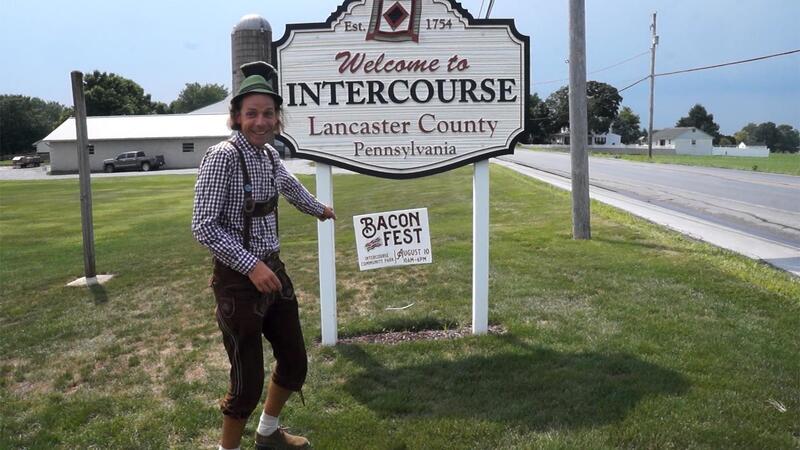
RAVING REVIEW: By the time Robert A. Palmer begins looking less like a producer and more like a man being held captive by his own project, THE GREAT AMERICAN ROAD TRIP IN AMERICA has found its source of energy and comedy. Palmer is supposed to be directing, driving, navigating, translating, troubleshooting, and somehow turning a cross-country disaster into a presentable travel show. Instead, he spends much of the trip seated beside Luca Wunderbaum, a self-declared professional traveler whose confidence rises in direct proportion to how little he understands.
Luca, played by co-director and co-writer Atilla Végh, intends to introduce America to an eager international audience. Local customs are interpreted through whatever information happens to enter his head, landmarks acquire entirely new histories, and every correction from Palmer sounds like an unnecessary interruption from someone who lacks Luca’s professional instincts. The movie alternates between the travel program Luca believes they’re making and the increasingly exhausted production trying to make it. The introduction presents another famous destination with great certainty, only for the footage inside the minivan to reveal how the segment was assembled, misunderstood, or barely rescued from failure. The travel show keeps promising an authoritative journey across the United States. The making-of footage quietly documents Palmer’s attempt to survive it.
We see Luca describe America, then watch Palmer deal with the consequences of that description. New York somehow turns up in Las Vegas, Niagara Falls becomes confused with the Grand Canyon, and locations separated by thousands of miles begin blending into Luca’s private version of the country. He isn’t trying to deceive anyone. He simply considers uncertainty a problem that can be solved by speaking with greater conviction.
Végh makes Luca ridiculous without playing him as cruel or cynical. His enthusiasm feels genuine, and that sincerity keeps the character from becoming unbearable. He wants to meet people, try food, see landmarks, and share everything he learns. The fact that he learns almost nothing correctly doesn’t reduce his excitement. The performance works because Luca rarely appears aware that he’s performing for the camera. Végh maintains the character’s misplaced certainty through long stretches of improvised interaction, allowing strangers to respond naturally to his questions, pronunciation, clothing, and a questionable grasp of American culture. Luca believes he’s conducting a serious travel program. Everyone else has to decide how seriously they’re willing to take him.
The gentler approach makes the film easy to spend time with, though it also limits how far some encounters can develop. Several people react to Luca with amused confusion, answer his questions, and send him back toward the minivan. The exchanges can be funny in the moment without producing a larger surprise. Once the basic pattern becomes familiar, the movie depends heavily on the personalities involved to keep each stop from resembling the previous one.
Palmer provides the necessary resistance. His job is to keep the trip moving while Luca continually changes what the trip is supposed to accomplish. A producer normally remains invisible when everything works. Here, each logistical failure pulls Palmer farther into the movie until his frustration becomes as important as the show Luca is hosting.
Their relationship gradually becomes the feature’s real subject. Luca treats Palmer as a driver, assistant, translator, critic, and reluctant witness to his greatness. Palmer treats Luca as both the cause of every problem and the only reason the movie exists. Their irritation never completely conceals the affection forming beneath it. Palmer’s reactions are funniest when he doesn’t exaggerate them. A pause, defeated glance, or careful explanation often lands better than the louder confrontations. He seems to understand that arguing with Luca only creates another roadblock, but silence allows Luca to interpret the situation however he pleases. Every available response carries its own punishment.
America itself is presented through roadside oddities, motels, fast food, tourist attractions, unexpected interviews, and long hours inside a vehicle packed with production equipment. The film isn’t searching for a complete portrait of the country. Its America is assembled from whatever the travelers can reach, whoever agrees to speak with them, and whatever goes wrong once the camera starts recording.
That fragmented approach feels especially appropriate for a movie released on July 4 during the country’s 250th anniversary year. Plenty of travel programming presents the United States as a carefully organized collection of inspirational landmarks. Luca’s version is messier, stranger, and often geographically impossible. He may misunderstand the country, but the places and people he finds along the way frequently say more than a polished tourism package would.
The Poozeum, Route 66 stops, unusual museums, security encounters, local personalities, and a lost hiker all become part of a national tour held together by enthusiasm rather than planning. Some destinations produce stronger material than others, and the deliberately uneven footage reflects the reality of a small crew working on the road. That roughness can be charming because it makes the movie feel genuinely discovered during production.
It can also become an excuse the film relies upon too often. The low-budget construction explains inconsistent sound, abrupt visual shifts, and segments that resemble material intended for an online travel series rather than a feature. Explanation doesn’t always make those limitations disappear. A few sequences needed tighter editing, particularly when a misunderstanding has already reached its obvious conclusion.
The alternating structure eventually becomes predictable as well. Luca introduces something incorrectly, Palmer attempts to repair the damage, and the pair move toward the next destination. Later scenes add a little more tension to their relationship, but the format doesn’t evolve enough to sustain the full runtime without occasional stretches that feel repetitive.
The comedy surrounding Luca’s English requires similar restraint. His unusual phrasing produces several effective lines, especially because the character speaks with complete authority. Repeating that joke too frequently risked reducing him to an accent rather than a personality. The movie is so much stronger when the humor comes from Luca’s reasoning, confidence, and determination to continue after every correction.
Végh gives the character enough warmth to survive those weaker moments. Luca’s ignorance rarely feels malicious, and his desire to connect with people remains convincing. Even when a segment falls apart, he approaches the next stop as though his travel career has only gained momentum.
The feature’s improvised nature produces a loose, unpredictable energy that a tightly scripted road comedy would struggle to recreate. Nobody can really control what happens during a cross-country shoot, particularly when real people, unfamiliar locations, and a character like Luca are involved. Végh and Palmer understand that failure isn’t an interruption of their movie. Failure is the footage they need.
A greater level of discipline in shaping that footage would have made the finished feature more cohesive. Some jokes are allowed to continue after the moment, while several travel segments repeat things already communicated by the in-car material. Cutting ten or fifteen minutes could have preserved the homemade personality while giving the comedy a more consistent impact. The production’s imperfections never erase the pleasure of watching two people commit themselves to a ridiculous idea. Végh and Palmer crossed the country with a minivan, a character, and a format flexible enough to absorb whatever they encountered. The result doesn’t always feel finished, but it almost always feels sincere.
THE GREAT AMERICAN ROAD TRIP IN AMERICA ultimately succeeds less as a parody of travel television than as a record of creative partnership under prolonged stress. Luca believes the show is about his expertise. Palmer believes it’s about completing the production. The movie understands that neither man is entirely correct.
Their trip may not provide reliable directions, cultural insight, or even consistency. It does capture the affection that can develop when two people remain trapped in a vehicle long enough to turn every disagreement into part of the show. The road trip wanders, repeats itself, and occasionally needs someone to check the map, but Luca and Palmer remain enjoyable company whenever the movie lets their relationship drive. Ultimately, arriving right in the middle for me, a film I didn’t hate, but also didn’t love, there was a lot to like here, but also a lot that wore thin, falling right in the middle at a 2.5 out of 5 for me.
Please visit https://linktr.ee/overlyhonestr for more reviews.
You can follow me on Letterboxd, Instagram, Twitter, and YouTube. You can also find my social media accounts on most platforms by searching for 'Overly Honest Reviews'.
I’m always happy to hear from my readers; please don't hesitate to say hello or send me any questions about movies.
[photo courtesy of GENEVA CONTRADICION, HOPPYWOOD FILMS]
DISCLAIMER:
At Overly Honest Movie Reviews, we value honesty and transparency. Occasionally, we receive complimentary items for review, including DVDs, Blu-rays, CDs, Vinyl Records, Books, and more. We assure you that these arrangements do not influence our reviews, as we are committed to providing unbiased and sincere evaluations. We aim to help you make informed entertainment choices regardless of our relationship with distributors or producers.
Amazon Affiliate Links:
Additionally, this site contains Amazon affiliate links. If you purchase through these links, we may receive a commission. This affiliate arrangement does not affect our commitment to honest reviews and helps support our site. We appreciate your trust and support as you navigate these links.


Happy
0 %

Sad
0 %

Excited
0 %

Sleepy
0 %

Angry
0 %

Surprise
0 %
 0
0
 0
0


Average Rating