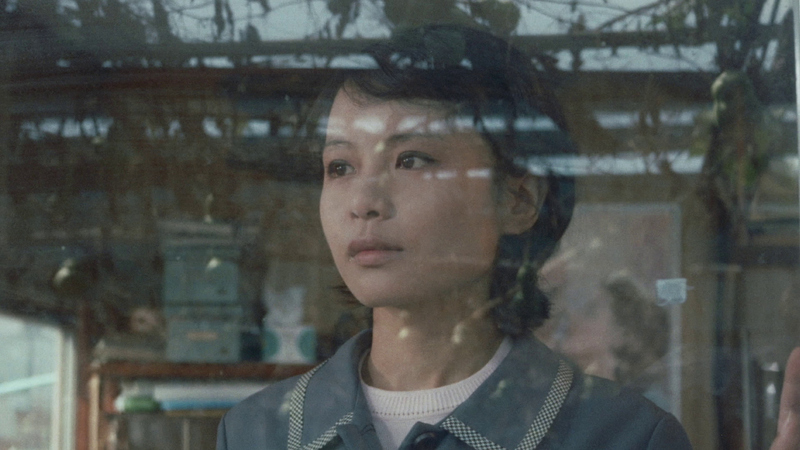
Redemption Takes a Savage Beating
Read Time:6 Minute, 8 Second
MOVIE REVIEW
The Boxer (Bokusâ)
 –
– 

Genre: Drama, Sport
Year Released: 1977, 2026 Radiance Films Blu-ray
Runtime: 1h 34m
Director(s): Shūji Terayama
Writer(s): Fumio Ishimori, Rio Kishida, Shūji Terayama
Cast: Bunta Sugawara, Kentarō Shimizu, Masumi Harukawa, Hiroko Isayama, Jūrō Kara, Yōsuke Natsuki
Where to Watch: available now, order your copy here: www.radiancefilms.co.uk, www.mvdshop.com, or www.amazon.com
RAVING REVIEW: One fighter stands, another falls, and the bell appears to be the answer to everything. Director/co-writer Shūji Terayama looks past that temporary certainty in THE BOXER, finding an entire society of damaged men whose victories disappear almost as quickly as the swelling around their eyes. The film follows the familiar outline of a retired champion training an unlikely contender, then covers that outline in grief, resentment, theatricality, and the knowledge that courage won’t repair every part of a life.
Hayato was once a celebrated boxer. Now he lives in near isolation, drinks heavily, and seems determined to make his remaining years as inconspicuous as possible. Bunta Sugawara carries that decline without begging for sympathy. Hayato hasn’t become an inspirational former athlete waiting for the right student to restore his confidence. He’s bitter, withholding, and capable of making misery feel like a chosen discipline. Even his silence has an aggressive quality, as though speaking might allow someone to get close enough to discover what he has spent years burying.
That becomes harder when Tenma enters his life. The young boxer has limited prospects, a weakened leg, and an uncomfortable connection to the death of Hayato’s brother. His request for training should be easy to reject. Instead, the two men become entangled through a mixture of guilt, anger, curiosity, and recognition. Terayama doesn’t reduce their relationship to forgiveness. Hayato’s decision to help Tenma never erases the reason he resents him, and Tenma’s determination can’t make him innocent of the damage that brought them together.
Kentarō Shimizu plays Tenma with vulnerability, keeping his persistence from becoming irritating. He knows what others see when they look at him. A limited fighter carrying an injury that may prevent him from ever becoming much more. His ambition isn’t presented as proof that he deserves success. It’s closer to desperation, a need to find one place where effort might overpower the judgments already made about him. Boxing gives him a structure for that hope, though the film repeatedly asks whether the ring offers an escape or simply a more formal setting for punishment.
Those questions could have fit inside a conventional sports drama, especially one during a period when the underdog boxing narrative was becoming this popular. Terayama has little interest in conventional presentation. Training takes place across industrial spaces, railway tracks, empty roads, and endless stretches of concrete.
Terayama’s background in poetry and experimental performance can be felt in every disruption of realism. A conversation may become an arrangement of bodies, smoke, light, and music. The city doesn’t function as a neutral location; it seems infected by the characters’ memories and anxieties. THE BOXER remains accessible compared with some of the director’s more confrontational work, although accessible shouldn’t be confused with ordinary.
Sugawara remains the grounding force inside the visual unrest. Known for roles built around hardened masculinity, he gives Hayato the physical presence of someone who could still command a room even after losing control of his own life. The performance becomes more affecting whenever Hayato’s confidence slips. A glance toward the ring can carry pride, envy, regret, and fear without separating those feelings for the audience. He wants Tenma to succeed, resents the possibility that he might, and understands better than anyone what success demands from a boxer’s body.
The refusal to treat endurance as an uncomplicated virtue gives the matches their force. The choreography isn’t built around graceful combinations or dominance. Bodies become heavy, balance breaks, and each punch appears to remove something that may not return. Terayama sometimes photographs the fighters as lonely figures inside a ritual larger than either of them. At other moments, he presses close enough to make exhaustion feel immediate. The ring becomes a stage where pain is converted into a performance for strangers.
THE BOXER doesn’t linger over every reconciliation or explain each shift in loyalty. People act from feelings they can’t sort out, and the film allows contradiction to remain visible. Hayato can train Tenma without resolving his grief. Tenma can seek guidance from a man who may never stop associating him with death. Their bond matters because it remains unstable, carrying affection and hostility into the same room.
Radiance Films’ Blu-ray gives this difficult-to-categorize work a welcome release. The high-definition presentation preserves the grain, harsh urban textures, expressive filters, and deliberate clashes of color that make Terayama’s approach so distinctive. The original mono track keeps Seazer’s music energetic, while the revised subtitle translation makes the shifting relationships easier to follow without flattening their ambiguity. The supplemental material adds context to a film that sits between Toei’s commercial production culture and its director’s refusal to behave like a conventional studio filmmaker.
Calling THE BOXER an underdog story would describe its inner workings while missing its purpose. Terayama isn’t interested in assuring us that determination conquers weakness. He’s asking what remains after determination has demanded everything the body can give. Hayato and Tenma pursue redemption through a sport designed to leave marks, hoping that one form of suffering might relieve another. The possibility keeps them moving, while the film’s bruised, yet beautiful images remind us that no bell can declare their deeper fight finished.
Bonus Materials:
High-definition digital transfer
Original uncompressed mono audio
Interview with composer J.A. Seaver (2026)
New visual essay on Toei studio in the year 1977 by Tom Mes (2026)
New and improved English subtitle translation
Reversible sleeve featuring artwork based on original posters
Limited edition booklet featuring new writing by Roberta Novielli
Please visit https://linktr.ee/overlyhonestr for more reviews.
You can follow me on Letterboxd, Instagram, Twitter, and YouTube. You can also find my social media accounts on most platforms by searching for 'Overly Honest Reviews'.
I’m always happy to hear from my readers; please don't hesitate to say hello or send me any questions about movies.
[photo courtesy of RADIANCE FILMS, MVD ENTERTAINMENT]
DISCLAIMER:
At Overly Honest Movie Reviews, we value honesty and transparency. Occasionally, we receive complimentary items for review, including DVDs, Blu-rays, CDs, Vinyl Records, Books, and more. We assure you that these arrangements do not influence our reviews, as we are committed to providing unbiased and sincere evaluations. We aim to help you make informed entertainment choices regardless of our relationship with distributors or producers.
Amazon Affiliate Links:
Additionally, this site contains Amazon affiliate links. If you purchase through these links, we may receive a commission. This affiliate arrangement does not affect our commitment to honest reviews and helps support our site. We appreciate your trust and support as you navigate these links.


Happy
0 %

Sad
0 %

Excited
0 %

Sleepy
0 %

Angry
0 %

Surprise
0 %
 0
0
 0
0


Average Rating