Mourning Without a Road Map
Read Time:7 Minute, 27 Second
MOVIE REVIEWS
Still Night, Burning House
 –
– 

Genre: Documentary
Year Released: 2026
Runtime: 1h 16m
Director: Carol Nguyen
Where to Watch: shown at the 2026 Toronto International Film Festival
RAVING REVIEW: Carol Nguyen spends the majority of STILL NIGHT, BURNING HOUSE listening to people who have spent years hiding what they feel. That gives this documentary its influence, because silence isn't presented as a simple problem waiting for somebody brave enough to break it. Sometimes silence causes damage, sometimes it protects someone who wasn't ready to speak, and sometimes it has simply become so familiar that nobody knows how to live without it.
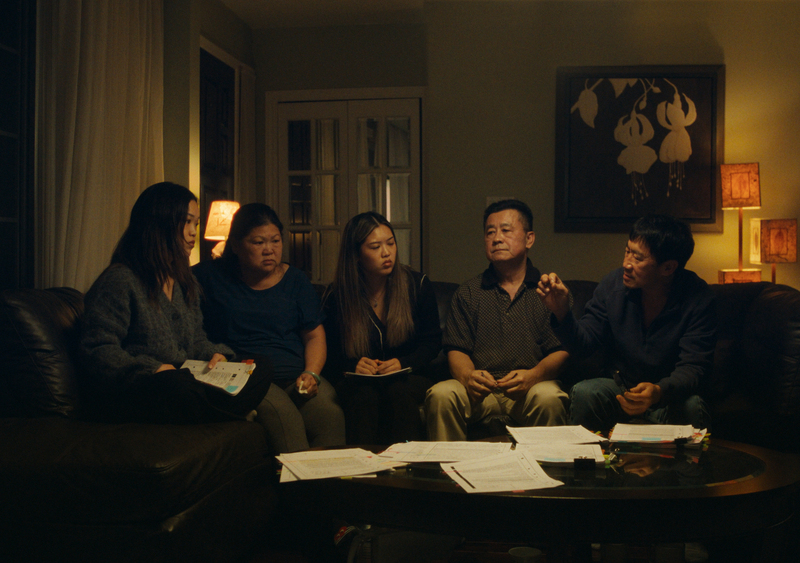
Nguyen's feature debut begins with a wound that has never really closed. More than a decade after the mysterious death of her uncle Thach fractured parts of her family, Nguyen brings relatives together and travels with them to Vietnam, hoping to understand what happened and what has been left unresolved. Medical records offer the possibility of answers, while conversations expose something harder to organize. The guilt, regret, confusion, and grief lingered long after the details themselves had become uncertain.
Her father carries that burden. He spent years revisiting what he understood about his brother at the time, what he failed to understand, and what he imagines might have changed if the family had a better understanding of mental illness. Nguyen doesn't turn that regret into some simple lesson about forgiveness. She lets his questions remain uncomfortable because the kind of guilt he's carrying isn't something a document, diagnosis, or belated explanation can automatically erase.
That restraint is vital to the story. Family documentaries built around a death can easily become investigations in which discovering the right piece of information is treated as emotional closure, as though grief works like a mystery waiting for the solution that could be just out of reach. STILL NIGHT, BURNING HOUSE understands that finding an answer and accepting an answer are completely different experiences. Knowing more about the past may change how someone interprets it, although that doesn't mean the years spent believing something else suddenly disappear.
Nguyen explored her family's emotional range before, most notably in her 2019 short NO CRYING AT THE DINNER TABLE, and this feels less like a replication than a continuation of a conversation that was never going to be finished in one sitting. That earlier project opened a door in her family, while this one asks what happens after people acknowledge that the door exists. There are histories beneath those admissions, including cultural expectations, immigration, language, mental-health stigma, and different ideas about what grieving is supposed to look like.
The trip to Vietnam could've taken the familiar form of returning to an ancestral homeland and discovering the missing part of yourself. Nguyen seems almost resistant to that. Vietnam matters because of what happened there and because of the family's connection to it, even though the country isn't treated as some magical answer to everything that followed. The trip instead creates an environment in which relatives who have spent years living with the same pain are forced to confront it from slightly different perspectives.
One of the film's more intriguing ideas comes through the rituals surrounding death. Through incense, prayer, offerings, and the burning of objects, grief is given a physical form even when the people participating don't necessarily agree on what those actions mean. Nguyen's father can question the logic behind a ritual and participate anyway, which says something wonderfully human about mourning. Belief isn't always required; sometimes the act itself gives a person a place to put feelings that don't fit neatly into conversation.
That contradiction also changes Nguyen's treatment of silence. The younger filmmaker entering this story might have assumed that talking is inherently healthier and that her family simply needs to overcome withholding emotion. STILL NIGHT, BURNING HOUSE gradually recognizes something less convenient. Communication matters, though silence can also provide solitude, dignity, time, or a private relationship with grief that doesn't need to be translated for anybody else.
Nguyen occasionally steps away from straightforward documentary observation and enters a more dreamlike territory, allowing the family's emotional reality to drift toward the metaphysical. The imagery is beautiful and understandable within a story so preoccupied with the unknowable boundary between the living and the dead. It also creates a slightly uneven tension within the film, because the least constructed moments between family members are so emotionally convincing that the deliberately shaped passages occasionally feel as though they're translating feelings that were already coming through perfectly well on their own.
Juliette Lossky's cinematography helps those sections feel connected rather than separate, especially in the way ordinary spaces can take on an uncanny quality without turning the documentary into something supernatural. Anouk Deschênes' editing has an equally difficult job, moving between investigation, memory, travel, conversation, ritual, and introspection without suggesting that one mode contains a more legitimate version of the truth. At only 76 minutes, the film is remarkably concentrated considering how many deep and impactful ideas Nguyen is working with.
That short runtime has a somewhat negative side as well. Certain relatives and parts of the family's history receive less attention, and there were moments when I wanted to stay in a conversation a little longer before the documentary moved elsewhere. The investigation involving medical records could also support more contextual detail, especially because questions surrounding mental-health knowledge and cultural barriers are important to understanding the regret that has followed this family for years. This is mainly just a selfish standpoint on my behalf; I wanted more of this story. There was so much to dive into here.
The absence of exhaustive explanation may also be part of the point. Nguyen isn't reconstructing her uncle's life so that an audience can judge everyone else's decisions with the comfort of hindsight. She is examining what uncertainty has done to the people who remained, particularly the way unanswered questions can harden into blame when someone desperately wants the past to make sense. So I have to play devil's advocate; even as I wanted more, I can understand why there wasn’t.
STILL NIGHT, BURNING HOUSE never exploits the most painful parts of its story. Nguyen is filming relatives, but she's also participating in the family process she's documenting, and there is a noticeable level of trust in the room. People aren't pushed toward major emotional breakdowns for the camera. Hesitation, incomplete thoughts, awkwardness, and moments when somebody doesn't quite know what to say are allowed to have as much value as the more direct admissions.
The strongest achievement here may be how little Nguyen insists upon a universal way to grieve. Her family includes people who talk, people who retreat, people who participate in rituals they don't even fully believe in, and people who are trying to make peace with choices made based on knowledge they no longer consider sufficient. Nobody gets handed the perfect sentence that repairs everything.
STILL NIGHT, BURNING HOUSE finds hope in something smaller and probably more realistic. The past doesn't change, the unanswered questions don't all disappear, and reconciliation doesn't require pretending that every wound has finally healed. Nguyen gives her family the chance to look at the same loss together after years of carrying pieces of it separately, and sometimes that shared understanding is about as close to an answer as grief ever allows.
Please visit https://linktr.ee/overlyhonestr for more reviews.
You can follow me on Letterboxd, Instagram, Twitter, and YouTube. My social media accounts can also be found on most platforms by searching for 'Overly Honest Reviews'.
I’m always happy to hear from my readers; please don't hesitate to say hello or send me any questions about movies.
[photo courtesy of METAFILMS, NATIONAL FILM BOARD OF CANADA (NFB), PORTAGE FILMS]
DISCLAIMER:
At Overly Honest Movie Reviews, we value honesty and transparency. Occasionally, we receive complimentary items for review, including DVDs, Blu-rays, CDs, Vinyl Records, Books, and more. We assure you that these arrangements do not influence our reviews, as we are committed to providing unbiased and sincere evaluations. We aim to help you make informed entertainment choices regardless of our relationship with distributors or producers.
Amazon Affiliate Links:
Additionally, this site contains Amazon affiliate links. If you purchase through these links, we may receive a commission. This affiliate arrangement does not affect our commitment to honest reviews and helps support our site. We appreciate your trust and support as you navigate these links.


Happy
0 %

Sad
0 %

Excited
0 %

Sleepy
0 %

Angry
0 %

Surprise
0 %
 0
0
 0
0


Average Rating