The Surprisingly Durable Appeal of Family Perfection
Read Time:9 Minute, 12 Second
MOVIE REVIEW
The Brady Bunch: The Complete Series
 –
– 

Genre: Family, Comedy, Sitcom
Year: 1969–1974, 2026 DVD
Runtime: 5 Seasons / 117 Episodes / Approximately 49h 40m
Creator: Sherwood Schwartz
Directors: John Rich, Jack Arnold, Oscar Rudolph, and others
Writers: Sherwood Schwartz, Lloyd J. Schwartz, and others
Cast: Robert Reed, Florence Henderson, Ann B. Davis, Barry Williams, Maureen McCormick, Christopher Knight, Eve Plumb, Mike Lookinland, Susan Olsen
Where to Watch: available October 20, 2026. Pre-order your copy here: www.moviesunlimited.com or www.amazon.com
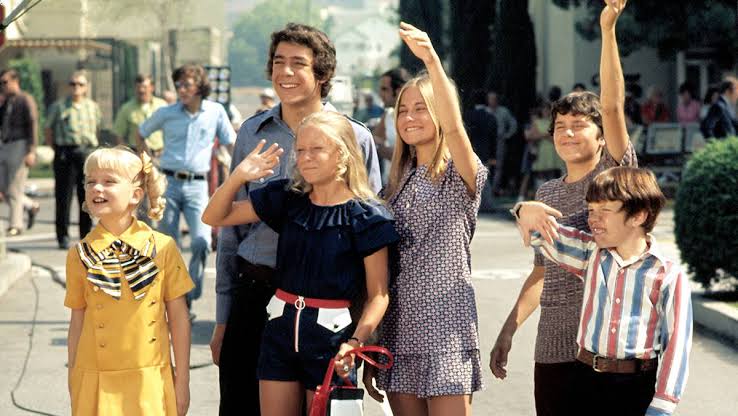
RAVING REVIEW: Few families in TV history have had as much space in American pop culture as the Bradys. Its nine-square opening credits, impossibly catchy theme song, and six kids have remained fixtures of American pop culture long after the original series ended. That's quite an accomplishment for a sitcom that never ranked among television's thirty most-watched programs during its original run. Created by Sherwood Schwartz, THE BRADY BUNCH aired on ABC from 1969 to 1974 before finding a different level of popularity through syndication. Paramount's latest complete-series DVD collection brings together all 117 episodes across five seasons, offering nearly fifty hours of a family whose life problems rarely lasted longer than twenty-five minutes.
The premise doesn’t even need an introduction, though it's worth remembering how unusual it was when Schwartz developed the series. Widowed architect Mike Brady (Robert Reed) marries Carol Martin (Florence Henderson), bringing his three sons, Greg (Barry Williams), Peter (Christopher Knight), and Bobby (Mike Lookinland), together with her daughters, Marcia (Maureen McCormick), Jan (Eve Plumb), and Cindy (Susan Olsen). Housekeeper Alice Nelson (Ann B. Davis) completes the household, providing an additional adult presence who frequently seems better equipped to handle the children's nonsense than either parent. Their blended family becomes the foundation for a seemingly endless collection of misunderstandings, sibling rivalries, school problems, and minor domestic disasters.
Schwartz reportedly developed the concept after reading about the growing number of marriages involving children from previous relationships. At the time, television families were generally presented in more traditional setups, so the idea of two households becoming one felt somewhat different from what audiences were used to. THE BRADY BUNCH doesn't spend a lot of time examining the complicated realities of remarriage, however. Once everyone settles into the house, the distinction between stepchildren and biological children becomes largely irrelevant. The six kids are simply brothers and sisters, and Mike and Carol behave as though they've been raising them together their entire lives.
Watching the series today, it's almost impossible to ignore how much it feels like another era. The clothes, hairstyles, furniture, and even the dialogue establish its late-1960s and early-1970s origins, while the family dynamics reflect an idealized understanding of domestic life. Mike and Carol rarely have serious disagreements, the children generally respect their parents, and even the worst mistakes can usually be corrected through a conversation about responsibility. That optimism can become ridiculous, especially when everyone gathers around for another perfectly timed lesson. Yet the show's willingness to remain cheerful is also a considerable part of its appeal.
The series finds entertainment in familiar experiences rather than original storytelling. Many situations draw on fairly ordinary experiences, including jealousy, embarrassment, dishonesty, and the desperate desire to impress others. Jan struggles to live in Marcia's shadow, Peter develops insecurities about his personality, and Bobby regularly tries to prove he's just as capable as his older brothers. These aren't especially complicated issues, but the actors give their characters those recognizable personalities. Jan's frustrations are always memorable because Eve Plumb makes her resentment toward Marcia understandable, even when the writing becomes exaggerated for the comedy.
The older children help the series change as it progresses. Greg and Marcia gradually move beyond the younger kids' concerns, developing interests in dating, popularity, and independence. Barry Williams and Maureen McCormick become increasingly comfortable carrying episodes built around those experiences. Christopher Knight brings an appealing awkwardness to Peter's attempts to figure out who he wants to be. The younger children don't always receive the same level of interest, and some of their stories rely too much on innocent misunderstandings. Nevertheless, watching the cast grow across five seasons gives the collection a sense of continuity that becomes more noticeable when the episodes are watched back to back.
Robert Reed and Florence Henderson deserve credit for keeping the household as believable as it is within the show's deliberately unrealistic boundaries. Reed plays Mike as a patient, dependable father who approaches parenting almost like another job assignment. Identify a problem and develop a solution. Henderson's Carol is equally supportive, though she's often allowed a little more playfulness with the children. Neither has a lot of opportunity to show the frustration that inevitably comes with raising six kids, especially in a house where privacy barely exists. Their almost supernatural patience occasionally makes them less interesting than the children, but it also creates the security that lets the series stay so consistently pleasant.
Ann B. Davis, meanwhile, is arguably the show's most reliable source of humor. Alice can deliver a sarcastic observation without undermining the family's affection for one another, and her reactions frequently acknowledge just how absurd the situation has become. The series never explores her personal life as thoroughly as it could. Davis understands the character's position. Alice is an employee, a confidante, a caretaker, and occasionally the only sensible person in the building.
Some of the most recognizable episodes demonstrate just how much mileage the writers could get from relatively insignificant moments. Marcia's broken nose in "The Subject Was Noses," Peter adopting a new personality in "The Personality Kid," and Jan's unforgettable "Marcia, Marcia, Marcia!" complaint have remained part of television history for decades. The family's trips to the Grand Canyon and Hawaii offer a welcome change of scenery, with the latter introducing a decidedly strange storyline involving a supposedly cursed tiki idol. Guest appearances by celebrities such as Davy Jones and Joe Namath also reflect the show's ability to incorporate recognizable personalities into its carefully maintained world.
The quality isn't always consistent across 117 episodes, and the strict formula becomes increasingly apparent over time. Problems arise, the misunderstandings multiply, someone learns an important lesson, and the family returns to normal before the credits. Occasionally, the moral is delivered so forcefully that it feels less natural and more like an educational announcement. Other episodes stretch a fairly weak idea beyond what it can support. The fifth season is particularly uneven, and the arrival of young cousin Oliver (Robbie Rist) does little to revitalize a series already running short on ideas. His inclusion isn't the disaster its reputation suggests, but it does show how hard the writers struggled to maintain the established formula.
The series also avoided most of what was happening in America during its original broadcast. The late 1960s and early 1970s were marked by political unrest, changing attitudes toward gender roles, and considerable social upheaval, but the Brady household reflects very little of that uncertainty. Carol's role as a homemaker and the show's relatively conventional view of family responsibilities can feel outdated, especially compared with contemporary television programs that began challenging those expectations. THE BRADY BUNCH existed during the same period as ALL IN THE FAMILY and THE MARY TYLER MOORE SHOW. It had little interest in engaging with their more confrontational approaches to comedy.
That absence of realism is worth acknowledging without treating it as a failure. Schwartz wasn't attempting to create a comprehensive account of American family life, and the series never pretended that Mike and Carol represented the average household. Its version of harmony was an ideal that audiences could visit for half an hour, knowing that whatever went wrong would eventually be resolved. Some of the humor has aged poorly, and the lessons occasionally sound hopelessly simplistic, but the affection between the characters remains convincing enough to support the stories. The family may be impossibly well-adjusted, but their individual insecurities and occasional selfishness prevent them from becoming one-dimensional.
Paramount's twenty-disc DVD release concentrates on the original series rather than the many reunions, spinoffs, and feature films that followed. For a program that found success through decades of syndication, collecting the complete run in one package feels particularly appropriate.
Perhaps the most remarkable thing about THE BRADY BUNCH is how it survived. The series wasn't a ratings success, and its original conclusion hardly suggested that future generations would keep talking about this family. Yet daily syndicated broadcasts introduced the Bradys to children who hadn't even been born when the final episode aired. Reunions, cartoons, television movies, and the self-aware adaptations that followed only strengthened the family's place in history. Even people who have never watched the original series understand many of the references, which says something about how deeply its characters became embedded in American entertainment.
Five seasons of THE BRADY BUNCH expose every weakness in its formula, from repetitiveness to lessons delivered with all the subtlety of a classroom lecture. They also demonstrate why audiences continued returning to this family long after ABC canceled the series. Spending time with these characters remains enjoyable, especially as the younger cast develops and the family establishes its experience. Paramount's complete-series collection preserves a program whose importance extends well beyond its original five-year run. The Bradys never represented a realistic American family, but after more than half a century, they're still easy to welcome back into the living room.
Please visit https://linktr.ee/overlyhonestr for more reviews.
Follow me on Letterboxd, Instagram, Twitter, and YouTube. You can also find my social media accounts on most platforms by searching for 'Overly Honest Reviews'.
I’m always happy to hear from my readers; please don't hesitate to say hello or send me any movie questions.
[photo courtesy of MOVIES UNLIMITED, ALLIANCE HOME ENTERTAINMENT, PARAMOUNT]
DISCLAIMER:
At Overly Honest Movie Reviews, we value honesty and transparency. Occasionally, we receive complimentary items for review, including DVDs, Blu-rays, CDs, Vinyl Records, Books, and more. We assure you these arrangements do not influence our reviews, as we are committed to unbiased, sincere evaluations. We aim to help you make informed entertainment choices regardless of our relationship with distributors or producers.
Amazon Affiliate Links:
This site also contains Amazon affiliate links. If you purchase through these links, we may receive a commission. This affiliate arrangement does not affect our commitment to honest reviews and helps support our site. We appreciate your trust and support as you navigate these links.


Happy
0 %

Sad
0 %

Excited
0 %

Sleepy
0 %

Angry
0 %

Surprise
0 %
 0
0
 0
0

Average Rating