An Unpredictable Pursuit Through Seventies Japan
Read Time:10 Minute, 17 Second
MOVIE REVIEW
Manhunt (Kimi yo fundo no kawa wo watare)
 –
– 


Genre: Action, Crime, Mystery, Thriller
Year: 1976, 2026 Blu-ray
Runtime: 2h 31m
Director: Junya Sato
Writers: Kei Tasaka, Junya Sato (screenplay); Juko Nishimura (original novel)
Cast: Ken Takakura, Yoshio Harada, Ryoko Nakano, Ryo Ikebe, Hideji Otaki, Mitsuko Baisho, Ko Nishimura, Kunie Tanaka, Eiji Okada
Where to Watch: available October 20, 2026. Pre-order your copy here: www.toyrobotvideo.com, www.mvdshop.com, or www.amazon.com
RAVING REVIEW: Somewhere between a wrongful arrest, a dangerous wilderness escape, and a conspiracy involving pharmaceutical experimentation, MANHUNT seems to forget that it started as a relatively straightforward crime thriller. Director Junya Sato takes a familiar story about an innocent man fleeing the authorities and gradually turns it into an increasingly outrageous adventure that barely resembles its opening act. Released in 1976, this Japanese production has enough unexpected developments to fill several movies. While it's wildly entertaining at times, its sprawling 151-minute runtime occasionally makes the experience feel like an endurance test.
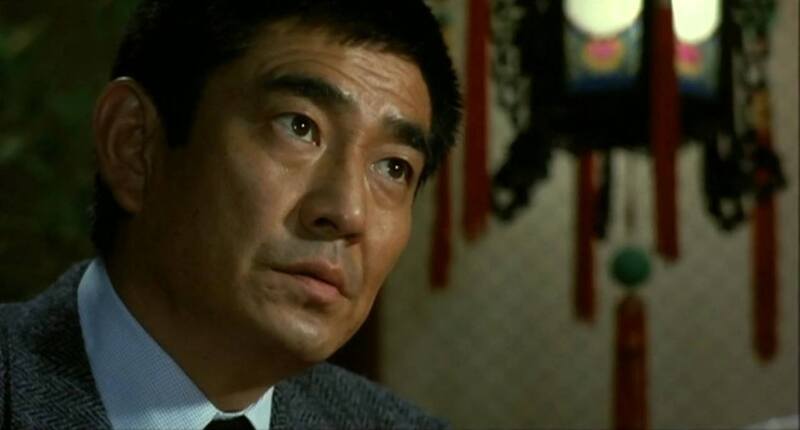
Ken Takakura plays Fuyuto Morioka, a respected prosecutor whose life falls apart when he's accused of crimes he didn't commit. Rather than wait for the authorities to sort things out, Morioka escapes custody and begins searching for the people responsible for framing him. Detective Yamura (Yoshio Harada) is assigned to track him down, setting off a pursuit that takes both men across Japan while gradually exposing a much larger conspiracy. What initially appears to be a case of mistaken identity becomes something far more sinister, involving powerful individuals willing to go to extraordinary lengths to protect their interests.
Takakura is exactly the kind of actor this material needs. His naturally reserved screen presence gives Morioka an air of authority, even as the circumstances around him grow increasingly ridiculous. He rarely raises his voice or shows much visible panic, maintaining an almost stubborn composure as he tries to understand why his entire life has been turned upside down. That restraint proves essential because the film surrounding him frequently operates at a completely different level of intensity. Takakura provides a dependable presence through all the strange developments, making it easier to accept situations that might otherwise seem absurd.
The relationship between Morioka and Detective Yamura adds another interesting dimension to the pursuit. Harada brings a rougher, more unpredictable energy to the detective, creating an effective contrast with Takakura's controlled performance. Yamura is persistent, intelligent, and determined to do his job, but he can also recognize when the circumstances surrounding his investigation don't make sense. Their opposing positions add tension beyond the immediate danger of capture, especially as questions about Morioka's guilt become harder to ignore.
One of Sato's more entertaining decisions is to move the action away from familiar urban environments and into the Japanese countryside. Rather than keeping Morioka confined to back alleys and crowded city streets, the film takes him through forests, mountains, rural communities, and other places that give the pursuit an unexpectedly adventurous feel. The change in scenery also allows Sato to introduce situations that would feel completely out of place in a more conventional police procedural, including an unforgettable encounter with a bear. It's the sort of sequence that makes you wonder whether the filmmakers deliberately tried to surprise their audience or simply couldn't resist adding more spectacle.
The bear encounter perfectly captures both the appeal and the frustration of MANHUNT. It's memorable, exciting, and almost comically unexpected, yet it also shows how often the movie wanders from its supposed objective. Just when the investigation seems ready to move forward, another obstacle appears, leading to an extended sequence that often has little immediate connection to the original accusations. These diversions give the film considerable personality, but they also make it hard to maintain consistent suspense over such a lengthy production.
Ryoko Nakano also plays Mayumi, a wealthy young woman who becomes involved in Morioka's increasingly desperate situation. Her willingness to help him introduces a romantic element that occasionally lets the otherwise relentless pursuit slow down. Nakano makes Mayumi appealing through her determination and confidence, though the relationship develops so quickly it requires some generosity from the audience. Some decisions are driven more by the needs of the adventure than by believable character development, but Nakano and Takakura's chemistry makes their connection enjoyable.
What surprised me most was how comfortable Sato seems with changing the film's personality whenever another idea catches his attention. The early investigation suggests a serious conspiracy thriller, while the extended chase sequences sometimes resemble an old-fashioned adventure serial. Romantic interludes, dangerous stunts, exaggerated confrontations, and moments of unexpected humor continue appearing as the narrative grows more complicated. These elements don't always fit comfortably together, but the filmmaker commits to each one with enough confidence that the film develops an unusual charm.
Hachiro Aoyama's musical score contributes significantly to that personality, though not always in the way you might expect. Its dramatic themes occasionally arrive during moments that don't seem to call for such heightened emotion, creating an almost unintentionally humorous contrast between the action and the accompanying music. Other passages give the pursuit a sweeping, heroic quality that suits Takakura's screen persona. The soundtrack is certainly memorable, even when its choices make certain scenes feel stranger than they probably should.
Beneath the exaggerated adventure, however, Sato says something worthwhile about the relationship between authority and corruption. Morioka begins as someone whose professional responsibilities depend upon the integrity of the legal system. When that same system suddenly identifies him as a criminal, he discovers how easily institutions designed to protect the public can be manipulated by people with sufficient influence. The deeper his investigation takes him, the more apparent it becomes that his personal predicament is connected to abuses of power extending well beyond his own circumstances.
The pharmaceutical conspiracy introduces some especially disturbing implications about the exploitation of vulnerable people and the willingness of powerful organizations to disregard basic human rights. Without getting into the specifics, the material takes the film into territory considerably darker than its more adventurous passages might suggest. I appreciated the ambition behind these developments, though Sato occasionally struggles to balance their seriousness with the increasingly exaggerated action. The sudden tonal shifts can make it hard to tell how seriously certain revelations are meant to be taken.
At two and a half hours, MANHUNT would have benefited from a more disciplined approach to storytelling. Several chase sequences run well past the point where their purpose is established, and some supporting characters appear mainly to introduce another complication before disappearing from the narrative. The investigation also becomes unnecessarily tangled, requiring considerable exposition whenever the film returns to the conspiracy. I enjoyed much of the journey, but much of it could have been shortened without sacrificing the film's unusual personality.
Even with those problems, Sato demonstrates an impressive ability to stage large-scale action. His experience directing THE BULLET TRAIN the previous year is apparent in the ambitious location work, elaborate pursuits, and willingness to place characters in dangerous situations that extend beyond ordinary police confrontations. These sequences have a physical quality that makes them enjoyable, especially when the film incorporates vehicles, aircraft, and difficult terrain into Morioka's escape. Modern productions often rely on extensive digital assistance for similarly ambitious sequences, making this older production's practical approach especially interesting.
The movie's reputation also extends far beyond its original Japanese release. Although its initial domestic reception was disappointing, MANHUNT became an enormous cultural phenomenon in China after the Cultural Revolution ended, helping introduce a generation of Chinese moviegoers to Japanese popular cinema. Takakura's performance contributed significantly to his popularity with Chinese audiences, establishing him as a recognizable figure whose appeal crossed national boundaries. The film also found considerable success in the Soviet Union, giving it an international legacy that greatly exceeded its original commercial expectations.
That international influence eventually reached filmmaker John Woo, who directed a 2017 remake. Watching the original, it's interesting to see what might have drawn Woo to the material, especially the mix of loyalty, betrayal, professional honor, and individuals confronting powerful institutions. Sato's film lacks the highly choreographed action style associated with Woo's best-known work, but its enthusiasm for outrageous developments and increasingly elaborate confrontations makes the connection understandable.
Toy Robot Video's Blu-ray release offers a chance to revisit this unusual production with a new high-definition restoration. The single-disc, region-free release includes lossless original Japanese audio with English subtitles and comes in a slipcover. The restoration is a key selling point for a film that spends so much time moving between locations, giving the photography, period details, and ambitious action sequences renewed attention.
The supplemental material is another reason physical media collectors should find this edition appealing. Film specialists Jasper Sharp and Amber T. contribute a new audio commentary, while Japanese cinema expert Mark Schilling provides an introduction titled "Man on the Run." The edition also includes "An Unusual Director," a discussion featuring Junya Sato biographers Masaaki Nomura and Tatsuya Masuto, offering additional historical context about the filmmaker and the production. Two text essays, James Marsh's "Scaling The (Great) Wall to Freedom" and Earl Jackson's "Believing in Ken Takakura," further explore the film's cultural significance, while the original theatrical trailer and a stills gallery complete the advertised extras.
For a film whose reputation has developed so differently across various countries, that historical material is particularly welcome. Understanding why MANHUNT became such an important cultural reference in China adds another dimension to a production that might otherwise be dismissed as an excessively long and occasionally ridiculous action thriller. Its influence is undeniably significant, even if that doesn't automatically excuse the movie's problems.
I had a good time with MANHUNT, though I can't pretend every detour justified the time it took to get there. Takakura's commanding performance, the ambitious action, and Sato's willingness to embrace increasingly outrageous developments make this an entertaining discovery for anyone interested in Japanese genre cinema. The uneven structure, excessive length, and occasional confusion keep it from reaching the level of the director's stronger work. Its peculiar mix of serious conspiracy and almost unbelievable adventure is hard to forget. Few films dare to take such a straightforward premise in so many unexpected directions, and even when MANHUNT becomes a mess, it's often thoroughly enjoyable.
Bonus Materials:
NEW – Brand new audio commentary by Jasper Sharp and Amber T.
NEW – Man on the Run, a brand new introduction with Japanese film specialist Mark Schilling
NEW – An Unusual Director, a discussion of the film and its production by Junya Sato biographers Masaaki Nomura and Tatsuya Masuto
NEW – Scaling The (Great) Wall to Freedom, a text essay by James Marsh
NEW – Believing in Ken Takakura, a text essay by Earl Jackson
Original Theatrical Trailer
Stills Gallery
Please visit https://linktr.ee/overlyhonestr for more reviews.
Follow me on Letterboxd, Instagram, Twitter, and YouTube. You can also find my social media accounts on most platforms by searching for 'Overly Honest Reviews'.
I’m always happy to hear from my readers; please don't hesitate to say hello or send me any movie questions.
[photo courtesy of TOY ROBOT VIDEO, MVD ENTERTAINMENT]
DISCLAIMER:
At Overly Honest Movie Reviews, we value honesty and transparency. Occasionally, we receive complimentary items for review, including DVDs, Blu-rays, CDs, Vinyl Records, Books, and more. We assure you these arrangements do not influence our reviews, as we are committed to unbiased, sincere evaluations. We aim to help you make informed entertainment choices regardless of our relationship with distributors or producers.
Amazon Affiliate Links:
This site also contains Amazon affiliate links. If you purchase through these links, we may receive a commission. This affiliate arrangement does not affect our commitment to honest reviews and helps support our site. We appreciate your trust and support as you navigate these links.


Happy
0 %

Sad
0 %

Excited
0 %

Sleepy
0 %

Angry
0 %

Surprise
0 %
 0
0
 0
0



Average Rating