A Road Trip Into Old Wounds
Read Time:7 Minute, 29 Second
MOVIE REVIEWS
Màquina
 –
– 

Genre: Documentary
Year Released: 2026
Runtime: 1h 30m
Director: Joaquim Adrià Pujol
Where to Watch: shown at the 2026 Brooklyn Film Festival
RAVING REVIEW: It’s one thing to make a documentary about another person, but when you end up pointing a camera at your own family, it comes with a different kind of responsibility. Director Joaquim Adrià Pujol explores this through MÀQUINA, a documentary that gets remarkably close to people he knows; he doesn't pretend that proximity makes him objective. His father, Xavi Pujol Berlanga, and brother, Marcel Enric Pujol, aren't subjects he discovered while making a film. Their addictions, histories, and complicated relationships are part of Joaquim’s life, and his place behind the camera never completely separates him from what is happening in front of it.
That gives MÀQUINA something many documentaries spend a long time trying to establish. Xavi and Marcel rarely take the time to explain themselves to the audience, even when they talk about things most families would struggle to say privately. Conversations wander, people contradict themselves, those uncomfortable subjects stay uncomfortable, and nobody knows exactly how to describe decades of damage. Joaquim doesn't clean that up for easier consumption, which makes the documentary feel less like a presentation about addiction than time spent around a family trying to understand what addiction has done to them.
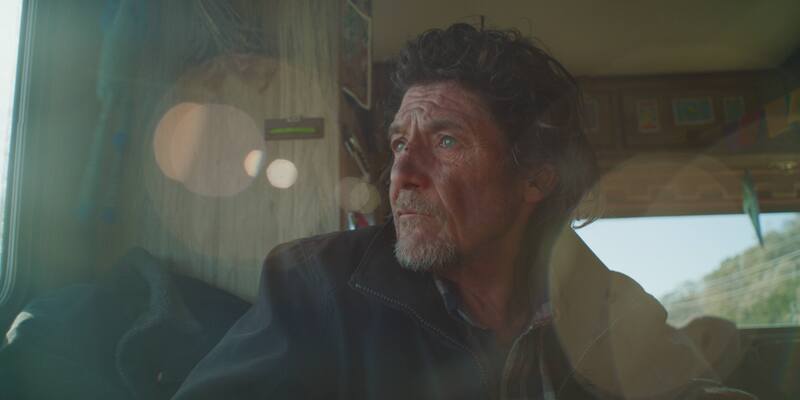
The journey gives all of that somewhere to go. Xavi and Marcel travel through the American West in an aging Winnebago on their way to Colorado for psychedelic-assisted addiction treatment, and the RV becomes an appropriately imperfect vehicle for the trip. It breaks down, demands constant attention, and forces everyone into close quarters, while the landscapes outside keep changing from one state to another. The metaphor is obvious, but Joaquim doesn't hammer it home until every problem becomes a statement about recovery.
That restraint carries over. MÀQUINA could easily have turned psychedelic-assisted therapy into the hook, especially because it's the thing most likely to make people unfamiliar with the process curious. Instead, the treatment becomes part of a much larger conversation about whether someone is genuinely prepared to change. No miracle in Colorado can erase family history, undo years of dependency, or suddenly make everyone understand one another. Whatever opportunity the treatment creates still leaves these men responsible for what happens afterward.
That matters because the film spends far more time on the human consequences of addiction than on the mechanics of treating it. Xavi and Marcel talk through behavior, responsibility, childhood experiences, resentment, and their relationships with other people, and some of the strongest moments arrive when those conversations refuse to settle. Someone can understand why he behaved harmfully without that explanation excusing it. Someone can be hurt by another person's actions while also having caused pain themselves, and MÀQUINA is more than happy to allow those contradictions to remain in the room.
Joaquim's experience as a cinematographer is evident without making the documentary feel like a visual experiment. His camera captures the American West beautifully, but the scenery doesn't become just a counterweight to the harder stuff. Long stretches of road, open land, and the stops along the way give the family room to exist outside the treatment center, while smaller images inside the Winnebago often say just as much. The film notices people waiting, cleaning, sitting silently, or simply looking exhausted, moments that aren't dramatic enough to become highlights but matter because addiction doesn't disappear during the hours between major conversations.
His decision to embed himself with his family also changes how those moments play out. No traditional crew was there to cover Xavi and Marcel, and the camera stayed long enough that its presence became part of everyday life rather than something forcing itself in whenever an important conversation began. You can feel the benefit of that. People aren't constantly turning to the filmmaker to translate their emotions, and Joaquim lets exchanges continue beyond the point where a more conventional documentary might cut to a clearer explanation.
MÀQUINA occasionally becomes so committed to preserving the natural shape of these conversations that the 90-minute runtime feels heavier than it needs to be. There’s a similar frustration and some ideas circle back several times, and while repetition is certainly part of living through addiction, reproducing that experience isn't always the same thing as making it as revealing. Some sections could have been tightened with another pass without losing the sense that we're listening to people think through issues rather than deliver prepared statements.
Joaquim’s closeness to everyone involved creates another obstacle. His compassion is essential to the film, but it can also make MÀQUINA hesitant to push against some of the explanations being offered. Understanding the circumstances that shaped destructive behavior is valuable. At times, I wanted the documentary to sit with the difference between explaining an action and accepting responsibility for it a little longer. That doesn't require an outside narrator passing judgment, but a few conversations feel as though they're approaching a harder question only to move elsewhere before completely confronting it.
The absence of those confrontations may frustrate some viewers, but it also fits what Joaquim is trying to document. Recovery isn't presented as a story with a perfectly timed breaking point followed by a rebuilding process. People recognize things about themselves and still fall into familiar thinking. They say something insightful and later contradict it. Progress exists alongside resistance, and hope isn't treated as evidence that everything has been repaired.
Watching this family try to separate love from enabling is also incredibly effective. Codependency can sound like an abstract psychological term until MÀQUINA places it inside the everyday exchanges, where helping someone and protecting them can begin looking all too similar. Joaquim doesn't position himself outside of that struggle. His presence reminds us that the filmmaker is another family member trying to determine where support ends and self-preservation begins.
The documentary's refusal to sensationalize addiction is ultimately one of its greatest assets. There are painful disclosures and difficult memories here, but Joaquim doesn't organize them around shock or trying to treat his family as evidence in an argument. Xavi and Marcel remain complicated people capable of tenderness, humor, avoidance, insight, and frustration, sometimes within a very short span of time. MÀQUINA respects them enough to leave those contradictions intact rather than flattening either into the addict audiences are supposed to pity or condemn.
Joaquim had already established himself as a cinematographer, including work that reached Cannes in 2026, but MÀQUINA reveals a different kind of control behind the camera. His feature directorial debut works as well as it does because he's willing to surrender some of that control and accept that his family's story won't align itself into a perfect recovery timeline. The resulting film can be repetitive and occasionally too reluctant to challenge the people closest to it. That same intimacy gives it moments an outside filmmaker could never capture.
MÀQUINA doesn't leave the road with addiction filled with some miraculous solution, nor does it argue that one form of treatment holds an answer everyone else has missed. It watches people attempt something difficult while carrying years of history, and it recognizes that deciding to change and actually changing are two very different achievements. The documentary could be tighter in places, but its patience, confidence, and willingness to remain inside family dynamics give the journey enough weight to justify taking the slower road.
Please visit https://linktr.ee/overlyhonestr for more reviews.
You can follow me on Letterboxd, Instagram, Twitter, and YouTube. You can also find my social media accounts on most platforms by searching for 'Overly Honest Reviews'.
I’m always happy to hear from my readers; please don't hesitate to say hello or send me any questions about movies.
DISCLAIMER:
At Overly Honest Movie Reviews, we value honesty and transparency. Occasionally, we receive complimentary items for review, including DVDs, Blu-rays, CDs, Vinyl Records, Books, and more. We assure you these arrangements do not influence our reviews, as we are committed to unbiased, sincere evaluations. We aim to help you make informed entertainment choices regardless of our relationship with distributors or producers.
Amazon Affiliate Links:
This site also contains Amazon affiliate links. If you purchase through these links, we may receive a commission. This affiliate arrangement does not affect our commitment to honest reviews and helps support our site. We appreciate your trust and support as you navigate these links.


Happy
0 %

Sad
0 %

Excited
0 %

Sleepy
0 %

Angry
0 %

Surprise
0 %
 0
0
 0
0


Average Rating