A Strange, Uneven, yet Fascinating Kung Fu Odyssey
Read Time:6 Minute, 17 Second
MOVIE REVIEW
The Himalayan (Mi zong sheng shou)
 –
– 

Genre: Martial Arts, Action, Drama
Year Released: 1976
Runtime: 1h 57m
Director(s): Huang Feng
Writer(s): Ni Kuang
Cast: Angela Mao, Sing Chen, Tao-Liang Tan, Sammo Hung, Jackie Chan, Yuen Biao
Where to Watch: available now, order your copy here: www.mvdshop.com or www.amazon.com
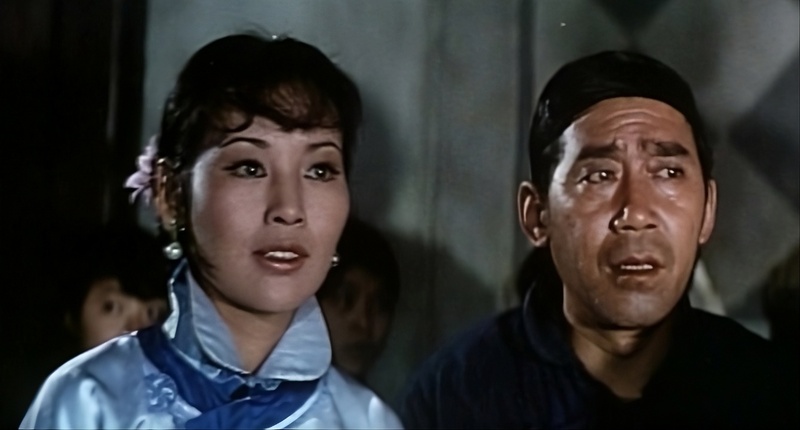
RAVING REVIEW: A lot of martial arts films from the mid-70s survive almost entirely on choreography. The plots are functional, the characters exist mainly to move from one fight to the next, and the stakes rarely matter beyond revenge. THE HIMALAYAN does something unusual. Even when the film stumbles, and it absolutely does at times, there’s a genuine attempt to create scale, atmosphere, and texture beyond the expected framework of a standard kung fu film. Huang Feng approaches the material less as nonstop exploitation and more as an adventure drama that occasionally erupts into violent physical punishment.
The opening stretch alone separates the film from many of its contemporaries. Before the revenge mechanics kick in, THE HIMALAYAN spends a surprising amount of time simply existing within its setting. Ceremonies, celebrations, competitions, dancing, and environmental photography dominate the early sections, giving the film an identity rooted in location and mood rather than just action escalation; whether every detail is historically accurate matters less than the effect it creates.
That ambition becomes one of the film’s greatest strengths. The Himalayan landscapes add something tangible to the experience. Even decades later, the scenery gives the film an unusual sense of openness compared to many confined studio-shot martial arts pictures from the same period. The mountain terrain creates an almost mythic atmosphere around the story, particularly once exile, spiritual discipline, and physical endurance become central to the narrative.
Angela Mao’s presence also gives the film a different level of intrigue than many male-driven kung fu films of the era. She carries an intensity that rarely needs exaggeration. Even when the screenplay sidelines her for stretches longer than it probably should, Mao maintains emotional authority over the film whenever she’s onscreen. Her version of Ching Lan isn’t simply motivated by revenge in the broad sense of exploitation. There’s visible humiliation, grief, betrayal, and exhaustion weighing on the character throughout the story. The film puts her through relentless physical and emotional suffering before finally allowing her retaliation.
THE HIMALAYAN spends far more time focused on political manipulation, betrayal, inheritance schemes, and the increasingly cruel behavior of Chen Sing’s villainous Kao Chu than the advertising might suggest. In many ways, Chen Sing becomes the film’s dominant screen presence for large portions of the runtime. Fortunately, he’s compelling enough to justify it. Kao Chu isn’t portrayed as a charming rogue or tyrant. He’s vicious, paranoid, opportunistic, and cruel from the beginning, creating a constant feeling of instability around nearly every interaction.
The film’s brutality occasionally catches you off guard because Huang Feng doesn’t romanticize much of the violence. Characters are beaten, framed, manipulated, drowned, clawed, and psychologically tormented in ways that feel harsher than the adventure initially suggests. Even some of the training sequences carry an unexpected edge. Ironically, those extended training scenes are both one of the film’s defining strengths and one of its pacing problems. There’s something admirable about how committed THE HIMALAYAN becomes to the physicality of transformation. The training doesn’t look glamorous. It looks painful, repetitive, humiliating, and exhausting. You understand why the characters emerge changed afterward. At the same time, the movie occasionally lingers on those sequences so long that the momentum noticeably slows.
Tao-Liang Tan brings a sincerity to Hsu Chin Kang, and the relationship dynamic between him and Mao feels more grounded than expected. The movie never turns romantic melodrama into the central focus. Yet, there’s enough connection there that the characters’ suffering carries actual weight instead of functioning purely as narrative obligation before the showdown.
Sammo Hung’s involvement in the choreography is also noticeable during the combat sequences. The fights feel physical rather than overly stylized, emphasizing impact and movement over endless flashy technique demonstrations. When the film reaches its climactic confrontations, the action lands harder because the movie spent so much time building toward them.
You can sense Hong Kong martial arts cinema evolving around it. Parts of the movie still belong firmly to the older school of revenge-driven wuxia storytelling. At the same time, other elements hint at the more character-driven, visually adventurous direction the genre would increasingly explore in later years. Even brief appearances by figures like Jackie Chan and Yuen Biao now carry a retrospective fascination, given what Hong Kong cinema would soon become.
The film’s biggest weakness ultimately comes from imbalance. The first half spends so much time establishing the betrayal and atmosphere that some viewers may grow impatient as they wait for the story to ignite. Meanwhile, the second half occasionally rushes resolutions after investing heavily in suffering and endurance. There’s also a version of this film in which Angela Mao becomes even more central throughout, rather than disappearing into the background during certain stretches.
THE HIMALAYAN remains far more memorable than many martial arts films that contain more action. The scenery matters. The physical exhaustion matters. The cruelty matters. Most importantly, Angela Mao’s eventual reemergence as a force of retaliation feels earned because the movie spent so long dragging her character through despair before allowing her strength to surface fully.
THE HIMALAYAN may not rank alongside the absolute top tier of 70s Hong Kong martial arts cinema. But it’s exactly the kind of ambitious, slightly chaotic, visually distinctive genre film that becomes more interesting with time. It reaches beyond revenge mechanics toward something more spiritual and melancholic. Even when the pacing drifts or the structure loses focus, the film’s sincerity and visual ambition keep pulling it back from becoming forgettable.
Bonus Materials:
O-ring slip case with new artwork by Aurelio Oorenzo
2K restoration from the original negative
Remastered original Mandarin monoaural soundtrack
Newly translated English subtitles
Optional English Mono Soundtrack
Audio Commentary with Asian Cinema Expert Frank Djeng
Image Gallery
Reversible sleeve with original Hong Kong poster artwork
Please visit https://linktr.ee/overlyhonestr for more reviews.
You can follow me on Letterboxd, Instagram, Twitter, and YouTube. My social media accounts can also be found on most platforms by searching for 'Overly Honest Reviews'.
I’m always happy to hear from my readers; please don't hesitate to say hello or send me any questions about movies.
[photo courtesy of 88 FILMS, MVD ENTERTAINMENT]
DISCLAIMER:
At Overly Honest Movie Reviews, we value honesty and transparency. Occasionally, we receive complimentary items for review, including DVDs, Blu-rays, CDs, Vinyl Records, Books, and more. We assure you that these arrangements do not influence our reviews, as we are committed to providing unbiased and sincere evaluations. We aim to help you make informed entertainment choices regardless of our relationship with distributors or producers.
Amazon Affiliate Links:
Additionally, this site contains Amazon affiliate links. If you purchase through these links, we may receive a commission. This affiliate arrangement does not affect our commitment to honest reviews and helps support our site. We appreciate your trust and support as you navigate these links.


Happy
0 %

Sad
0 %

Excited
100 %

Sleepy
0 %

Angry
0 %

Surprise
0 %
 1
1
 0
0


Average Rating