Healing Arrives One Track at a Time
Read Time:6 Minute, 15 Second
MOVIE REVIEW
Sara Bareilles: Good Grief
 –
– 

Genre: Documentary, Music
Year Released: 2026
Runtime: 1h 34m
Director(s): Josh Alexander
Where to Watch: shown at the 2026 Tribeca Festival
RAVING REVIEW: SARA BAREILLES: GOOD GRIEF doesn’t approach grief as just an emotional arc, which is exactly why its most peaceful moments land with so much force. Josh Alexander’s documentary follows Sara Bareilles as she returns to the recording studio for the first time in seven years, bringing with her a new collection of songs shaped by personal loss, creative uncertainty, and the courage it takes to share pain before you’ve figured out how to manage it. The film isn’t built around a famous artist explaining herself from a safe distance. It stays close to the work, the room, the conversations, and the people trusted enough to be present while something takes shape.
That choice gives SARA BAREILLES: GOOD GRIEF a different texture than the usual musician portrait. No talking heads interrupt the story or push the audience through a career timeline, and there’s no need to pause for a biography of Bareilles’ accomplishments. Her place in contemporary music is already clear, from the reach of “Love Song” and “Brave” to her work on WAITRESS, GIRLS5EVA, INTO THE WOODS, and beyond. Alexander is less interested in summing up her public life than observing what happens when someone known for giving language to other people’s feelings has to sit with feelings that are still raw for her.
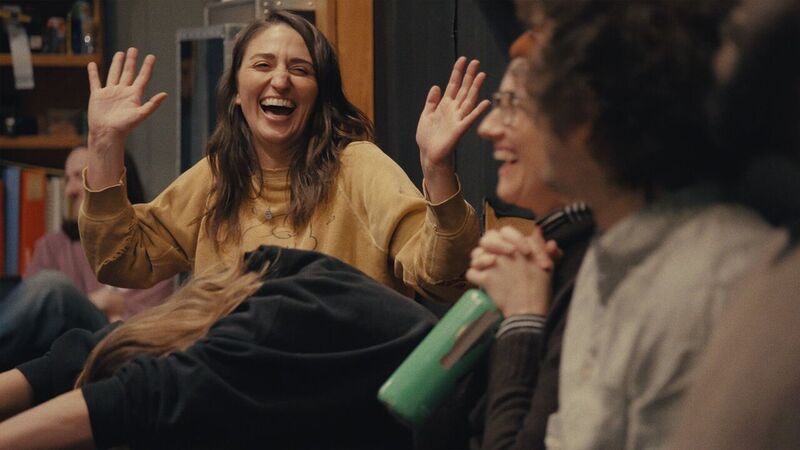
Shot at Dreamland Recording Studios in Hurley, New York, a former church, the film finds a physical space for the kind of work Bareilles and her collaborators are doing. Dreamland becomes a place of permission. People gather, stay, listen, sing, laugh, revisit loss, and make something together without pretending the process is simple. The music doesn’t erase grief. It gives grief somewhere to go.
Bareilles is the center of the film, but one of its smartest intuitions is recognizing that this isn’t a solo act. Misty Boyce, Butterfly Boucher, Solomon Dorsey, Charley Drayton, Rob Moose, and Jonathan Low aren’t treated as interchangeable studio professionals. They bring memory, humor, sensitivity, restraint, and their own histories into the room. The documentary gets a lot of mileage from watching people who know how to listen. Not just listen for the right note, but listen for what someone is trying to say before everything has been formed.
That ensemble quality keeps the film from becoming too self-contained. Bareilles’ grief is personal, but SARA BAREILLES: GOOD GRIEF understands that sorrow often loosens something in everyone nearby. A conversation can begin with one person’s loss and reveal how much others have kept tucked away. That communal vibe gives the documentary its heart. The film isn’t only about an album being made. It’s about a group of artists creating enough safety for honesty to become possible.
The songs themselves become the film’s most revealing material. Bareilles has always had a gift for writing direct emotion without flattening it, and that gift becomes especially important here. Songs like “Forever,” “Home,” “Hands Off My Body,” “Capsize Me,” and “Wind is the Weather” suggest a record shaped by mourning, bodily awareness, memory, resistance, and the act of remaining open after being hurt. The film doesn’t need to spell out the origin of every word. It lets the recording sessions carry that, allowing the viewer to feel how a song changes once it moves from notebook or piano into a shared performance.
There are places where SARA BAREILLES: GOOD GRIEF feels protective. The documentary invites the audience into vulnerable territory, but it doesn’t always push into the more complicated edges of grief, fame, or artistic responsibility. At times, it seems to step back just as a harder question begins to surface. That restraint keeps the film from feeling invasive, for a documentary about transforming pain into art, there are moments where a little more friction might’ve made the emotional honesty cut deeper. Although that gentleness never feels dishonest. Bareilles isn’t presented as someone who has conquered grief or arrived at some newfound or profound wisdom. She’s allowed to be thoughtful, funny, tired, grateful, uncertain, and present. The film’s most compelling idea is that grief doesn’t only isolate people. Under the right conditions, it can also create connection, not because pain is noble, but because telling the truth about it permits others to stop pretending they’re untouched.
The documentary never loses sight of the fact that music is work, even when it’s emotional. The band shapes arrangements, tries ideas, adjusts, reacts, and returns to the material with care. Jonathan Low’s role as engineer and producer becomes part of that trust, helping preserve the intimacy of the room without making it feel sealed off from the audience. What emerges is a portrait of creation as something relational and often exhausting.
SARA BAREILLES: GOOD GRIEF works because it doesn’t mistake vulnerability for confession alone. It understands vulnerability as a practice, something built over time, with attention and the willingness to let other people witness you before you’ve found the solutions you’re looking for. Bareilles’ return to the studio becomes a return to community, and the film’s hope comes from that more than from any statement about healing. It’s not saying music fixes grief. It’s saying music can help people sit inside what still hurts.
By the end, the documentary feels less like a portrait and more like a record of people making space for one another. It’s tender without being empty, personal without feeling closed off, and hopeful without pretending hope comes easily. SARA BAREILLES: GOOD GRIEF finds its strength in presence. It watches an artist bring broken pieces into a room and trusts the audience to understand the bravery of that act. The result is a moving documentary about loss, friendship, and the relief of realizing that even the most painful songs don’t have to be sung alone.
Please visit https://linktr.ee/overlyhonestr for more reviews.
You can follow me on Letterboxd, Instagram, Twitter, and YouTube. My social media accounts can also be found on most platforms by searching for 'Overly Honest Reviews'.
I’m always happy to hear from my readers; please don't hesitate to say hello or send me any questions about movies.
[photo courtesy of GROUP EFFORT FILMS, NAKED EDGE FILMS]
DISCLAIMER:
At Overly Honest Movie Reviews, we value honesty and transparency. Occasionally, we receive complimentary items for review, including DVDs, Blu-rays, CDs, Vinyl Records, Books, and more. We assure you that these arrangements do not influence our reviews, as we are committed to providing unbiased and sincere evaluations. We aim to help you make informed entertainment choices regardless of our relationship with distributors or producers.
Amazon Affiliate Links:
Additionally, this site contains Amazon affiliate links. If you purchase through these links, we may receive a commission. This affiliate arrangement does not affect our commitment to honest reviews and helps support our site. We appreciate your trust and support as you navigate these links.


Happy
0 %

Sad
0 %

Excited
100 %

Sleepy
0 %

Angry
0 %

Surprise
0 %
 1
1
 0
0

Average Rating