The Apocalypse Starts at Home
Read Time:9 Minute, 28 Second
MOVIE REVIEW
The Glorious Dead
 –
– 

Genre: Horror, Dark Comedy, Apocalyptic Thriller
Year Released: 2026
Runtime: 1h 21m
Directors: John Adams, Toby Poser
Writers: John Adams, Toby Poser
Cast: Toby Poser, Zelda Adams, London May, John Adams, Lulu Adams, Judith Roberts
Where to Watch: shown at the 2026 Fantasia Film Festival
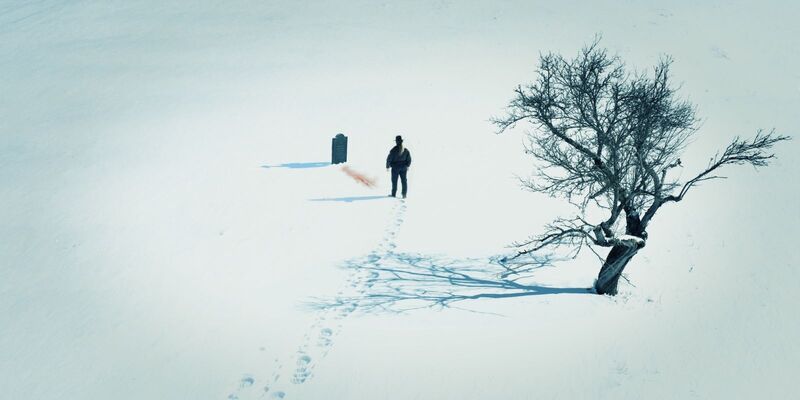
RAVING REVIEW: THE GLORIOUS DEAD begins where belief stops being abstract and becomes anatomy. Blood pours from the taps, the earth refuses to keep its dead imprisoned, and creatures move through the woods as though generations of sermons, resentments, and fantasies of punishment have finally learned how to walk. This isn’t simply Hell arriving on earth in small-town America. It’s small-town America discovering that Hell has been built from its own philosophies, its own divisions, and its own certainty about who deserves to suffer.
John Adams and Toby Poser aren’t merely imagining the end of the world. They’re asking what the end might look like after culture has spent decades practicing the ideas, preaching them, commercializing them, and using their promise as a weapon. Apocalyptic thinking has always carried a strange contradiction. It presents destruction as something to fear while also offering certain believers the comfort of imagining themselves spared, vindicated, or proven correct. THE GLORIOUS DEAD tears away that comfort. Judgment arrives without respecting the boundaries people constructed around it, and damnation becomes far less appealing once it’s no longer reserved for strangers.
The film’s small-town setting is essential to that idea. Global catastrophe can become impersonal, reduced to far-away cities, collapsing monuments, and crowds without faces. Here, the apocalypse unfolds among neighbors. Every disappearance leaves an identifiable absence. Every eruption of fear travels through relationships that existed before the first sign of blood. The collapse isn’t happening somewhere else to people who can be converted into statistics. It’s entering homes, contaminating the water, crossing property lines, and exposing the limits of a community that once believed familiarity was the same thing as unity.
A sheriff and her deputy become the guides through this reality, initially approaching the impossible developments as though it might still fit inside of something recognizable. Their authority depends on an agreement that evidence can be gathered, witnesses can be questioned, and chaos can eventually be assigned a cause. The more the day deteriorates, the more those assumptions become useless. You can’t restore order when nature, death, and belief have stopped obeying the same laws. Their journey gives the movie a stronger emotional and intellectual foundation than conventional survival storytelling. The question isn’t only whether they can endure what’s happening. They must decide what responsibility means after the institutions surrounding them have lost their power. A badge can establish authority within a town that’s behaving how it should, but it can’t explain why the dead are rising or prevent fear from transforming neighbors into threats.
That loss of certainty runs through nearly every part of the film. People search for explanations because explanations offer the illusion of control. Religion, contagion, punishment, invasion, and conspiracy all become possible frameworks for understanding what has happened. Each interpretation also carries the danger of focusing on a target. Once terror takes hold, identifying someone to fear can feel easier than admitting that no one understands the rules. This is where THE GLORIOUS DEAD becomes particularly unsettling. The apocalypse doesn’t introduce everything ugly about the town and its residents. It reveals what was already waiting beneath the surface. Suspicion, resentment, moral superiority, and the desire to separate the worthy from the condemned existed long before anything crawled out from the woods. The supernatural crisis strips away the things that once made those impulses appear respectable.
The film isn’t traditional body horror, yet its ideas are repeatedly expressed through flesh. Bodies leak, break, return, and resist the meanings people attempt to impose upon them. Human anatomy becomes unstable, skin becomes something else altogether, while creatures appear assembled from forms that should never have been forced together. The effect isn’t centered on the fear of one person transforming into something unrecognizable. It’s broader and more disturbing. An entire community discovers that the body itself is no longer a shield.
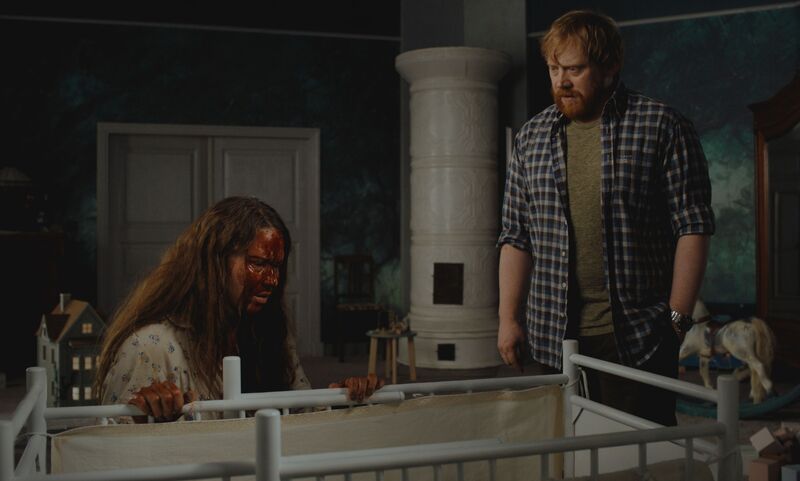
Blood emerging from the plumbing is one of the film’s most effective images because it corrupts something ordinary, something with expectations. Water systems connect homes invisibly, carrying the same substance into kitchens, bathrooms, and public buildings. Replacing water with blood turns infrastructure into circulation. The town begins to resemble a single diseased body, with every faucet opening another wound.
The dead rising carries a related violation. Burial is supposed to create a boundary between life and death, allowing grief to become memory and the living to continue. When the ground refuses to preserve that separation, death loses its finality without becoming hopeful. The returned bodies don’t offer reunion. They represent history refusing to remain contained.
The practical effects retain the family’s handmade personality. Flesh, blood, fabric, dirt, masks, and creature construction occupy the same rough physical world as the town itself. Nothing appears too pristine to touch. The imperfections make the horrors more convincing because they look as though they were dragged from the surrounding earth rather than delivered from a separate effects department. Their resourcefulness has always been part of the Adams family’s appeal, but THE GLORIOUS DEAD shows how much more controlled that resourcefulness has become. Earlier films often carried the excitement of artists testing the limits of what they could accomplish together. That experimental quality remains, though the choices now feel guided by a clearer understanding of tone and visual consequence. They know when to show the creature, when to reduce it to movement in the bushes.
That growing vision belongs to the entire Adams family. Toby Poser and John Adams shape the film’s apocalyptic vision as writers and directors. Still, THE GLORIOUS DEAD carries the fingerprints of Toby, John, Zelda, and Lulu in ways that reach beyond any individual credit. Zelda brings the fierce instinct and physical confidence that have continued sharpening with every project. At the same time, Lulu’s presence strengthens the sense that each film is part of an ongoing family conversation rather than an isolated production. Together, they haven’t simply developed a style. They’ve created a shared language built from music, performance, handmade effects, dark humor, and an emotional trust that allows them to push one another toward stranger and more ambitious territory without losing the intimacy that made their earliest work so compelling.
The humor is just as carefully placed. This is a dark film, but it isn’t humorless, and that difference matters more than you could know. Comedy emerges from disbelief, exhaustion, awkward reactions, and the absurdity of people attempting to maintain normal behavior after normality has become impossible. The characters occasionally laugh because the mind needs somewhere to release pressure before it breaks. Those moments don’t undermine the horror. They make the responses feel recognizably human. Terror can produce anger, inappropriate jokes, numbness, irritation, or bursts of energy. THE GLORIOUS DEAD understands that a funny moment can exist inside genuine despair without making the despair less real.
The balance also reflects the family’s growing confidence. HELL HOLE leaned further into creature-feature comedy and the pleasures of larger-scale chaos. MOTHER OF FLIES moved in the opposite direction, confronting illness and mortality with a painful intimacy. This film draws from both approaches. It has the momentum and playfulness of the former, along with the emotional darkness and symbolic weight of the latter.
Its maturity lies in how comfortably it holds contradictions. The story can be entertaining without making its anger disposable. It can be politically charged without reducing every character to a position in an argument. It can approach body horror without becoming defined by transformation, and it can invoke religious imagery without offering a simple rejection of faith.
The score is indispensable to that balance. H6LLB6ND6R’s music doesn’t sit behind the images as decoration. It moves through the movie like another form of blood circulating through its veins, giving the chaos a pulse before the characters can recognize it. At times it feels aggressive enough to push the town toward destruction. Elsewhere, it takes on a ritualistic force, as though the apocalypse has arrived with its own liturgy. Music has long been woven into the family’s creative identity, particularly in HELLBENDER, where it expressed rebellion, inheritance, and awakening. Here, it becomes the sound of escalation. The score understands that the film is frightening, angry, strange, and sometimes exhilarating. Rather than choosing one emotion, it allows all of them to collide.
THE GLORIOUS DEAD represents both a return and an advancement. After expanding their working process with HELL HOLE, they have returned to a more intimate form of family filmmaking without surrendering what that larger experience taught them. The result feels closer to the handmade immediacy of THE DEEPER YOU DIG and HELLBENDER, but the control belongs to artists who have continued refining their language with every project. That progression has become one of the most rewarding parts of following their work. Each film exposes another facet of what this family can create together. THE DEEPER YOU DIG found supernatural horror inside grief. HELLBENDER transformed inheritance and adolescence into feral mythology. WHERE THE DEVIL ROAMS expanded their visual ambition. HELL HOLE tested their identity within a larger production, while MOTHER OF FLIES turned personal pain into ritual.
THE GLORIOUS DEAD takes everything they have learned and uses it to build an apocalypse that could belong to no one else. It is fun, grotesque, furious, alive, and much darker than its moments of humor initially suggest. Its most troubling idea isn’t that monsters may be waiting for society to collapse. It’s that society has spent so long defining who deserves Hell that it may no longer recognize the moment it creates one.
Please visit https://linktr.ee/overlyhonestr for more reviews.
You can follow me on Letterboxd, Instagram, Twitter, and YouTube. You can also find my social media accounts on most platforms by searching for 'Overly Honest Reviews'.
I’m always happy to hear from my readers; please don't hesitate to say hello or send me any questions about movies.
[photo courtesy of YELLOW VEIL PICTURES, WONDER WHEEL PRODUCTIONS, MOON DOG PICTURES]
DISCLAIMER:
At Overly Honest Movie Reviews, we value honesty and transparency. Occasionally, we receive complimentary items for review, including DVDs, Blu-rays, CDs, Vinyl Records, Books, and more. We assure you that these arrangements do not influence our reviews, as we are committed to providing unbiased and sincere evaluations. We aim to help you make informed entertainment choices regardless of our relationship with distributors or producers.
Amazon Affiliate Links:
Additionally, this site contains Amazon affiliate links. If you purchase through these links, we may receive a commission. This affiliate arrangement does not affect our commitment to honest reviews and helps support our site. We appreciate your trust and support as you navigate these links.


Happy
0 %

Sad
0 %

Excited
0 %

Sleepy
0 %

Angry
0 %

Surprise
0 %
 0
0
 0
0


Average Rating