Paranoia Becomes Its Own Affair
Read Time:9 Minute, 18 Second
MOVIE REVIEWS
The Magnificent Cuckold (Il magnifico cornuto)
 –
– 


Genre: Comedy, Drama
Year Released: 1964, 2026 Blu-ray
Runtime: 2h 4m
Director(s): Antonio Pietrangeli
Writer(s): Diego Fabbri, Ruggero Maccari, Ettore Scola, Stefano Strucchi
Cast: Ugo Tognazzi, Claudia Cardinale, Bernard Blier, Michèle Girardon, Paul Guers, Gian Maria Volonté
Where to Watch: available now; order your copy here: www.radiancefilms.co.uk, www.mvdshop.com, or www.amazon.com
RAVING REVIEW: Andrea Artusi cheats on his wife and almost immediately discovers that adultery itself bothers him considerably less than the possibility that she might be capable of doing the same thing. That hypocrisy gives THE MAGNIFICENT CUCKOLD its funniest material, but Antonio Pietrangeli isn't satisfied with simply watching a guilty husband get a taste of his own medicine. Andrea's affair doesn't destroy his marriage. His imagination nearly does that for him.
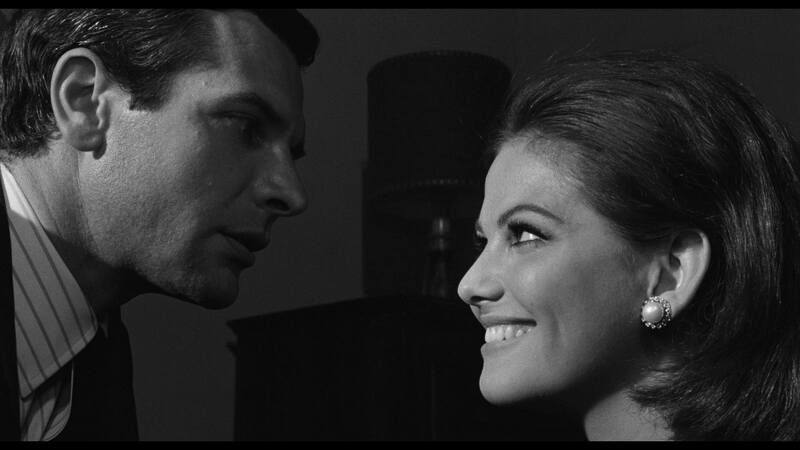
Ugo Tognazzi plays Andrea as a successful businessman comfortably settled into marriage with Maria Grazia, played by Claudia Cardinale. He has money, status, friends, an attractive wife, and apparently very little reason to disrupt any of it. Then an opportunity presents itself, Andrea strays, and something strange happens inside his head once he realizes how surprisingly easy deception can be. If he can cheat, why couldn't Maria Grazia?
That question begins reasonably enough before Andrea turns it into an obsession. Suddenly every man looking at his wife represents a potential threat, every unexplained detail becomes evidence, and behavior he previously considered harmless starts taking on enormous significance. Andrea doesn't need proof because suspicion eventually becomes much more satisfying than reality.
Tognazzi is terrific at making that deterioration funny without turning Andrea into a complete cartoon. His paranoia gets increasingly ridiculous, but the insecurity underneath it remains recognizable. He watches other men, watches his wife, watches how people lie to their spouses, and slowly constructs an entire alternate marriage in his head where he's constantly being humiliated.
The irony never leaves him. Andrea's terror isn't really that adultery exists; he's already established that he's perfectly willing to participate in it. What horrifies him is the idea that Maria Grazia might possess the same freedom he quietly grants himself.
That double standard gives the movie plenty to work with beyond ordinary bedroom farce. THE MAGNIFICENT CUCKOLD arrived during a period when Italian comedy was particularly good at using selfish, foolish men to examine social rules everyone seemed willing to follow until those rules became inconvenient. Andrea sees the affairs taking place around him and recognizes the dishonesty immediately, yet somehow believes his own marriage should operate under an entirely different set of expectations. Pietrangeli doesn't hammer that contradiction into the ground. He lets Andrea embarrass himself.
That's important because two hours of escalating jealousy could become unbearable if the movie demanded we treat every suspicion as an actual mystery. Whether Maria Grazia is being unfaithful matters far less than what Andrea is willing to imagine, and his fantasies become increasingly elaborate expressions of his own guilt.
Those sequences are where THE MAGNIFICENT CUCKOLD gets especially playful. Andrea doesn't merely picture his wife cheating in some vague way. His mind stages scenarios with enough detail and theatricality that they begin revealing more about him than they ever could about her.
Claudia Cardinale is essential to making those fantasies work. Maria Grazia is beautiful enough that Andrea can easily convince himself every man must desire her. Still, Cardinale doesn't play the character as some passive object whose only purpose is to provoke jealousy. There's amusement, intelligence, frustration, and eventually a growing awareness that something inside her husband has gone seriously off course.
She also has the difficult job of playing more than one version of Maria Grazia. There's the actual woman Andrea married, and then there's the increasingly sexualized and untrustworthy version he manufactures whenever insecurity takes over. Pietrangeli uses that separation cleverly, allowing Cardinale to move between reality and Andrea's imagination without always announcing the transition immediately.
The result can become surprisingly strange for a comedy that otherwise seems grounded in wealthy social circles, marital gossip, parties, and domestic arguments. Andrea's fantasies exaggerate situations until reality starts to feel unstable, especially because he desperately wants confirmation of something he supposedly fears discovering.
Tognazzi understands that contradiction. Andrea's jealousy has an almost exciting edge, as though imagining betrayal gives him something dramatic to pursue after his own affair has made ordinary married life impossible to view innocently again.
That's one reason the movie remains interesting even when it isn't especially hilarious. THE MAGNIFICENT CUCKOLD isn't built around rapid-fire jokes or enormous comic set pieces. Much of the humor comes from watching a man repeatedly interpret neutral information in the worst possible way and then behave as though everybody else should understand the logic.
Tognazzi's reactions carry a lot of those scenes. Andrea can move from smug confidence to wounded disbelief with almost no evidence connecting the two, and his determination to investigate his own fantasies becomes increasingly pathetic. The further he goes, the more obvious it becomes that Maria Grazia isn't the person he distrusts most. It's himself.
The supporting cast helps expand that idea into the wider social environment. Bernard Blier, Michèle Girardon, Paul Guers, and Gian Maria Volonté move through a world where affairs aren't exactly shocking discoveries, and everyone seems to understand more about marital dishonesty than anyone publicly admits. Andrea begins noticing that hypocrisy everywhere because he's suddenly participating in it himself.
That wider perspective keeps the movie from becoming entirely about one jealous husband. Pietrangeli is also poking at respectable people whose private behavior bears very little resemblance to the standards they expect everyone else to maintain.
Some sections, though, start to feel repetitive. Andrea suspects something, reacts badly, finds another reason for suspicion, and pushes himself further into paranoia. The variations are often amusing, but at 124 minutes the movie occasionally spends more time demonstrating his obsession than deepening it.
A slightly tighter version could have preserved the increasingly irrational behavior while giving some later sequences more impact. Once Andrea's psychological pattern becomes clear, not every additional misunderstanding reveals something new.
Maria Grazia could also have been given more space outside Andrea's perspective. Cardinale makes her memorable anyway, but much of what we understand about her is filtered through what Andrea fears, expects, or imagines. The movie is intentionally examining male jealousy, yet allowing her interior life to push back more forcefully against his version of events might have sharpened the satire even further.
Still, Pietrangeli never loses sight of how ridiculous Andrea's position is. The man who violated the rules becomes obsessed with enforcing them, and the person responsible for introducing distrust into the marriage somehow appoints himself its victim.
Visually, the movie is far more elegant than Andrea deserves. Armando Nannuzzi's black-and-white photography gives homes, clubs, streets, clothing, and faces an immaculate sophistication that contrasts nicely with how childish Andrea's behavior becomes. The more attractive his life looks, the more ridiculous it seems that he's dismantling it over scenarios he keeps inventing.
Maurizio Chiari's production design and Armando Trovajoli's music add to that polished surface. This is a world of people who appear composed and successful while hiding affairs, resentments, insecurities, and petty competition underneath, which makes Andrea less exceptional than he'd probably like to believe.
Radiance's Blu-ray is particularly valuable because the new 4K restoration gives that visual sophistication room to breathe. The restored monochrome image handles facial detail, clothing, interiors, and Nannuzzi's lighting beautifully without making the film look unnaturally scrubbed clean. The uncompressed mono presentation also keeps the dialogue and Trovajoli's score clear without trying to modernize material that doesn't need modernizing.
The supplements are substantial without distracting from the feature. An interview with film scholar Richard Dyer and a visual essay by Rémi Fournier Lanzoni provide additional context around Pietrangeli and Italian cinema. At the same time, the alternate color material offers an interesting look at another element of the presentation. The improved subtitle translation is especially welcome for a comedy where tone and conversational nuance matter more than broad physical jokes. THE MAGNIFICENT CUCKOLD ultimately works because Andrea's punishment doesn't require some enormous outside force. His own mind is perfectly capable of handling the job.
He cheats, realizes what cheating makes possible, and then becomes incapable of enjoying the marriage he was supposedly trying to preserve. Every glance becomes suspicious, every absence becomes evidence, and every attractive man becomes competition because Andrea can no longer believe in a standard of fidelity he has already broken himself.
Pietrangeli turns that hypocrisy into something funny, uncomfortable, and occasionally sad. THE MAGNIFICENT CUCKOLD runs longer than its basic idea really requires, and Maria Grazia deserves a little more room outside her husband's imagination. Still, Tognazzi and Cardinale give the movie enough personality to keep Andrea's unraveling entertaining. Andrea spends most of the film searching for another man who might ruin his marriage. The joke is that he never really needed one.
Bonus Materials:
4K restoration of the film from the original camera negative by the Cineteca di Bologna in collaboration with Compass Film and Studio Cine
Uncompressed mono PCM audio
New interview with Italian film expert Richard Dyer
New visual essay by Italian cinema professor Rémi Fournier Lanzoni
Alternative color sequences
Newly improved English subtitle translation
Reversible sleeve featuring original and newly commissioned artwork by Time Tomorrow
Limited edition booklet featuring new writing by film critic Phuong Le and archival writing
Please visit https://linktr.ee/overlyhonestr for more reviews.
You can follow me on Letterboxd, Instagram, Twitter, and YouTube. You can also find my social media accounts on most platforms by searching for 'Overly Honest Reviews'.
I’m always happy to hear from my readers; please don't hesitate to say hello or send me any questions about movies.
[photo courtesy of RADIANCE FILMS, MVD ENTERTAINMENT]
DISCLAIMER:
At Overly Honest Movie Reviews, we value honesty and transparency. Occasionally, we receive complimentary items for review, including DVDs, Blu-rays, CDs, Vinyl Records, Books, and more. We assure you these arrangements do not influence our reviews, as we are committed to unbiased, sincere evaluations. We aim to help you make informed entertainment choices regardless of our relationship with distributors or producers.
Amazon Affiliate Links:
This site also contains Amazon affiliate links. If you purchase through these links, we may receive a commission. This affiliate arrangement does not affect our commitment to honest reviews and helps support our site. We appreciate your trust and support as you navigate these links.


Happy
0 %

Sad
0 %

Excited
100 %

Sleepy
0 %

Angry
0 %

Surprise
0 %
 1
1
 0
0

Average Rating