Searching for What Already Disappeared
Read Time:7 Minute, 21 Second
MOVIE REVIEWS
Heading to the East
 –
– 


Genre: Drama, Short
Year Released: 2026
Runtime: 17m
Director: Lisa Ranran Hu
Writers: Lisa Ranran Hu, Weiting Tian
Cast: Michelle Jones Lee, Arnold Setiadi
Where to Watch: shown at the 2026 LA Shorts International Film Festival
RAVING REVIEW: There’s something painful about returning to a place tied so closely to a perfectly happy memory and realizing it no longer exists the way you remember it. HEADING TO THE EAST builds around that as Jinna and Alex search for the desert oasis where they once fell in love, only to find that time has changed more than the landscape. Their relationship is already slipping away before they make the trip, and the journey becomes less about saving it and more about confronting what remains.
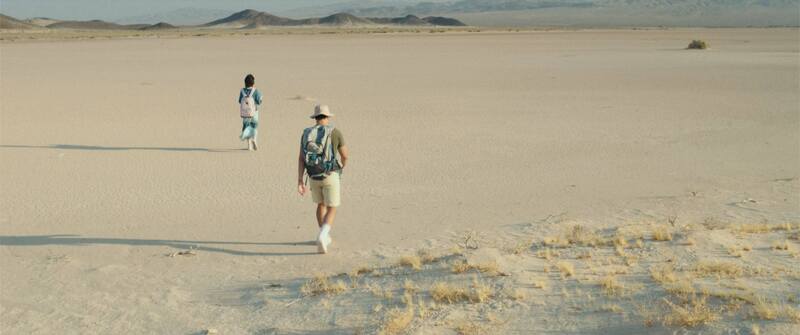
Jinna (Michelle Jones Lee) and Alex (Arnold Setiadi) are approaching an unavoidable separation when they decide to travel east of Los Angeles and revisit the oasis where they first fell in love. The trip has all the ingredients of an attempt to preserve something. It has the familiar routines and the comfort of returning to a place tied to happier years. Instead, they get lost and eventually discover that the oasis itself has dried up, leaving dried, cracked ground where their memories remember pure beauty.
Writer-director Lisa Ranran Hu doesn't treat that as some enormous dramatic revelation. It happens with much less ceremony than the symbolism might suggest, and that restraint makes it more effective. Jinna and Alex aren't staring at some generic representation of their relationship because the screenplay needs to teach them a lesson. They're looking at proof that places change with time, no matter how badly we sometimes think they wouldn’t.
Hu's personal connection to separation gives HEADING TO THE EAST additional importance without forcing the movie to explain why. Having lived between China and the United States, she uses the idea of traveling east in more than a geographical sense. The couple drives east from Los Angeles, but the direction also carries associations with home and with living far from the people and places that once defined everyday life.
That perspective keeps the movie from becoming just about whether Jinna and Alex can survive their separation. Their relationship belongs to a larger struggle involving distance itself. Leaving someone can mean trusting that the relationship will remain unchanged while both people continue having experiences, an expectation HEADING TO THE EAST recognizes as nearly impossible. Love can survive distance, but surviving doesn't necessarily mean remaining the same.
Michelle Jones Lee is exceptional as Jinna, giving the short story an emotional strength that goes well beyond what’s written on the page. So much of what Jinna is feeling comes through before she ever says it. Lee’s facial expressions constantly reveal the fear, frustration, and sadness beneath her attempts to keep the trip moving, and even the smallest shifts in her face can change a scene's meaning. Jinna is already mourning the relationship while still trying desperately to hold onto it, and Lee makes that feel painfully real rather than just dramatic.
What impressed me most is how naturally Lee moves between hope and resignation. Jinna can look convinced for a moment that finding the oasis will somehow reconnect her with Alex, then seconds later completely aware that nothing about this trip can stop what’s coming. Lee lets those moments happen quietly, often through a look or a pause, and that restraint makes Jinna one of the most memorable characters I’ve seen recently.
Setiadi gives Alex a different type of relationship with the journey. He's capable of affection and shares a past with Jinna, but he doesn't approach the search with quite the same desperation. That imbalance becomes increasingly important because two people can experience the same impending goodbye very differently.
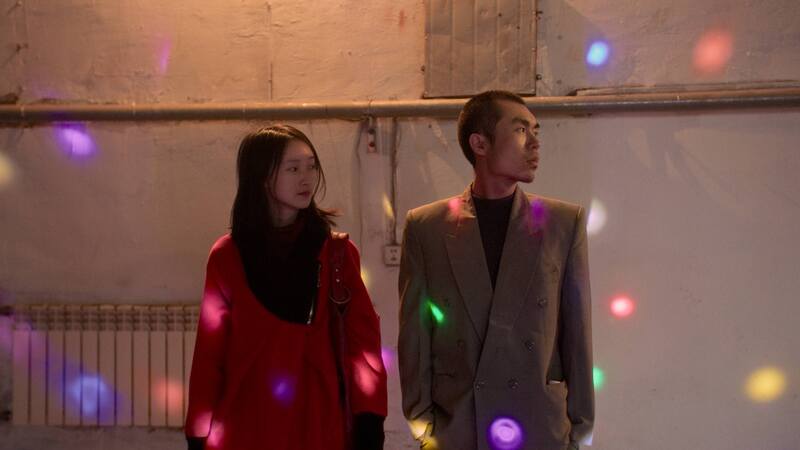
Their chemistry benefits from Hu's decision to give the actors some freedom as they develop. The disagreement comes through improvisation during auditions and rehearsals, which helps explain why their conflict feels more natural than forced dialogue. They shift between tenderness and irritation, and occasionally seem to be responding to each other rather than waiting for the screenplay to deliver the next line.
Rocky Huang's cinematography gives the movie an identity beyond the performances. The desert isn't shown just because it looks impressive on screen. The sheer amount of space surrounding Jinna and Alex makes them look smaller, and the landscape feels increasingly indifferent to whatever significance they've assigned to it. Hu and Huang also resist filling that space with something constantly. Altered frame rates and deliberately blurred motion give portions of HEADING TO THE EAST the unstable quality of a memory being rebuilt rather than an event being documented. Honestly, at first, I thought it was me; then when I realized what was happening, it hit me so hard.
HEADING TO THE EAST benefits considerably from not trying to manufacture additional plot around the couple. No other twist waits around to show up, and there’s no dramatic betrayal needed to justify their sadness. Separation is enough, especially when neither person seems completely certain what distance will do to them. Often, short films make you feel like you’re only getting a part of the story, and sure, we obviously are here, but something about it also makes it feel complete; we get to see what ends up being the most important moments within such a constrained runtime.
Photography becomes an important response to the uncertainty on screen. Jinna can't keep the oasis; she can’t freeze Alex in a time or place, or even guarantee that whatever exists between them will remain, but she can preserve pieces of their time together. The photographs aren't presented as substitutes for experience. They're evidence that something happened, which becomes increasingly important once the places connected with those memories begin disappearing.
That may be the saddest realization I had during HEADING TO THE EAST. People often take photographs because they want to remember, yet the need for those images also acknowledges that memory is unreliable and everything being photographed is temporary. Jinna's instinct to document things carries both affection and fear, especially during a trip built around something she already knows she's losing.
HEADING TO THE EAST moves closer to a type of recollection than conventional storytelling, allowing landscapes, silence, and the smallest details to carry as much weight as the couple's conversations. If you want the story to hold your hand and tell you exactly what to feel, I don’t know if this will do it for you. This is more a memory of itself, a look inside the moments that matter. The film isn't asking whether Jinna and Alex loved each other enough. They clearly did, and at times, still do. The harder question is what happens when love becomes attached to places and versions of ourselves that time has already changed forever.
HEADING TO THE EAST finds its best moments in that uncomfortable distance between remembering something and being able to return to it. The oasis may be gone, but that doesn't erase what happened there, just as an impending separation doesn't automatically invalidate the relationship that came before it. Hu allows both ideas to exist together, giving this brief road trip a melancholy that comes not from watching love disappear, but from realizing that sometimes the only version we can keep is the one we remember.
Please visit https://linktr.ee/overlyhonestr for more reviews.
You can follow me on Letterboxd, Instagram, Twitter, and YouTube. You can also find my social media accounts on most platforms by searching for 'Overly Honest Reviews'.
I’m always happy to hear from my readers; please don't hesitate to say hello or send me any questions about movies.
DISCLAIMER:
At Overly Honest Movie Reviews, we value honesty and transparency. Occasionally, we receive complimentary items for review, including DVDs, Blu-rays, CDs, Vinyl Records, Books, and more. We assure you these arrangements do not influence our reviews, as we are committed to unbiased, sincere evaluations. We aim to help you make informed entertainment choices regardless of our relationship with distributors or producers.
Amazon Affiliate Links:
This site also contains Amazon affiliate links. If you purchase through these links, we may receive a commission. This affiliate arrangement does not affect our commitment to honest reviews and helps support our site. We appreciate your trust and support as you navigate these links.


Happy
100 %

Sad
0 %

Excited
0 %

Sleepy
0 %

Angry
0 %

Surprise
0 %
 0
0
 0
0

Average Rating