The Lesson That Came Decades Later
Read Time:7 Minute, 46 Second
MOVIE REVIEW
Bill W. Conscious Contact
 –


Genre: Documentary, Biography
Year Released: 2025, 2026
Runtime: 58m
Director(s): Kevin Hanlon
Where to Watch: streaming & DVD launch on December 1, 2026
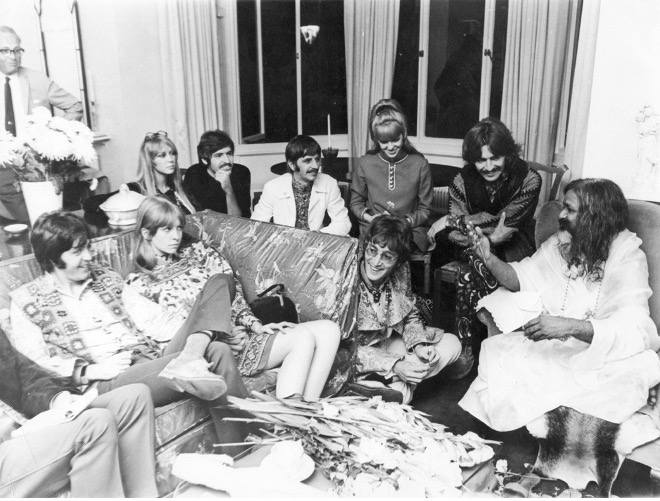
RAVING REVIEW: In 1969, more than three decades after he helped found Alcoholics Anonymous, Bill Wilson took a lesson in Transcendental Meditation. That's a peculiar place for a movie about the co-founder of A.A. to focus so much attention. By then, Wilson had helped write a program that told people to pray and meditate, and countless strangers knew him through those instructions. Here he was taking instruction himself. Kevin Hanlon's BILL W. CONSCIOUS CONTACT has a good reason to spend time with the person who taught that lesson. Lincoln Norton remembers the man who came to learn, and there's a difference between the Bill Wilson who shows up in that account and the authority readers encounter on the page.
Hanlon also has to explain why anybody would be interested in Wilson's spiritual life in the first place. In 1934, during a stay at Towns Hospital in New York, Wilson experienced what he described as a white light and a profound sense of peace. By its nature, a memory like that puts a documentary in an awkward position. There's a hospital you can locate, a life you can trace on either side of the admission, and a person who can tell you his room seemed to fill with light. At the center of it all is an experience only Wilson had. Hanlon has Wilson's own account to work with, down to the plain words he uses to describe the peace he felt. Wilson has to find language for an experience he can remember more easily than he can explain.
There's a temptation to tell the story of A.A. as though everything a worldwide fellowship would eventually become was already inside that hospital room. That makes for an efficient story and gives the founding a moment people can picture. It also puts a lot of history on one person's shoulders. Wilson had an old drinking friend, Ebby Thacher, who showed up sober and told him how he'd gotten there. In Akron, Wilson met Dr. Bob Smith, another man with a drinking problem and one of the people who would give A.A. its shape. The documentary's close attention to Wilson has a cost here. It explains in considerable detail why the spiritual language mattered to him, and the move from his personal account to a practice shared by others is a bigger story than Hanlon has room for in 58 minutes.
The film gets its title from the Eleventh Step. It uses the words “conscious contact” in an instruction about prayer and meditation. It also says “as we understood Him,” a phrase that, some say, gives the person doing the work a way to think about God. Those words are easy to skim past on a list of twelve steps. In a film about the person who helped put them there, they show you why he'd have something to learn from Norton. The instruction calls for improving a connection over time. Wilson can give his own account of that work, and somebody reading the same page can have an entirely different account of it. That's a lot of latitude for a few words in a set of directions people tend to speak of as fixed.
The philosopher William James helps explain what the film gains by covering so much of Wilson's life. A.A.'s Big Book eventually added an appendix explaining that its earliest readers had gotten the impression that recovery demanded an overwhelming experience. The appendix borrows a distinction from James to explain how often people changed gradually. That makes the emphasis on Wilson's hospital stay a tricky choice. It's the episode that gives the film its most vivid account of belief, and it's exactly the kind of account that can crowd out less dramatic experiences. The time Hanlon gives to a man learning to meditate makes the distinction easier to grasp. The hospital account has a clear before and after. A meditation practice takes shape the next morning and the morning after that, when the only thing to report may be that you sat down and did it again.
The interviews have different jobs. William Schaberg, who wrote a book about the writing of A.A.'s Big Book, brings a historian's interest in how the material took shape. Norton appears in archival footage and can speak to an encounter he participated in. Mixing those kinds of testimony gives Hanlon more to work with than a handful of people explaining why Wilson was important. A scholar can help you understand the words that survived and the conditions under which they were written. Norton can tell you about an exchange that was ordinary enough at the time to leave very little public trace. The difference matters in a film that spends so much time with experiences that took place in Wilson's head.
Producer Jay Stinnett's research also puts a surprisingly everyday object behind that story. Lois Wilson kept a guest book, and the filmmakers point to it as corroboration for the visit associated with Wilson's introduction to Transcendental Meditation. A record like that can establish who came by. Norton supplies the part a name and date could never tell you. It's a satisfying use of archival research because the two pieces do such different work. A guest book can sit in a house for decades without anybody thinking of it as a source for the history of a spiritual practice. Somebody has to know whose name they're looking for and why it belongs in a movie.
The photographs from Stepping Stones, the Wilsons' home, do something else. A photograph of Wilson at dinner is the sort of image a family keeps because it recognizes the person in it. People usually encounter him either as Bill W., a name shorn of most of its identifying information, or as a man credited with changing an enormous number of lives. Both versions make it easy to forget he was somebody people ate dinner with. There are limits to what a photograph can tell you about his thinking, and the film has letters and recordings for that. The photographs earn their place alongside those materials by showing the viewer how far the public business of A.A. could be from the Wilsons' dinner table.
Hanlon gives Wilson room to speak in the religious language he used for himself. That makes sense for a film about the part of his life he understood through faith. It also shapes whom the film seems most at home talking to. There's room for more curiosity about how those words land with people who come to A.A. looking for help and find prayer among the instructions. The flexibility of the wording is there on the page, and a reader wrestling with it has a different story to tell from the man who helped write it. The film gives us a good sense of whose language it was to begin with.
Norton's footage is the part of the documentary that changes what's available to people going back through Wilson's life. You can look up Wilson's own story in the Big Book any time. This record depended on somebody turning a camera on a meditation teacher, and it preserves the kind of meeting a biography could pass over in a sentence. By the time Norton met Wilson, Wilson had spent decades as the person other people turned to for an account of what had changed his life. For the duration of one visit, he got to be the guy taking a lesson.
First Run Features provided a digital screener for coverage. Press access and promotional materials do not determine the opinion or rating of a review.
Please visit https://linktr.ee/overlyhonestr for more reviews.
Follow me on Letterboxd, Instagram, Twitter, and YouTube. You can also find my social media accounts on most platforms by searching for 'Overly Honest Reviews'.
I’m always happy to hear from my readers; please don't hesitate to say hello or send me any movie questions.
[photo courtesy of FIRST RUN FEATURES]
DISCLAIMER:
At Overly Honest Movie Reviews, we value honesty and transparency. Occasionally, we receive complimentary items for review, including DVDs, Blu-rays, CDs, Vinyl Records, Books, and more. We assure you these arrangements do not influence our reviews, as we are committed to unbiased, sincere evaluations. We aim to help you make informed entertainment choices regardless of our relationship with distributors or producers.
Amazon Affiliate Links:
This site also contains Amazon affiliate links. If you purchase through these links, we may receive a commission. This affiliate arrangement does not affect our commitment to honest reviews and helps support our site. We appreciate your trust and support as you navigate these links.


Happy
0 %

Sad
0 %

Excited
0 %

Sleepy
0 %

Angry
0 %

Surprise
0 %
 0
 0

Average Rating