When Justice Depends on Who’s Asking
Read Time:9 Minute, 20 Second
BOOK REVIEW
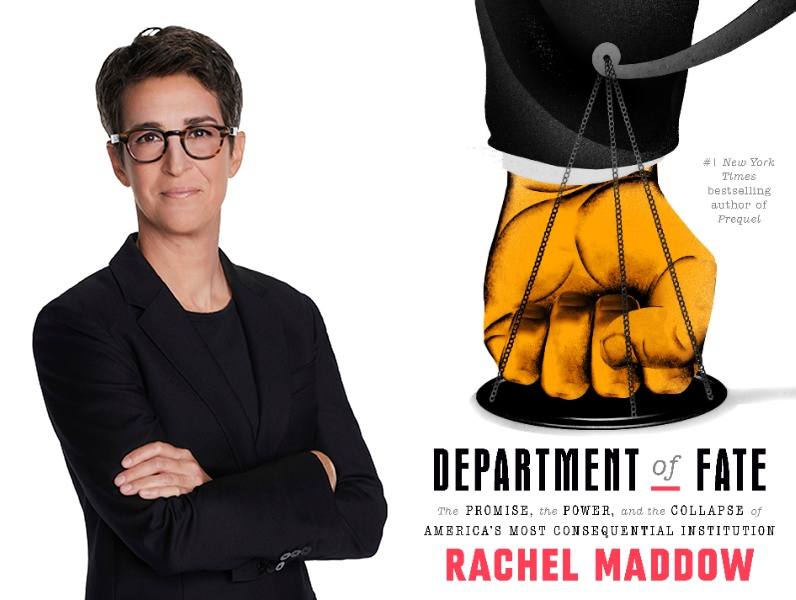
Department of Fate: The Promise, the Power, and the Collapse of America's Most Consequential Institution


Genre: U.S. History, Politics, Legal History
Year Released: 2026
Pages: 496
Author(s): Rachel Maddow
Where to Read: available now; order your copy here: www.penguinrandomhouse.com or www.amazon.com
RAVING REVIEW: Rachel Maddow's DEPARTMENT OF FATE takes on nearly 160 years of American history through an institution most people probably don't think twice about until something goes wrong. The Department of Justice is supposed to enforce the law without favoring the current administration in the White House, but its history tells a far more complicated story. Maddow goes back to its founding in 1870 and follows the people who used its authority to fight the Ku Klux Klan, protect civil rights, suppress labor movements, persecute political opponents, and sometimes enrich themselves along the way. Some risked their careers to uphold the law, while others found ways to bend it around their own ambitions. The book eventually reaches modern times with the Trump administration and Maddow's argument that the department has suffered a collapse serious enough to require rebuilding. What makes this history worth reading is how often the country has faced similar, though different, versions of the same problems before. Maddow isn't asking readers to admire an institution because it's supposed to stand for justice. She's examining what happens when the people entrusted with that responsibility decide who deserves it and who doesn't.
Robert H. Jackson used to practice speeches in front of his daughter. If she wasn’t around, there was always the horse. That’s how Rachel Maddow introduces the man whose 1940 address to federal prosecutors would later be quoted like scripture by Washington lawyers. The handful of reporters who showed up had no clue exactly what they were witnessing. Decades later, when the Justice Department ordered federal prosecutors in Manhattan to drop the corruption case against New York City Mayor Eric Adams, acting U.S. attorney Danielle Sassoon resigned. She and the official who defended the order, Emil Bove, both used Jackson’s words for precedent. It’s the sort of example that Maddow let sit for a second. They’d found instructions for doing two completely different things in the same speech.
Jackson was trying to explain a problem every prosecutor faces. There are more possible cases than anyone has time to handle, and deciding which ones to pursue can cause real harm. Following the evidence sounds pretty straightforward until someone in a position of power asks a prosecutor to walk away from a case they’ve already built. Jackson also understood why Washington might need to set policy across districts and why a local prosecutor might know more about a case than the people issuing orders from headquarters. Maddow really dives into why both parts of the speech matter. The argument over Adams has teeth because quoting Jackson can make a decision sound more sound before anyone has to explain what the decision serves.
The book goes back to 1870, when Congress created the Department of Justice and Ulysses S. Grant picked Amos T. Akerman to be attorney general. Akerman posed for Mathew Brady in the same studio where Abraham Lincoln had been photographed a decade earlier. The newspapers could think of plenty of men they considered better qualified, and the portrait gives them little reason to reconsider. Maddow gets more out of Akerman once she takes him back to Georgia, where his support for federal enforcement of civil rights had already cost him. His wife and one of their boys were seriously ill for months, and only one person in town came to offer help. By the time Akerman reaches the department’s offices in Washington, there’s a sense of what enforcing those laws has already cost him.
Akerman previously “owned” enslaved people and served in the Confederate Army. Those facts sit alongside his decision to use federal power against the Ku Klux Klan. It’d be easy to turn him into a forgotten hero, someone simply ahead of his time. His past makes that an awkward fit and gives his choices in office more importance. Maddow also puts the reader at a crossroads in York County, South Carolina, where masked men gather at night. In a weird twist, they also covered their horses. In an area where a neighbor might know the animal even if he couldn’t see the rider’s face, a hood for the person wouldn’t be enough. That gets at what it took to bring a case in a place where the people committing the violence could be the same people a witness had to face in town the next morning.
The government goes to court again in Maddow’s account of the Pullman strike. This time, the railroad companies stand to gain everything. Under Richard Olney, the department secured an injunction against a railroad boycott, and Eugene V. Debs went to jail for defying it. The dispute involved railroad workers’ ability to act together, and a court order put the federal government’s authority behind breaking up that effort. Placing this after Reconstruction gives Maddow a way to test what the department’s capacity to act meant. Federal intervention had given Black citizens in South Carolina a chance at protection when local authorities failed them. In the railroad dispute, the government’s decision to intervene gave employers a way to put a union leader behind bars. What connects all of this is the monumental and minor moments that the department worked in the people's favor, even against corruption that seemed untouchable.
Louis Post links the Reconstruction story to the Palmer Raids through a single person. As a young man, he took notes at federal Klan trials. By 1920, he was at the Labor Department reviewing deportation cases that grew out of Justice Department raids. The officials running those raids had made the threat sound so obvious that checking each case could seem like an inconvenience. Post dismissed cases that couldn’t meet the legal standard. He faced an impeachment threat for doing the right thing. His place in the book makes a good case for paying attention to the person whose job comes after the raid. By then the government has already made its announcement, and checking the paperwork can be the first real chance someone gets to contest what’s happening to them.
The murder of Viola Liuzzo brings the conflict inside the department itself. Liuzzo was helping ferry civil rights marchers in Alabama when Klansmen shot and killed her. An FBI informant was in the car with the attackers. Maddow describes J. Edgar Hoover’s efforts to smear Liuzzo and the young civil rights worker riding with her, even as John Doar pursued a federal civil rights case that secured convictions against three Klansmen. Hoover’s behavior gets at what an official can do to a victim’s reputation once the public is waiting for an explanation. Doar’s work shows what another part of the same department could do when it put the government’s authority behind a case. Both happened close enough together that any single verdict on the department’s conduct in 1965 felt inadequate. It’s a wild feeling to read these words and unlearn the truths you've been given your whole life. Hoover was nearly icon level throughout my schooling. I was told that he enforced this perfect system. Finding out the truth all these years later makes me wonder how many other things I was misinformed about.
Maddow calls what happened to the Justice Department in the second Trump administration a collapse. I honestly don’t think collapse is a strong enough word. The loss of career staff and the damage to work that depends on people knowing how to build a case over years. It gets harder to describe the weakened office that can send investigators to someone’s door or make a person spend months finding the money to defend themselves. It can fail in court and leave somebody paying for the experience. The history Maddow assembles here makes that distinction necessary. The power to do public work can leave the building faster than the power to make somebody’s life miserable.
There’s a practical reason for Maddow to put the responsibility for rebuilding on Congress. Congress created the department, and it can write rules about its operation after the people who broke its practices have moved on. Maddow wants Congress to strengthen the department’s inspector general. The proposal sounds almost pedestrian next to the stories about people risking their careers. Much of the work of holding prosecutors accountable happens out of public view anyway. A court fight or a resignation letter gives you one decision you can point to. Oversight has to reach the decisions that never become news, including the case somebody ordered a lawyer to drop. Some of the former DOJ attorneys in Maddow’s account went on to defend people pursued by their old department. Their experience went with them, and the public office that lost it can’t make up the difference by hiring someone to fill the chair.
Nobody should have needed a stubborn assistant labor secretary to check whether the government had a legal basis for deporting someone. The people whose cases reached his desk were lucky he was there, which is a pretty weak way to run a system that can decide whether you’ll be allowed to stay in the country. Maddow gives Post the attention his job rarely earned, and the story leaves a demand for the department that comes next. A person facing the power of the federal government ought to be able to count on someone to read the file.
Please visit https://linktr.ee/overlyhonestr for more reviews.
Follow me on Letterboxd, Instagram, Twitter, and YouTube. You can also find my social media accounts on most platforms by searching for 'Overly Honest Reviews'.
I’m always happy to hear from my readers; please don't hesitate to say hello or send me any movie questions.
[photo courtesy of CROWN, PENGUIN RANDOM HOUSE]
DISCLAIMER:
At Overly Honest Movie Reviews, we value honesty and transparency. Occasionally, we receive complimentary items for review, including DVDs, Blu-rays, CDs, Vinyl Records, Books, and more. We assure you these arrangements do not influence our reviews, as we are committed to unbiased, sincere evaluations. We aim to help you make informed entertainment choices regardless of our relationship with distributors or producers.
Amazon Affiliate Links:
This site also contains Amazon affiliate links. If you purchase through these links, we may receive a commission. This affiliate arrangement does not affect our commitment to honest reviews and helps support our site. We appreciate your trust and support as you navigate these links.


Happy
0 %

Sad
0 %

Excited
0 %

Sleepy
0 %

Angry
0 %

Surprise
0 %
 0
 0


Average Rating