Leaving Home Without Leaving It Behind
Read Time:7 Minute, 49 Second
MOVIE REVIEWS
The Condor Daughter (La Hija Cóndor)
 –
– 

Genre: Drama
Year Released: 2025, 2026
Runtime: 1h 49m
Director: Álvaro Olmos Torrico
Writer: Álvaro Olmos Torrico
Cast: María Magdalena Sanizo, Marisol Vallejos Montaño, Nely Huayta, Alisson Jimenez, Gregoria Maldonado
Where to Watch: opens in New York City September 11, 2026, and in Los Angeles September 18, and expands throughout National Hispanic Heritage Month
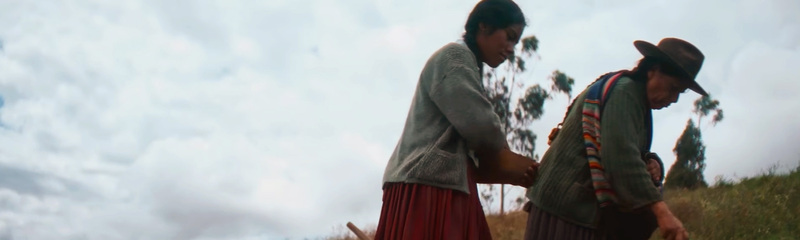
RAVING REVIEW: Clara has a magnificent voice long before she considers becoming a singer. She uses it while accompanying her adoptive mother, Ana, to births in their Quechua community high in the Bolivian Andes, singing songs passed down from one generation to the next as women bring children into the world. THE CONDOR DAUGHTER understands the importance of that. Clara isn't discovering something that was missing from her life. She's beginning to imagine that something she already had might actually mean something more.
That runs quietly through Álvaro Olmos Torrico's film without reducing Clara's future to a choice between the old world and the new. Ana is a traditional midwife who expects Clara to inherit knowledge that may otherwise disappear, and the weight of that expectation is impossible to ignore. Clara is also young, curious, and increasingly aware that the mountains she knows aren't the only place she could build a life. Neither desire is shown as being more than the other, which gives THE CONDOR DAUGHTER a lot of its emotional strength.
A radio becomes one of the simplest and most effective symbols of that enlightenment. To Ana, music has meaning through memory, ceremony, and connection to the people around her. Clara hears possibilities extending far beyond the community. Strangers might hear the same voice that has comforted women during childbirth in a city she's barely experienced, and Olmos Torrico allows that realization to develop naturally instead of treating it as some sudden act of rebellion.
Marisol Vallejos Montaño makes Clara's curiosity easy to understand because she rarely plays it as outright rejection. Clara isn't spending every scene complaining about her life or screaming about wanting to escape. She listens, watches, and gradually becomes more certain that following the path chosen for her would mean ignoring something important within herself. Vallejos Montaño had no previous acting experience, but that doesn’t really show in her performance. Her restraint fits a character who is learning how much she wants before she's entirely comfortable saying it aloud.
María Magdalena Sanizo is just as important as Ana because the film could have gone so wrong if she had been reduced to just the mother standing in Clara's way. Ana isn't protecting tradition because the film needed to give her an obstacle. She carries knowledge of practical, spiritual, and cultural importance, and she understands that very little guarantees someone will be there to carry it on after her. The possibility of Clara leaving isn't merely personal rejection. It represents another link that could disappear from an already weakened chain.
Sanizo shows much of that through silence. Ana's face can hold affection, frustration, fear, and disappointment without forcing the audience toward any single interpretation, and Nicolás Wong Díaz's cinematography knows when to linger rather than cut away. The interiors and birthing scenes are particularly beautiful, with small sources of light revealing faces without making the images feel like they’re on display. THE CONDOR DAUGHTER is gorgeous, but its beauty usually comes from observing the environment instead of turning rural Bolivia into scenery for outsiders to admire.
The mountains inevitably command attention. Their scale repeatedly makes the people crossing them appear minuscule, and Olmos Torrico uses that relationship without suggesting that these communities exist outside of time. Clara doesn't introduce the modern world into a place untouched by time. She belongs to a generation deciding how much of an inherited life remains useful as the boundaries around that life shift.
The film is just as interested in what happens to knowledge when younger people leave. Ana's midwifery isn't presented as quaint folklore preserved for its own sake. She provides something women in the community depend upon, including the reassurance of language, familiarity and practices understood through generations of experience. The tension between that knowledge and institutional medicine adds another dimension to Clara's decision because losing traditional midwives means losing something that cannot simply be recovered from a book later.
Olmos Torrico also avoids pretending every tradition deserves protection simply because it's old. THE CONDOR DAUGHTER acknowledges patriarchal expectations within the community and the restrictions placed on women while also recognizing that women are responsible for preserving much of what gives that community its strength. That contradiction makes the film more thoughtful than a story that simply celebrates tradition or condemns it. Clara has every right to decide what happens to her future, even if exercising that right carries consequences for people she loves.
Sound becomes as important as the images. Songs accompany birth, connect Clara with Ana and eventually offer a path toward another identity, while silence communicates just as much when the two women struggle to understand one another. Cergio Prudencio's music works alongside those ideas rather than overpowering them. The contrast between singing and the different sounds Clara encounters elsewhere makes music integral to the storytelling rather than decoration layered over it.
THE CONDOR DAUGHTER is patient about establishing Clara's life in the mountains. Parts of her encounter with another world fall into place with less resistance than the emotional and cultural distance between those places would suggest. Economic hardship, discrimination, and the simple disorientation of leaving a small Quechua community for an urban environment could have further complicated that transition.
Its patience elsewhere works much better. Olmos Torrico isn't afraid of scenes where people simply walk, listen, or sit with an uncomfortable thought. That allows us to understand why leaving matters before Clara ever makes a meaningful move. The film premiered as part of TIFF's 2025 Centerpiece program. It later earned significant festival recognition, including Best Film at the Biarritz Latin American Film Festival, as well as awards at the Málaga Film Festival for María Magdalena Sanizo's supporting performance and the film's music. Those honors make sense because the performances and the sound do as much emotional work as the screenplay.
Knowing that Vallejos Montaño and Sanizo were both nonprofessional performers makes their accomplishments even more impressive, although their work doesn't need that qualification to be effective. Vallejos Montaño gives Clara growing confidence without suddenly making her a different person. At the same time, Sanizo lets Ana's fear of losing her daughter sit alongside the fear that an entire way of caring for people may disappear with her. Their relationship works because love never eliminates disagreement.
THE CONDOR DAUGHTER eventually becomes less about whether Clara should stay or leave than whether love can survive allowing another person to choose. Ana can’t preserve a tradition by trapping Clara inside it, and Clara can’t become independent by pretending the life that formed her no longer matters. The film finds its most moving territory in that space between obligation and freedom, where neither woman can get everything she wants without asking something painful of the other.
There are moments when its understated approach slows the story more than necessary, and Clara's path outside the mountains could have been more complicated. Those reservations don't diminish how beautifully Olmos Torrico connects music, motherhood, birth, migration, and memory without reducing any of them to just symbols. THE CONDOR DAUGHTER respects the traditions it depicts enough to question them and respects Clara enough to understand that leaving home doesn't require erasing where she came from. Her voice mattered before anyone beyond those mountains heard it. The important change is that she finally gets to decide where it goes next.
Please visit https://linktr.ee/overlyhonestr for more reviews.
You can follow me on Letterboxd, Instagram, Twitter, and YouTube. My social media accounts can also be found on most platforms by searching for 'Overly Honest Reviews'.
I’m always happy to hear from my readers; please don't hesitate to say hello or send me any questions about movies.
[photo courtesy of OUTSIDER PICTURES]
DISCLAIMER:
At Overly Honest Movie Reviews, we value honesty and transparency. Occasionally, we receive complimentary items for review, including DVDs, Blu-rays, CDs, Vinyl Records, Books, and more. We assure you that these arrangements do not influence our reviews, as we are committed to providing unbiased and sincere evaluations. We aim to help you make informed entertainment choices regardless of our relationship with distributors or producers.
Amazon Affiliate Links:
Additionally, this site contains Amazon affiliate links. If you purchase through these links, we may receive a commission. This affiliate arrangement does not affect our commitment to honest reviews and helps support our site. We appreciate your trust and support as you navigate these links.


Happy
0 %

Sad
0 %

Excited
0 %

Sleepy
0 %

Angry
0 %

Surprise
0 %
 0
0
 0
0


Average Rating