A Little Pleasure Goes a Long Way
Read Time:16 Minute, 58 Second
MOVIE REVIEW
Miranda
 –


Genre: Comedy, Drama, Romance, Erotic
Year Released: 1985, 2026 Blu-ray
Runtime: 1h 39m
Director(s): Tinto Brass
Writer(s): Tinto Brass, based on La locandiera by Carlo Goldoni
Cast: Serena Grandi, Andrea Occhipinti, Franco Interlenghi, Andy J. Forest, Franco Branciaroli, Malisa Longo, Laura Sassi, Isabelle Illiers, Jean René Lemoine
Where to Watch: available November 10, 2026. Pre-order your copy here: www.cultfilms.co.uk, www.mvdshop.com, or www.amazon.com
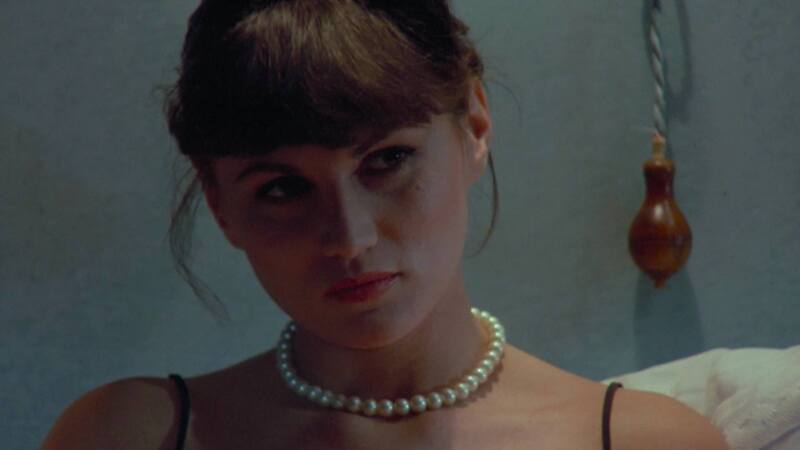
RAVING REVIEW: Tinto Brass has never been the kind of filmmaker to look away when somebody starts taking off their clothes. In fact, he'd probably be the first person to complain if they stopped halfway through. His 1985 erotic comedy MIRANDA does not attempt to conceal his interests, placing Serena Grandi at the center of a romantic free-for-all where the men are constantly competing for her attention, and the woman they're pursuing seems perfectly happy to let them work for it. There's a certain amusement in watching these men convince themselves that they're the answer to her romantic future, especially when none of them appears to understand that Miranda might be enjoying the attention more than the prospect of settling down. The film is unapologetically adult entertainment, built around a premise that's been entertaining audiences in different forms for centuries.
Set in Italy's Po Valley during the years following World War II, MIRANDA introduces a tavern owner whose husband, Gino, disappeared during the conflict. His fate remains uncertain, leaving Miranda in an unusual position. She's technically married, but her husband has been absent long enough that waiting faithfully for his return has become an increasingly complicated proposition. Running the inn keeps her occupied, and the establishment attracts enough male attention to keep loneliness from being her immediate concern. Miranda has developed a romantic life that doesn't conform to conventional expectations of marriage, and she's not especially interested in having anyone tell her how she should behave.
The title character's circumstances give Brass a convenient starting point for a story about a woman who has options, and Serena Grandi is an appropriate choice to bring that personality to the screen. Grandi became closely associated with Italian erotic cinema during the 1980s, with MIRANDA helping cement her status as one of the country's prominent sex symbols. Her casting is central to the film's identity, and the director makes no secret of his fascination with her physical appearance. Yet the character's appeal isn't limited to being the woman everyone wants to sleep with. Miranda has a business to operate, knows how to handle customers, and understands that a man declaring his love doesn't automatically mean she has to rearrange her future around him. That outlook has an appealing stubbornness, especially when the men involved seem incapable of accepting that affection and obedience aren't the same thing.
The romantic complications begin with Berto (Andrea Occhipinti), a truck driver who already occupies an established place in Miranda's life. Their relationship comes with its share of arguments, largely because Berto isn't nearly as comfortable with her other romantic interests as she is. His jealousy makes for an interesting contradiction. He's attracted to the very qualities that make Miranda unwilling to behave like a traditionally devoted partner. He also wants the security of knowing that her attention belongs exclusively to him. That isn't an especially promising arrangement when the woman involved has shown no intention of accepting such restrictions. Their disagreements give the film a more argumentative romantic-comedy feel than the endlessly agreeable flirtation suggested by its sunny presentation.
Carlo (Franco Interlenghi) approaches his pursuit of Miranda with something Berto can't necessarily match. Money. An older man with a comfortable financial position, Carlo attempts to demonstrate his affection through expensive gifts, including jewelry. He's also a former fascist, a detail that carries more historical weight than the film's generally playful attitude might suggest. Miranda's husband disappearing during the war makes Carlo's political background an uncomfortable part of the romantic arrangement, even though Brass doesn't develop it into a substantial political subplot. His wealth gives him an obvious material advantage, but buying somebody doesn't mean convincing them to share the rest of their life with you. The distinction seems rather obvious from the outside, even if Carlo has reasons to believe his approach might work.
Norman (Andy J. Forest), an American technician working on a methane pipeline, introduces a different kind of temptation. He's neither the familiar lover trying to set boundaries nor the older gentleman trying to buy affection. As an outsider, Norman represents the possibility of leaving behind the routine Miranda has established for herself. His presence also fits the film's postwar setting, when foreign workers and American economic influence were becoming increasingly visible in parts of Italy. Norman's relationship with Miranda appeals to her desire for someone whose experiences extend beyond her community. There's a meaningful difference between finding someone attractive and imagining an entirely different life with them, and Norman introduces that possibility into the story.
Working at the inn is Toni (Franco Branciaroli), whose affection for Miranda doesn't come with the elaborate courtship strategies the other men favor. He's familiar with her everyday life in a way that occasional visitors and romantic competitors aren't. Their shared environment also means he sees Miranda as more than somebody to pursue whenever the opportunity presents itself. Toni's involvement adds another angle to the romantic situation without requiring the film to introduce an entirely different setting. His comparatively quiet presence stands apart from the more conspicuous attempts to attract Miranda's attention, even as his feelings make the workplace more complicated than a simple employer-employee relationship.
These relationships provide MIRANDA with its basic story, but the film's origins are considerably older than its setting. Brass drew inspiration from Carlo Goldoni's LA LOCANDIERA, a comedy first performed in 1753. Goldoni's original work follows Mirandolina, an innkeeper whose dealings with the men around her expose their vanity and assumptions about romance. It's a clever foundation for a comedy because the male characters are so confident in their ability to impress a woman who understands their behavior better than they understand themselves. Brass moves that premise into the twentieth century and replaces much of the original's theatrical restraint with the sexual openness that would define his later films. The adaptation isn't attempting to reproduce Goldoni's play scene for scene. It borrows a recognizable situation and gives the director room to pursue his own interests.
Goldoni's influence also helps explain why the inn is such a useful location. It's a workplace and a gathering place where people from different circumstances can interact without elaborate explanations for their presence. Miranda isn't a passive observer sitting around waiting for romance to find her; she runs the establishment. Her position gives her a practical reason to deal with the personalities that come through its doors, and those encounters naturally blur the boundaries between hospitality and flirtation. The location provides a modest theatrical framework for the romantic competition, allowing much of the comedy to emerge from conflicting expectations rather than an especially complicated series of events.
The postwar backdrop adds another consideration to Miranda's situation. Italy was undergoing significant social and economic changes in the early 1950s, and women who had managed businesses or households during wartime didn't necessarily feel eager to surrender that responsibility afterward. MIRANDA isn't a serious historical drama about those developments, and treating it as one would impose ambitions on the production that don't belong there. A woman operating her own establishment while deciding what she wants from the men around her fits the setting. Her missing husband connects her to the country's recent history without making his absence the only thing that defines her. It's a different approach from the familiar image of a war widow whose entire existence becomes an extended period of mourning.
That historical element is also where the film's more carefree attitude can become complicated. Miranda doesn't know whether her husband will return, yet her romantic life is already moving in directions that would create obvious difficulties if he did. Brass doesn't appear especially concerned with asking audiences to condemn her behavior. He approaches her situation through erotic comedy, where the uncertainty gives the central character room to pursue relationships that a more conventional story might treat as scandalous. The premise isn't without emotional implications, but the film generally favors the immediate complications of romance over prolonged anxiety about the past.
Anyone familiar with Brass's reputation will know that his adaptation was never going to be a modest drawing-room comedy. His work frequently explores sexual behavior through a camera that's openly fascinated by the human body, particularly the female form. Nudity in MIRANDA isn't an occasional addition intended to make a traditional romance seem more provocative. It's central to the production's identity. The director's visual priorities are clear, and viewers expecting a fairly restrained Italian period comedy should understand this belongs to a very different tradition of filmmaking.
Brass's reputation can sometimes overshadow the fact that he began his career working in a much broader range of styles. His earlier films included experimental projects and politically charged productions, with titles such as SALON KITTY demonstrating an interest in combining sexuality with darker historical material. His involvement with CALIGULA also became a defining part of his public image, despite his well-documented disagreements with producer Bob Guccione over the completed film. By the time he directed THE KEY in 1983, Brass was moving toward the erotic filmmaking that would increasingly become his trademark. MIRANDA continued that direction, trading the more troubling material of some of his earlier work for a comparatively lighthearted story about pleasure and romantic competition.
The contrast between Brass's filmmaking style and the character's independence creates an interesting complication. Miranda is presented as someone who makes her own romantic decisions, yet the film is unmistakably constructed around the director's desire to display Grandi's body. Her confidence defines the character, but the camera's interest in her physical appearance can be far more persistent than its attention to her personal circumstances. That raises a reasonable question about how much of the film's celebration of female sexual freedom comes from Miranda herself and how much serves the interests of the man behind the camera. Both interpretations have a basis in the production, and acknowledging the distinction gives the film more to discuss than the simple fact that it contains a great deal of nudity.
It's also important not to confuse sexual openness with strong character development. Miranda's relationships are distinct enough to establish recognizable romantic possibilities, but the underlying story remains fairly simple. Each man enters her life with something different to offer, and their competing interests structure much of the film. Once those arrangements are established, there isn't much additional narrative complexity. Brass seems more comfortable letting situations play out than pushing them toward increasingly consequential developments. That works within the relaxed conventions of an erotic comedy, though it also places limits on how much the supporting characters can contribute beyond their immediate relationships with Miranda.
Grandi's central position places considerable responsibility on her performance. A character who attracts this much attention could easily become little more than a decorative presence, especially under a director whose priorities are so obviously physical. Her screen persona helps distinguish Miranda from the men whose desires often define their behavior. She has an easygoing attitude toward romantic attention and a willingness to provoke arguments rather than surrender to somebody else's demands. The result is a character whose personality is connected to the comedy rather than merely providing an excuse for the next erotic encounter. That distinction matters when the surrounding story offers limited room for dramatic development.
The production also has recognizable craftsmanship behind its adult-oriented material. Cinematographer Silvano Ippoliti worked extensively with Brass, including on THE KEY, and the director's preference for carefully composed erotic imagery is an established feature of their collaborations. Art director Paolo Biagetti and costume designer Jost Jakob contributed to the film's period environment, while the use of Cinecittà Studios connects MIRANDA to Italy's long tradition of studio filmmaking. These credits help explain the production's visual ambitions. Its historical world isn't presented as an austere documentary reconstruction; it provides an attractive environment for the director's stylized approach to romance.
Riz Ortolani composed the score, bringing in another experienced Italian filmmaker's collaborator. Ortolani's career ranged from the internationally recognized theme for MONDO CANE to scores for horror films and popular Italian dramas. His presence reminds us how often the country's film industry crossed boundaries that American audiences might regard as separate categories. Erotic comedies could employ the same accomplished technicians and composers associated with more prestigious productions. That doesn't automatically elevate the material, but it helps place MIRANDA within the larger industry that produced it rather than treating the film as an isolated curiosity.
Brass also handled the editing, giving him direct control over how the finished material was assembled. His dual role as director and editor matters in a production so closely tied to his personal visual interests. The amount of time devoted to erotic imagery is part of the film's construction rather than something added independently by an editor attempting to sensationalize the material. MIRANDA is an example of a director making a film with a clearly established audience in mind, even when those choices come at the expense of conventional dramatic pacing. Its structure leaves relatively little doubt about which elements Brass considers essential.
The comedy belongs to a tradition of Italian popular entertainment where sexual misunderstandings, jealousy, and exaggerated behavior provide the foundation for adult humor. That approach differs from the more restrained romantic comedies associated with Hollywood, especially those where sexual activity is implied rather than explicitly depicted. Brass has little patience for leaving everything to the imagination. MIRANDA is accordingly a film whose adult content is inseparable from its humor, even when the romantic disagreements involve familiar situations that could exist in a considerably less explicit production. The material is intended for viewers comfortable with that sensibility, and its appeal will naturally depend on their tolerance for the director's enthusiasm.
Its limitations are easier to identify when the romantic setup is considered separately from the erotic presentation. The film has several recognizable personalities competing for the central character's affection, but those men are largely defined by what they want from her. Berto's jealousy, Carlo's wealth, Norman's outsider appeal, and Toni's devotion give each relationship a purpose without necessarily creating equally developed characters. A more ambitious romantic comedy might spend additional time examining their individual lives or making their relationships change in unexpected ways. MIRANDA keeps the focus on its title character and the immediate amusement of her circumstances. The approach is understandable, but it also explains why the film's narrative can feel slight despite the number of people involved.
For viewers interested in the physical-media edition, Cult Films' presentation is noteworthy for offering Brass's complete director's edit in high definition. Older European exploitation and erotic films have frequently circulated in different edits and international releases, making an uncut version a meaningful consideration for collectors. The label describes MIRANDA as remastered from restored materials and presents the film in 1080p, with multiple language options and improved subtitle support. The ability to watch the Italian-language version with English subtitles is especially welcome for audiences who prefer the original dialogue. At the same time, the English-language option provides an alternative for those accustomed to dubbed European cinema.
The bonus materials include an interview with Brass and the theatrical trailer, alongside reversible artwork. The interview has obvious historical value given how closely MIRANDA is associated with the director's approach to erotic filmmaking. The edition doesn't appear designed around an enormous collection of documentaries or newly produced critical supplements, so collectors hoping for a substantial archival package should keep their expectations reasonable. Its primary attraction is access to the complete film in modern high-definition, with the additional material serving as a useful complement rather than the main reason to buy it.
That distinction is important because the appeal of a physical-media release shouldn't be confused with the merits of the movie itself. Preserving an uncut version of MIRANDA is worthwhile for film history and for audiences interested in Brass's work, even if not every element of the production holds up equally well. The director occupies a distinctive place in Italian cinema, and his films deserve to remain accessible without unnecessary censorship or alterations. Collectors can appreciate that preservation effort while still recognizing the original production's storytelling limitations or creative indulgences.
MIRANDA occupies an interesting place in Brass's career because its relatively cheerful attitude makes it an accessible example of the erotic comedies that became his specialty. The film doesn't demand an extensive understanding of Italian politics or an appreciation for experimental filmmaking. It presents an uncomplicated romantic situation, fills it with competing personalities, and lets Grandi carry a production built around her appeal. That simplicity has limits, and the director's fascination with erotic imagery won't make them disappear. Yet the film has a recognizable identity, and there's little risk of mistaking it for a production made by somebody embarrassed about its subject matter.
At its heart, MIRANDA is a comedy about several men who think they understand romance and a woman with little reason to accept their conclusions. Some try to impress her, others get angry when their expectations aren't met, and the competition continues around a tavern that still needs someone to run it. Brass supplies more than enough adult entertainment along the way, sometimes allowing his interests to overwhelm the comparatively modest story. The film may not give its romantic complications the depth they could support. Grandi's central character remains an appealing reason to spend time in this peculiar little corner of postwar Italy. The gentlemen can argue over who deserves Miranda's affection. She has a business to run, and frankly, they could all use something more productive to do.
Please visit https://linktr.ee/overlyhonestr for more reviews.
Follow me on Letterboxd, Instagram, Twitter, and YouTube. You can also find my social media accounts on most platforms by searching for 'Overly Honest Reviews'.
I’m always happy to hear from my readers; please don't hesitate to say hello or send me any movie questions.
[photo courtesy of CULT FILMS, MVD ENTERTAINMENT]
DISCLAIMER:
At Overly Honest Movie Reviews, we value honesty and transparency. Occasionally, we receive complimentary items for review, including DVDs, Blu-rays, CDs, Vinyl Records, Books, and more. We assure you these arrangements do not influence our reviews, as we are committed to unbiased, sincere evaluations. We aim to help you make informed entertainment choices regardless of our relationship with distributors or producers.
Amazon Affiliate Links:
This site also contains Amazon affiliate links. If you purchase through these links, we may receive a commission. This affiliate arrangement does not affect our commitment to honest reviews and helps support our site. We appreciate your trust and support as you navigate these links.


Happy
0 %

Sad
0 %

Excited
0 %

Sleepy
0 %

Angry
0 %

Surprise
0 %
 0
 0

Average Rating