The Possibilites Are Endless
Read Time:9 Minute, 45 Second
MOVIE REVIEW
Possible Love
 –


Genre: Drama, Romance
Year: 2026
Runtime: 2h 44m
Director: Lee Chang-dong
Writers: Lee Chang-dong, Oh Jung-mi
Cast: Jeon Do-yeon, Sul Kyung-gu, Zo In-sung, Cho Yeo-jeong
Where to Watch: in select theaters October 23, 2026, on Netflix November 6
RAVING REVIEW: Money doesn't automatically make someone happier, kinder, or better equipped to handle life's problems. It does, however, provide opportunities unavailable to people struggling to pay their bills, especially when something unexpected turns their lives upside down. That difference becomes especially uncomfortable when those living comfortably try to understand the struggles of people with far less. Lee Chang-dong's POSSIBLE LOVE examines that distance through two married couples whose lives intertwine after a chance encounter. It's the South Korean filmmaker's first feature since 2018's BURNING, and his latest drama approaches wealth, marriage, personal ambition, and emotional responsibility with a patience that allows seemingly ordinary interactions to become increasingly revealing.
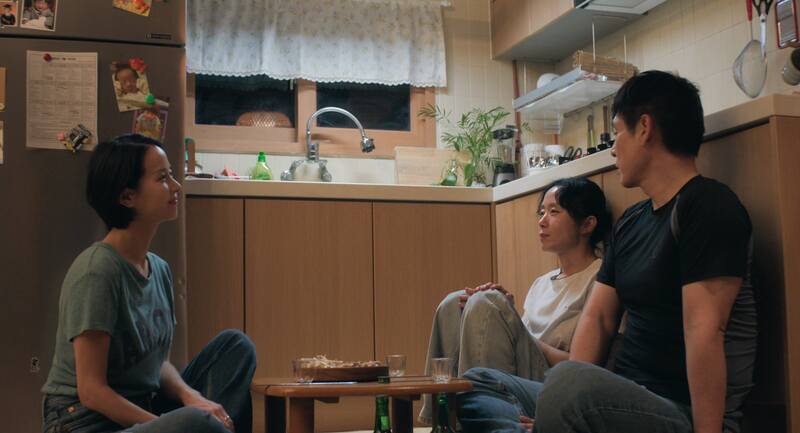
Mi-ok (Jeon Do-yeon) and Ho-seok (Sul Kyung-gu) raise their young son as they try to recover from the financial and emotional fallout of Ho-seok losing his job. A labor dispute and the subsequent job loss leave him withdrawn, angry, and unable to move forward, while Mi-ok struggles to maintain some sense of normalcy. Their circumstances bring them into contact with Ye-ji (Cho Yeo-jeong), a documentary filmmaker interested in the experiences of displaced workers, and her husband Sang-woo (Zo In-sung), whose comfortable financial position contrasts sharply with the lives of her prospective subjects. When Mi-ok agrees to participate in Ye-ji's documentary, their relationships begin to change in ways none of them fully understands.
The documentary introduces one of the film's most uncomfortable questions almost immediately. Ye-ji wants to tell the stories of people who have suffered because of economic inequality, and drawing attention to their experiences has genuine value. Yet she's also making a film, which means other people's hardships become material she can organize, interpret, and potentially use to advance her own ambitions. The arrangement creates an imbalance that neither woman's good intentions can eliminate. Ye-ji can eventually return to her comfortable lifestyle, while Mi-ok and Ho-seok must continue living with the problems she's documenting. Their suffering doesn't end when someone turns off the camera.
Cho Yeo-jeong, recognizable to international audiences from PARASITE, is particularly well suited to a character whose sincerity and privilege coexist. Ye-ji isn't simply an insensitive wealthy woman exploiting people less fortunate than herself, and reducing her to that would make the film considerably less interesting. She wants to understand Mi-ok's experiences, but her curiosity comes from a position of security that affects how she approaches their developing relationship. There's a difference between listening to someone because you care about them and listening because their experiences might make a compelling story. Ye-ji's difficulty recognizing where those motivations overlap gives the character an unsettling quality that becomes increasingly important as the film progresses.
Jeon Do-yeon's Mi-ok offers an equally compelling perspective, especially because her circumstances don't let her treat every decision as an intellectual exercise. She's a mother, a wife, and someone trying to hold a struggling household together while her husband remains consumed by what happened to him. Ye-ji's attention introduces opportunities for connection beyond the difficulties waiting at home, though it carries complications of its own. Jeon gives Mi-ok a personality that extends beyond being a sympathetic victim of economic hardship. Her curiosity, frustrations, desires, and occasional contradictions make her decisions understandable without requiring the audience to agree with them all.
Ho-seok's situation brings the consequences of unemployment into sharper focus. Losing a job means losing financial stability, but for someone who has invested years in a particular profession, it can also mean losing an important part of his identity. Sul Kyung-gu plays a man whose anger extends beyond his former employer and into nearly every aspect of his personal life. His withdrawal affects his marriage, his relationship with his surroundings, and his ability to imagine a future that looks different from the present. The film recognizes that prolonged unemployment can become as much an emotional problem as a financial one, especially when humiliation and resentment keep someone from accepting available support.
These difficulties also complicate how POSSIBLE LOVE approaches marriage. Neither relationship exists independently of its circumstances, and the financial differences between the couples shape their expectations of one another. Mi-ok and Ho-seok face practical problems that have gradually damaged their emotional connection, while Ye-ji and Sang-woo have the resources to avoid many of those pressures. However, wealth hasn't necessarily given the latter couple a more fulfilling relationship. Sang-woo's reserved personality adds another layer of uncertainty, especially as Mi-ok grows increasingly interested in someone whose experiences differ so sharply from her husband's.
Zo In-sung's Sang-woo is perhaps the hardest of the four characters to understand, and that uncertainty heightens the tension around the developing relationships. His financial success gives him options that Ho-seok no longer has, though the film doesn't suggest these advantages automatically translate into emotional maturity. Sang-woo's interactions with Mi-ok invite questions about attraction, curiosity, and the appeal of someone whose life differs significantly from your own. Attraction becomes especially complicated when one person has considerably more power over the circumstances surrounding the relationship. Even apparently innocent gestures can carry implications that the people involved would rather not acknowledge.
Lee's approach to these characters is consistent with his earlier work, particularly SECRET SUNSHINE, POETRY, and BURNING. He's interested in people whose internal struggles aren't always visible in their outward behavior, and he rarely gives the audience a straightforward explanation of everything they're feeling. POSSIBLE LOVE frequently asks viewers to pay attention to conversations, facial expressions, and the changing relationships between its characters rather than relying on dramatic confrontations to communicate every important development. The filmmaking is restrained without feeling emotionally distant, and the performances provide much of the detail a more conventional drama might explain through dialogue.
That approach requires considerable patience, especially across a running time approaching three hours. The film spends a substantial amount of time establishing the characters' circumstances and letting their relationships develop through conversations that don't always yield immediate revelations. Some stretches feel unnecessarily prolonged, particularly when the same emotional divisions have already been established through earlier interactions. There's a difference between giving complicated characters room to develop and letting familiar tensions linger without adding much to our understanding of them. Lee generally balances that well, but POSSIBLE LOVE occasionally tests how long its audience will wait for another meaningful change in the relationships.
The documentary also adds an interesting complication to the way the film presents truth. A camera records what happens in front of it, but that doesn't mean the resulting footage represents a complete or objective account of someone's experiences. The person filming decides what deserves attention, which questions to ask, and eventually how those answers should be presented. Ye-ji's project raises concerns about filmmakers' responsibilities to people who trust them with deeply personal experiences. Those concerns matter most when the filmmaker and subject develop a relationship that extends beyond their original professional arrangement. The camera can connect people, but it also creates separation between someone experiencing hardship and someone documenting it.
Lee's interest in labor disputes gives these personal conflicts a broader social dimension. Ho-seok's unemployment isn't presented as an isolated misfortune that can be resolved through determination or a more positive attitude. His circumstances reflect decisions made by people and institutions with far greater economic power, and their consequences continue long after the original dispute. The film recognizes how easily workers can disappear from public attention once a labor conflict ends, even though the personal damage may continue for years. This distinction keeps the story from treating financial inequality as merely an obstacle complicating a potential romance.
POSSIBLE LOVE also benefits from refusing to divide its characters neatly into innocent victims and selfish opportunists. The wealthier couple possesses advantages that influence nearly every interaction, but Mi-ok and Ho-seok aren't deprived of their own desires, resentments, or questionable decisions. Economic hardship can explain certain behaviors without excusing them, just as financial privilege doesn't prevent genuine emotional difficulties. Lee leaves these contradictions in the story rather than forcing every character into a predetermined moral position. That complexity makes the relationships more convincing, even when their decisions become frustrating.
The film's deliberate construction does occasionally make its intentions too apparent. Some developments seem designed to pit its competing ideas about class, desire, and personal responsibility against each other, and the accumulation of those connections can feel overly calculated. The larger social concerns also tend to compete with the intimate relationships for attention. The characters remain engaging enough to sustain both approaches, though a tighter screenplay could have preserved their complexity without requiring so much time to reach certain observations. These limitations don't erase the quality of the writing or performances, but they keep the experience from feeling entirely effortless.
What stays with POSSIBLE LOVE is its understanding that affection and empathy become complicated when people approach relationships from fundamentally unequal circumstances. Mi-ok, Ho-seok, Ye-ji, and Sang-woo each want something from their connections, whether stability, understanding, affection, recognition, or a chance to escape an unsatisfying part of their lives. Those desires aren't always compatible, and the film doesn't suggest that recognizing another person's suffering automatically solves anything. Lee Chang-dong has returned with a thoughtful, emotionally demanding drama that asks considerably more of its audience than simply choosing which characters deserve sympathy. At 164 minutes, it could use more economical storytelling. The richness of its four principal characters and the difficult questions surrounding their relationships make the investment worthwhile. POSSIBLE LOVE understands that caring about someone and knowing how to care for them are two very different things.
Please visit https://linktr.ee/overlyhonestr for more reviews.
Follow me on Letterboxd, Instagram, Twitter, and YouTube. You can also find my social media accounts on most platforms by searching for 'Overly Honest Reviews'.
I’m always happy to hear from my readers; please don't hesitate to say hello or send me any movie questions.
[photo courtesy of NETFLIX, ANONYMOUS CONTENT, NOW FILMS, PINE HOUSE FILM]
DISCLAIMER:
At Overly Honest Movie Reviews, we value honesty and transparency. Occasionally, we receive complimentary items for review, including DVDs, Blu-rays, CDs, Vinyl Records, Books, and more. We assure you these arrangements do not influence our reviews, as we are committed to unbiased, sincere evaluations. We aim to help you make informed entertainment choices regardless of our relationship with distributors or producers.
Amazon Affiliate Links:
This site also contains Amazon affiliate links. If you purchase through these links, we may receive a commission. This affiliate arrangement does not affect our commitment to honest reviews and helps support our site. We appreciate your trust and support as you navigate these links.


Happy
0 %

Sad
0 %

Excited
0 %

Sleepy
0 %

Angry
0 %

Surprise
0 %
 0
 0

Average Rating