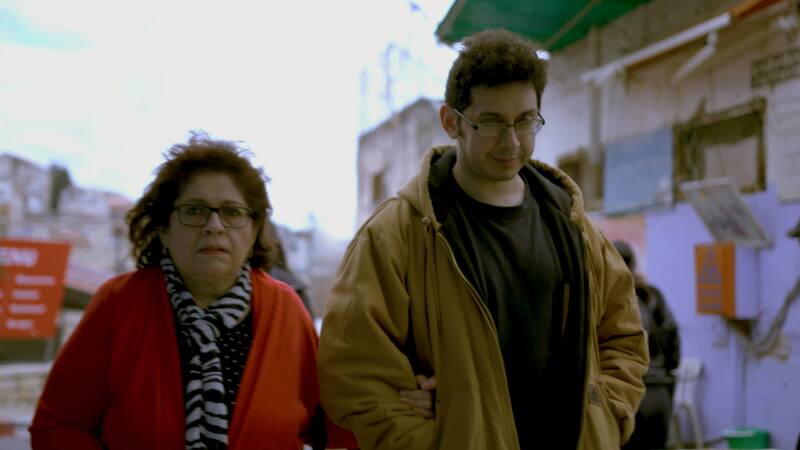
Returning Home Means Facing Everything
Read Time:7 Minute, 15 Second
MOVIE REVIEW
Traces of Home
 –
– 

Genre: Documentary
Year Released: 2025, 2026
Runtime: 1h 33m
Director: Colette Ghunim
Where to Watch: in theaters September 18, 2026, and September 25 in Los Angeles
RAVING REVIEW: Director Colette Ghunim knew the basic facts about where her parents came from, but TRACES OF HOME asks deeper, more complicated questions. How well can you really know your parents when the most painful parts of their lives were rarely discussed? Ghunim grew up in suburban Illinois with a Palestinian father and Mexican mother who worked to give their children a stable American childhood. Yet, something remained absent from the family story.
That becomes the reason for picking up the camera. Ghunim begins asking questions about why Hosni and Iza left their homelands, eventually traveling with them in search of the childhood homes they were forced to leave behind. One journey takes the family to Palestine, where Hosni was displaced as a child in 1948, while the other takes them to Mexico, where Iza's family fled a violent and abusive father.
The similarity between those stories ends almost as soon as you start examining them. One involves political displacement and a Palestinian family losing its home amid enormous historical upheaval. The other comes from domestic violence within a Mexican family trying to escape a dangerous man. Ghunim doesn't pretend they're interchangeable experiences. She recognizes what they created in the next generation. Parents who survived by moving forward and children who grew up feeling the effects of things nobody was comfortable discussing.
TRACES OF HOME could've easily become a documentary built around comparison. Instead, the connection develops through the people, not through an argument that both somehow mean the same thing. Hosni and Iza brought different wounds into the same household, and Colette and her brother Ramsey grew up inside the consequences without necessarily understanding where they came from.
Some of the film's most revealing moments feel surprisingly ordinary. Family photographs, old recordings, conversations around the home, and siblings comparing childhood memories provide evidence you can't find in a history book. The Ghunim children remember a fairly typical upbringing, but they also remember distance, tension, expectations, and the sense that something within the family remained unfinished.
Ghunim's willingness to include herself in that conversation gives the documentary something important. She's not approaching her parents as an outside filmmaker collecting testimony from subjects; she's their daughter, carrying frustrations and asking questions that have consequences after the camera stops recording. There are moments where you can feel the difference between interviewing someone and confronting someone you love.
That becomes especially important with Iza. Her childhood story gradually reveals a home shaped by alcoholism and domestic abuse, including violence directed toward her mother, and returning to Mexico means reopening wounds she had understandable reasons to leave behind. The trip isn't framed as some magical reunion where stepping onto familiar soil instantly repairs decades of pain.
Hosni's return feels entirely different. He was only a child when his family was forced from Safed in 1948, leaving him to search for a place remembered through fragments, stories, photographs, and decades of distance. Watching him attempt to match memory with what exists now gives the Palestinian portion of TRACES OF HOME an emotional resonance that doesn't require Ghunim to manufacture one.
There are times when TRACES OF HOME is carrying more material than ninety-three minutes comfortably allows. Palestine and Mexico each carry enormous historical and emotional weight, and Ghunim also examines her parents' marriage, her own upbringing, her relationship with her mother, Ramsey's perspective, questions of American identity, and the effects of generational trauma. Some things inevitably receive less attention whenever another part moves forward.
Documentary filmmaking inevitably becomes a form of family therapy. People don't necessarily reach revelations on schedule because a filmmaker needs an ending, and decades of emotional distance aren't repaired by one trip or one difficult conversation. TRACES OF HOME is smart enough not to claim otherwise, even when its desire for reconciliation occasionally pushes certain moments toward a resolution that real life probably doesn't allow.
Love and resentment can exist together, children can understand why their parents behaved a certain way without excusing everything that behavior caused, and parents can acknowledge pain without becoming different people. What makes the documentary hit as hard as it does is that Ghunim gradually stops treating "home" as an address she might find. Finding a building matters, especially to parents who believed those places might no longer exist or might be impossible to reach, but standing in front of an old house can't return anyone to childhood. The physical destination becomes a starting point for conversations that couldn't happen when those places existed only as stories.
That evolution explains why the five-year process behind TRACES OF HOME feels necessary. Ghunim began the project out of a desire to tell stories of Arab and Latino migration during a period when both communities were openly targeted in American political rhetoric. The filmmaking eventually pushed her toward something much more intimate. What started as an attempt to document where her parents came from became an examination of what they carried with them.
The film's DOC NYC Grand Jury Prize makes sense. TRACES OF HOME isn't valuable just because its subjects represent Palestinian and Mexican experiences, and treating it as a checklist of representation would undersell how exposed the family allows itself to become. Its strength comes from letting cultural identity remain inseparable from complicated parents, irritated children, uncomfortable memories, affection, silence, and the strange ways families protect themselves from things everyone already knows are there.
I do wish Ghunim occasionally gave the documentary more room to sit with what it uncovers. There are revelations significant enough to support much longer conversations, particularly when childhood trauma begins connecting to behavior within the family's American home. Moving toward the next destination or piece of the past can interrupt ideas that feel as though they have only begun to open up.
Even that frustration comes from wanting more of what TRACES OF HOME does well. Hosni and Iza aren't reduced to symbols of displaced people, and Colette and Ramsey aren't simply representatives of a first-generation American experience. They're allowed to be frustrating, funny, guarded, loving, angry, wounded, and occasionally contradictory, which grounds the larger themes in real family relationships instead of imposing them.
No version of returning home gives this family back what was lost. Buildings change, countries change, parents age, children eventually recognize their parents as people, and memories become less reliable with every passing year. TRACES OF HOME understands that reconciliation isn't recovering the past; it's finally being willing to talk about what the past did to everyone who came after it.
That's where Ghunim's documentary earns its praise. The political history matters, the cultural disconnection matters, and the search for two homes gives the movie its shape. The lasting impression comes from watching a daughter realize that understanding her parents requires accepting painful truths about them and herself at the same time. TRACES OF HOME can't repair generations of damage in ninety-three minutes, but it can show what happens when a family finally stops pretending the damage isn't there.
Please visit https://linktr.ee/overlyhonestr for more reviews.
You can follow me on Letterboxd, Instagram, Twitter, and YouTube. You can also find my social media accounts on most platforms by searching for 'Overly Honest Reviews'.
I’m always happy to hear from my readers; please don't hesitate to say hello or send me any questions about movies.
[photo courtesy of WATERMELON PICTURES, KARTEMQUIN FILMS]
DISCLAIMER:
At Overly Honest Movie Reviews, we value honesty and transparency. Occasionally, we receive complimentary items for review, including DVDs, Blu-rays, CDs, Vinyl Records, Books, and more. We assure you that these arrangements do not influence our reviews, as we are committed to unbiased, sincere evaluations. We aim to help you make informed entertainment choices regardless of our relationship with distributors or producers.
Amazon Affiliate Links:
This site also contains Amazon affiliate links. If you purchase through these links, we may receive a commission. This affiliate arrangement does not affect our commitment to honest reviews and helps support our site. We appreciate your trust and support as you navigate these links.


Happy
0 %

Sad
0 %

Excited
0 %

Sleepy
0 %

Angry
0 %

Surprise
0 %
 0
0
 0
0



Average Rating