A Childhood That Ends in the Rubble
Read Time:7 Minute, 18 Second
MOVIE REVIEWS
Children Untold
 –
– 

Genre: Drama, History
Year Released: 2026
Runtime: 2h 30m
Director: Miwa Nishikawa
Writer: Miwa Nishikawa
Cast: Ami Koyae, Fumi Nikaido, Ryota Bando, Kaito Sakurai, Kotone Hanase, Yukiya Kitamura, Yoh Yoshida, Yutaka Takenouchi, Junichi Okada, Yuko Tanaka, Koji Yakusho
Where to Watch: shown at the 2026 Toronto International Film Festival
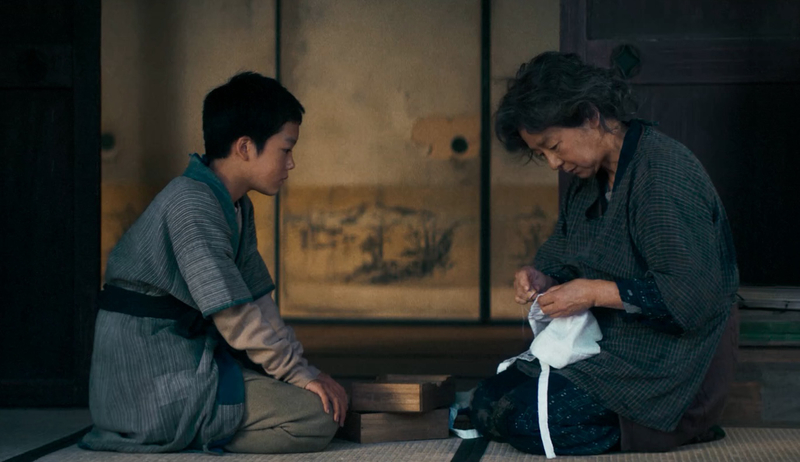
RAVING REVIEW: CHILDREN UNTOLD is more interested in what happens after the history books reach the end of the chapter. The bombs fell, the surrender happened, and the war may officially be over, but 12-year-old Kotoko is standing in the ruins without the family, comfort, or childhood she had before it. Writer/director Miwa Nishikawa doesn’t approach that aftermath as a dividing line between war and peace. For the people she follows, particularly the children, peace simply is a different fight for survival.
That distinction gives this sprawling postwar drama much of its heart. Kotoko isn’t placed at the center of the story to elicit sympathy for an orphaned child; Nishikawa is far more interested in what that child will become. Ami Koyae plays her with a deep awareness of how quickly innocence can turn into calculation when every decision carries consequences. Kotoko learns where she can sleep, how she can make money, whom she can trust, and eventually how presenting herself as a boy might offer protection that being a young girl cannot.
The film doesn’t turn Kotoko’s cover-up into a grand statement about reinventing herself because the choice comes from fear and danger. She’s already seen where the limited options available to girls can lead, and changing how the world sees her becomes another survival tool. Her identity hasn’t suddenly become unimportant, but hunger, exposure, exploitation, and violence don’t leave much room for abstract questions about who she wants to be.
Nishikawa surrounds Kotoko with other children who have developed their own systems for existing inside a society that has effectively stopped looking after them. They sell newspapers, shine shoes, steal supplies, move goods through the black market, and depend on relationships that can offer protection without ever becoming safe. Their connection to a local yakuza organization sounds like the beginning of another crime story, but CHILDREN UNTOLD keeps returning to something deeper and more intriguing. These are children making adult choices because the adults who were supposed to protect them disappeared, died, or simply looked away.
The movie doesn’t romanticize the freedom the children can discover. There is camaraderie here, along with the strange excitement that can come from living beyond the rules, and Nishikawa allows those moments to exist because misery isn’t the only thing these children experienced. They joke, form loyalties, fight, improvise, and find ways to enjoy themselves. Treating them as helpless victims would flatten them just as much as turning their lives into an adventure would, and CHILDREN UNTOLD works best when it holds those realities against each other.
The parallel story involving Kotoko’s former teacher, Sone, could have pulled attention away from the children. Instead, Fumi Nikaido gives the film another perspective on the same collapse. Sone is older and has more understanding of what is happening around her, but adulthood doesn’t grant her much more control. Pregnant by a fiancé who died in the war, unemployed, and increasingly desperate, she watches the boundaries of the life she once recognized disappear.
Nikaido’s performance is especially effective because Sone’s deterioration isn’t presented as one dramatic fall. Poverty gradually reduces her options, and each compromise makes the next one easier for the world to demand of her. Work at a dance hall serving occupation forces eventually gives way to prostitution, while grief and guilt continue eating away at whatever stability remains. She and Kotoko are traveling through different parts of postwar Japan. Both are forced to decide which parts of themselves to sacrifice to get through another day.
Their stories also keep CHILDREN UNTOLD from settling into a division between vulnerable children and failed adults. Sone failed Kotoko, and her eventual desire to find her is driven by genuine guilt. Nishikawa understands how easily judgment can become comfortable when we’re looking backward from safety. Sone herself is being crushed by circumstances that narrow her choices. That doesn’t erase responsibility; it makes responsibility harder to separate from desperation.
This is where the film’s two-and-a-half-hour length serves much of its purpose, even when I could feel it in places. Nishikawa is documenting rather than racing toward the reunion implied by Sone’s search. Streets, shelters, markets, workplaces, and communities accumulate until postwar Tokyo feels less like a backdrop and more like a constantly shifting system everyone is learning to navigate.
Norimichi Kasamatsu’s cinematography and Keiko Mitsumatsu’s production design are crucial to conveying that sense of scale. The ruins matter, but so do the smaller signs that life is attempting to restart inside. CHILDREN UNTOLD is strongest when the period detail becomes something the characters have to negotiate rather than something we’re simply supposed to admire.
The film is careful about where it places Japan within its own history. Nishikawa doesn’t use devastated Japanese civilians as a way of turning the country into nothing but another victim of World War II. The suffering we see is real, especially for children who had no control over any of it, while the larger history remains more complicated than suffering alone. That refusal to simplify the past gives CHILDREN UNTOLD a maturity that becomes increasingly important as the story expands beyond Kotoko.
They don’t undo the patience Nishikawa brings to Kotoko and Sone. Neither woman exists to deliver a lesson about perseverance, and neither story offers the comfort that surviving something means escaping what it did to you. Kotoko’s resourcefulness is impressive because it shouldn’t have been necessary in the first place. Sone’s attempt to find her matters because guilt can motivate responsibility without magically correcting everything that came before.
Ami Koyae carries an enormous amount of CHILDREN UNTOLD without making Kotoko feel like an actor performing the idea of suffering for the camera. There’s intelligence behind her reactions, especially as she becomes better at reading danger before anyone has to explain it. Nikaido provides the more damaged counterpart, and the distance between their performances strengthens their connection. One character is learning how quickly she must change, while the other is discovering how much of herself has already been lost.
CHILDREN UNTOLD ultimately faces its greatest challenge in the question of what society owes children after adults have destroyed the world around them. Nishikawa isn’t satisfied with mourning them decades later, because sympathy after the fact doesn’t change the abandonment they experienced. Her film asks us to see these children as people who adapted, made mistakes, built communities, hurt one another, protected one another, and survived circumstances no child should have been expected to understand.
That idea of processing all of this makes the experience so much more affecting than a conventional historical drama built around tragedy. CHILDREN UNTOLD looks at the end of a war and recognizes that an ending means very little to someone who has nowhere to go afterward. Kotoko survives because she learns to live in the world adults left behind, and the achievement is inseparable from the terrible fact that she ever had to learn it.
Please visit https://linktr.ee/overlyhonestr for more reviews.
You can follow me on Letterboxd, Instagram, Twitter, and YouTube. My social media accounts can also be found on most platforms by searching for 'Overly Honest Reviews'.
I’m always happy to hear from my readers; please don't hesitate to say hello or send me any questions about movies.
[photo courtesy of BUNKER HILL, K2 PICTURES]
DISCLAIMER:
At Overly Honest Movie Reviews, we value honesty and transparency. Occasionally, we receive complimentary items for review, including DVDs, Blu-rays, CDs, Vinyl Records, Books, and more. We assure you that these arrangements do not influence our reviews, as we are committed to providing unbiased and sincere evaluations. We aim to help you make informed entertainment choices regardless of our relationship with distributors or producers.
Amazon Affiliate Links:
Additionally, this site contains Amazon affiliate links. If you purchase through these links, we may receive a commission. This affiliate arrangement does not affect our commitment to honest reviews and helps support our site. We appreciate your trust and support as you navigate these links.


Happy
100 %

Sad
0 %

Excited
0 %

Sleepy
0 %

Angry
0 %

Surprise
0 %
 1
1
 1
1


Average Rating