A Shelter From More Than Weather
Read Time:7 Minute, 18 Second
MOVIE REVIEW
Young Mothers (Jeunes Mères)
 –
– 


Genre: Drama
Year Released: 2025, 2026
Runtime: 1h 35m
Directors: Jean-Pierre Dardenne and Luc Dardenne
Writers: Jean-Pierre Dardenne and Luc Dardenne
Cast: Babette Verbeek, Elsa Houben, Janaïna Halloy Fokan, Lucie Laruelle, Samia Hilmi
Where to Watch: available now, order your copy here: www.amazon.com or stream July 28 here: www.amazon.com
RAVING REVIEW: Most of the adults in YOUNG MOTHERS don’t press on with speeches about saving anyone. They prepare bottles, arrange appointments, ask difficult questions, and remain nearby when the answers fall apart. Their work rarely looks dramatic, but Jean-Pierre and Luc Dardenne understand that dependable care can feel almost radical to someone who has spent her life expecting abandonment.
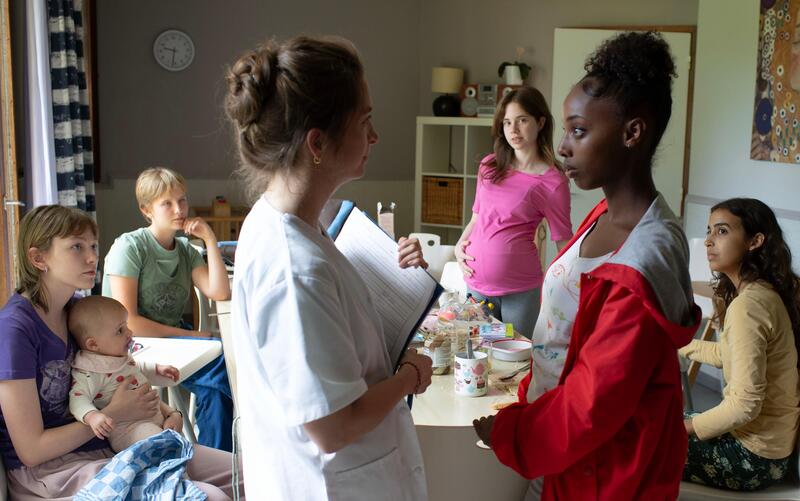
The maternity shelter at the heart of the film houses young women who are learning to care for their babies while still carrying the damage inflicted during their own childhoods. Some have untrustworthy partners. Others are dealing with addiction, unsafe families, financial insecurity, or parents who remain unwilling to acknowledge what they did. The shelter can provide structure and temporary protection, but it can’t erase what waits outside its walls.
Jessica, played by Babette Verbeek, wants to understand why her biological mother gave her up. She approaches their possible reunion with a mixture of hope and preparation, as though asking the correct questions might produce an explanation capable of reorganizing her entire life. The meeting forces her to confront the difference between receiving information and receiving the emotional recognition she has wanted.
Verbeek gives Jessica a restrained vulnerability that suits the Dardennes’ preference for observing behavior rather than just talking about psychology. Jessica doesn’t explain every reaction, and the camera doesn’t push her toward a major release. The pain registers in hesitation, posture, and the way she continues searching the face of someone who may never give her what she needs.
Perla’s conflict is more focused. Lucie Laruelle plays a young mother who keeps hoping her child’s father, Robin, will become dependable despite repeated evidence that he won’t. His presence offers brief reassurance before introducing another disappointment. Perla doesn’t merely have to decide whether she loves him. She has to determine whether wanting a family is causing her to accept a situation that leaves her and her baby less secure.
Laruelle captures how quickly affection can turn into pleading, anger, or panic when Perla feels Robin slipping away. Some of their exchanges become more heated than the surrounding film, occasionally pushing the performance beyond the maintained structure elsewhere. Her desperation remains understandable, though the dialogue can sound a little staged, delivering another painful turn rather than emerging naturally from the moment.
Julie, played by Elsa Houben, has a comparatively supportive partner but remains trapped by addiction. Her situation complicates the assumption that stability in one area can repair everything else. She can recognize the danger, express a desire to change, and imagine a better home, yet she cannot make the craving disappear.
Houben gives Julie’s setbacks an intimacy. The character isn’t surprised by her own weakness, which makes the disappointment more convincing than a louder collapse would have. Her efforts also allow the film to show recovery as an ongoing process involving medical care, personal accountability, and others' willingness to keep offering support without pretending that trust is automatic.
Ariane faces the question of whether keeping her daughter with her is truly the most loving choice. Janaïna Halloy Fokan plays her as someone trying to separate maternal devotion from possession. Ariane wants to protect her child, but doing so requires an honest assessment of the home and family she can provide.
Her storyline carries some of the film’s hardest decisions, particularly because YOUNG MOTHERS refuses to treat one form of motherhood as morally superior to another. Raising a child, placing a child with another family, and admitting that an environment is unsafe can all involve love. The Dardennes give Ariane’s choices room to remain painful without manufacturing a villain to simplify them.
Naïma, played by Samia Hilmi, appears mainly as an example of someone preparing to leave the shelter and continue building her life. Her farewell establishes that progress is possible, even when it remains vulnerable. She also reveals one of the limitations of the ensemble approach because her experiences receive far less attention than those of the other mothers.
The Dardennes’ other films, such as ROSETTA and TWO DAYS, ONE NIGHT, gain much of the impact you feel by remaining close to one person as each new obstacle changes the meaning of the last. YOUNG MOTHERS distributes that attention across its group. The shifts can make the movie feel less like one developing drama and more like several compressed stories sharing a location and purpose. The brothers describe the construction through movement rather than formal chapter divisions. One mother’s crisis gives way to another’s appointment, confrontation, or decision, creating the sense that responsibility never stops inside the shelter. Someone may be receiving good news in one room while another young woman is approaching a breaking point nearby.
The babies contribute more unpredictability than any written performance could supply. They cry over dialogue, look away at unexpected moments, resist being dressed, and sometimes settle against the actresses with complete trust. Those reactions interrupt the planned shape of scenes in useful ways because motherhood doesn’t wait for a conversation to reach its intended conclusion. The young cast responds naturally to that uncertainty. Holding, feeding, bathing, and comforting the babies prevents the performances from becoming exercises in staged misery. Even during serious discussions, someone may need to adjust a blanket or respond to a cry. Physical responsibility remains present when emotional responsibility becomes harder to face.
YOUNG MOTHERS is also careful about the shelter employees. The staff members aren’t flawless substitutes for the families these women lacked, nor are they presented as saints whose kindness demands gratitude. They’re professionals performing difficult work with patience, boundaries, and occasional firmness. Their presence changes the film’s attitude toward social support. The mothers’ circumstances aren’t treated as private failures that can be overcome through determination alone. Housing, counseling, health care, addiction treatment, childcare instruction, and simple consistency all matter. The film recognizes that breaking a cycle requires somewhere safe enough to practice a different way of living.
That perspective keeps the material from becoming an unbroken catalog of suffering. Each woman faces danger or disappointment, but the Dardennes resist turning hardship into a competition. Their interest lies in whether a person who hasn’t received reliable love can learn to provide it, accept it, or make a painful decision in its name.
YOUNG MOTHERS carries compassion into every storyline, and none of the women are reduced to warnings about irresponsible behavior. The film recognizes their mistakes without treating those mistakes as proof that they’re incapable of becoming good parents. It extends that same understanding to choices that might be judged harshly from outside the shelter.
The film’s most convincing hope doesn’t come from promises that everything will improve. It comes from the shelter’s willingness to remain present while improvement is uncertain. YOUNG MOTHERS may spread its attention too thinly, but it understands that changing a child’s future sometimes begins with teaching the mother that she doesn’t have to face hers alone.
Please visit https://linktr.ee/overlyhonestr for more reviews.
You can follow me on Letterboxd, Instagram, Twitter, and YouTube. You can also find my social media accounts on most platforms by searching for 'Overly Honest Reviews'.
I’m always happy to hear from my readers; please don't hesitate to say hello or send me any questions about movies.
[photo courtesy of MUSIC BOX FILMS]
DISCLAIMER:
At Overly Honest Movie Reviews, we value honesty and transparency. Occasionally, we receive complimentary items for review, including DVDs, Blu-rays, CDs, Vinyl Records, Books, and more. We assure you that these arrangements do not influence our reviews, as we are committed to providing unbiased and sincere evaluations. We aim to help you make informed entertainment choices regardless of our relationship with distributors or producers.
Amazon Affiliate Links:
Additionally, this site contains Amazon affiliate links. If you purchase through these links, we may receive a commission. This affiliate arrangement does not affect our commitment to honest reviews and helps support our site. We appreciate your trust and support as you navigate these links.


Happy
0 %

Sad
0 %

Excited
0 %

Sleepy
0 %

Angry
0 %

Surprise
0 %
 0
0
 0
0



Average Rating