Before Baz Went Bigger
Read Time:8 Minute, 9 Second
MOVIE REVIEWS
Strictly Ballroom
 –
– 

Genre: Comedy, Drama, Romance
Year Released: 1992, 2026 Vertigo Releasing 4K
Runtime: 1h 34m
Director(s): Baz Luhrmann
Writer(s): Baz Luhrmann, Andrew Bovell, Craig Pearce
Cast: Paul Mercurio, Tara Morice, Bill Hunter, Pat Thomson, Gia Carides, Peter Whitford, Barry Otto
Where to Watch: available now, order your copy here: www.orbitdvd.com or www.valoriavideo.com
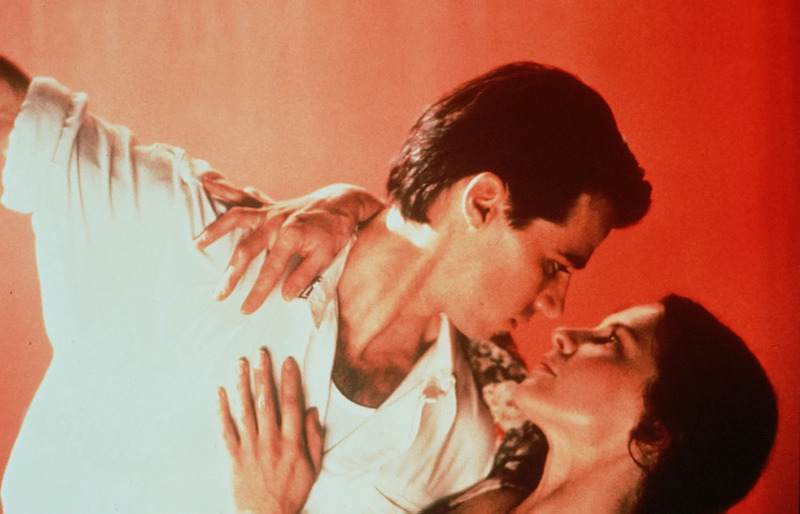
RAVING REVIEW: I think what surprised me the most with this rewatching of STRICTLY BALLROOM is how much of Baz Luhrmann is already there. This was his first feature, made years before ROMEO + JULIET, MOULIN ROUGE!, and ELVIS, the enormous productions that would eventually become synonymous with his name. There’s no mistaking who directed this, though. The colors are vibrant, the performances push beyond realism, the camera moves with the same enthusiasm, and everyone seems to exist in a world where emotions deserve an extraordinary presentation. The difference is scale. Luhrmann had far fewer toys at his disposal, and that limitation may be one reason STRICTLY BALLROOM remains one of his most endearing films. There’s something genuinely scrappy underneath all the sequins, and this 4K makes them all shine!
The ballroom community surrounding Scott Hastings is presented with such exaggeration that it borders on another dimension. Hair, makeup, costumes and smiles have all been pushed to ten and then a notch beyond. Winning isn’t treated like an accomplishment so much as a matter of life and death. Barry Fife, wonderfully played by Bill Hunter, runs this tiny kingdom as if Australian civilization might collapse should someone attempt an unauthorized dance step. That gives Luhrmann room to make fun of the establishment without making fun of dancing itself. STRICTLY BALLROOM loves dance. It loves what happens when two people understand each other through movement, and it respects the work necessary to make difficult steps look effortless.
Scott, played by Paul Mercurio, has spent his life preparing to win within that system, only to become its biggest problem when he starts improvising his own steps. His rebellion is initially driven as much by ego as conviction. Scott knows he’s talented. He enjoys knowing he’s talented. Mercurio gives him enough arrogance that the movie doesn’t have to pretend its hero begins as a champion of personal freedom. Fran changes that.
Tara Morice is the beginner that nobody takes seriously, including Scott. STRICTLY BALLROOM initially leans into an ugly-duckling presentation that aged less gracefully than other parts of the movie. The glasses, frizzy hair, and eventual transformation belong to a very familiar kind of portrayal, and there’s no pretending this has become less obvious with time. What saves Fran is that Morice never plays her as someone waiting for Scott to discover her value. She already has it.
Fran is nervous, inexperienced, and frequently dismissed. She’s also the person willing to tell Scott that all his talk about originality means very little if he’s too frightened to follow through. Their relationship changes because she challenges him. He may teach her technique, but her family introduces him to an entirely different understanding of dance, particularly through Rico and the paso doble. Scott learns how to perform the steps, but he gradually has to learn what those steps are supposed to express.
Antonio Vargas doesn’t need much screen time as Rico to completely change the movie. When Scott enters Fran’s home believing he’s the experienced dancer in the room, STRICTLY BALLROOM really turns things up a notch, and the dynamic shifts almost immediately. The dance he’s been performing as competition technique suddenly has history, culture, and emotional meaning behind them. For someone obsessed with creating new steps, Scott discovers how much he still has to learn.
It also gives the romance between Scott and Fran something more than the usual opposites-attract vibe. Their connection develops through rehearsal. They get closer because dancing requires it, but emotional intimacy follows gradually. Luhrmann lets their bodies communicate things before either of them can express them in words. The rooftop sequence works because it strips away much of the ridiculousness surrounding them. Two people practice, make mistakes, improve and start seeing one another differently.
Pat Thomson practically launches herself through the screen as Scott’s mother, Shirley, while Barry Otto spends much of the movie shrinking into himself as Scott’s father, Doug. Their marriage initially seems like another joke in a movie filled with them. Doug seems defeated by the dance world while Shirley lives through Scott’s potential success. The more we learn about Doug, the more that dynamic matters.
Without spoiling where this all goes, the story surrounding Scott’s parents takes what could have remained a very simple message about individuality and shows the cost of surrendering it. Fear doesn’t just keep someone from taking a chance. It can shape decades. That gives the movie’s repeated line about a life lived in fear considerably more force than it would have as an inspirational slogan on its own.
STRICTLY BALLROOM isn’t remotely subtle about any of this. Luhrmann has rarely been accused of whispering when shouting, singing, dancing and covering something with a gloss were available options. Barry Fife’s villainy is enormous. The competition politics are deliberately silly. Certain revelations have that kind of dramatic force normally reserved for exposing an international conspiracy rather than determining who gets to dance at the Pan-Pacific Grand Prix. That excess is part of the agreement the movie makes with us.
Luhrmann doesn’t ask us to believe competitive ballroom dancing literally operates this way. He asks us to accept a heightened world where it feels this way to the people inside it. The mockumentary-style interviews early in the film help establish the joke, letting characters address the camera with complete seriousness as they describe events that grow increasingly ridiculous.
You can also see why STRICTLY BALLROOM became the first piece of what Luhrmann would later call his Red Curtain approach. The movie never hides its theatricality. Sets look staged, costumes demand attention, music carries emotion openly, and performances aren’t restrained in pursuit of realism. The style isn’t decoration added to the story. It’s how the story communicates. Catherine Martin’s production and costume design are essential to that. The competitive dancers look as though every available rhinestone in Australia has been pulled into service, while Fran’s world has a warmer, less artificially controlled quality. The difference reinforces what Scott is gradually discovering without requiring anyone to explain it. One environment is obsessed with the appearance of passion. The other understands where passion comes from.
The dancing itself remains the movie’s strongest feature, which makes sense. Luhrmann and editor Jill Bilcock allow enough of the choreography to remain so we can appreciate what Mercurio and Morice are doing, rather than seeing the dance primarily through reaction shots and rapid cutting. Mercurio’s professional dance background is obvious, but Morice’s progression is equally important because Fran can’t just become his equal without the audience believing in the work that got her there.
The new 4K presentation is such a good fit for a movie so dependent on color, texture and costume. This isn’t a film where increased resolution exists mainly so someone can admire brickwork in the background. The sequins, makeup, fabrics, lighting and deliberately heightened production design are part of the experience, and having the film available in 4K gives those choices room to show off. Visions Home Video’s region-free UHD also carries a group of archival extras, including the GOING BACKSTAGE documentary, INTRODUCING MERCURIO, television spots and trailers. Ultimately though, going from my DVD copy to this was such a night-and-day experience.
Predictability matters a lot less when the pleasure comes from watching the characters get to the point you already want them to reach. STRICTLY BALLROOM knows exactly what kind of story it’s telling, commits completely to its heightened world and finds real feeling underneath the ridiculous hair, bronzer and competitive hysteria. Luhrmann would soon have larger budgets and a much bigger canvas. Yet, he already understood something here that would define the films that followed: sometimes sincerity works better when you stop being embarrassed by how big it feels.
Scott spends the movie trying to dance his own steps. Luhrmann was doing the same thing behind the camera.
Please visit https://linktr.ee/overlyhonestr for more reviews.
You can follow me on Letterboxd, Instagram, Twitter, and YouTube. My social media accounts can also be found on most platforms by searching for 'Overly Honest Reviews'.
I’m always happy to hear from my readers; please don't hesitate to say hello or send me any questions about movies.
[photo courtesy of VERTIGO RELEASING, VISIONS HOME VIDEO]
DISCLAIMER:
At Overly Honest Movie Reviews, we value honesty and transparency. Occasionally, we receive complimentary items for review, including DVDs, Blu-rays, CDs, Vinyl Records, Books, and more. We assure you that these arrangements do not influence our reviews, as we are committed to providing unbiased and sincere evaluations. We aim to help you make informed entertainment choices regardless of our relationship with distributors or producers.
Amazon Affiliate Links:
Additionally, this site contains Amazon affiliate links. If you purchase through these links, we may receive a commission. This affiliate arrangement does not affect our commitment to honest reviews and helps support our site. We appreciate your trust and support as you navigate these links.


Happy
0 %

Sad
0 %

Excited
0 %

Sleepy
0 %

Angry
0 %

Surprise
0 %
 0
0
 0
0


Average Rating