Nightmares Gather Behind Closed Windows
Read Time:8 Minute, 1 Second
MOVIE REVIEW
Laurin [Visual Vengeance Collector's Edition]
 –
– 

Genre: Gothic Horror, Mystery, Thriller
Year Released: 1989, 2026 Visual Vengeance Blu-ray
Runtime: 1h 24m
Director: Robert Sigl
Writers: Robert Sigl, Ádám Rozgonyi
Cast: Dóra Szinetár, Brigitte Karner, Károly Eperjes, Hédi Temessy, Barnabás Tóth
Where to Watch: available now, order your copy here: www.mvdshop.com or www.amazon.com
RAVING REVIEW: The adults in this film keep leaving rooms moments before they might notice something they should. They’re away at sea, lost in their own desires, distracted by grief, dulled by addiction, or protected by positions that keep anyone from questioning them. Children disappear while the village continues along with its normal routine. Robert Sigl’s film understands that childhood can be frightening without the supernatural because children are often expected to survive situations that the adults around them have chosen not to see.
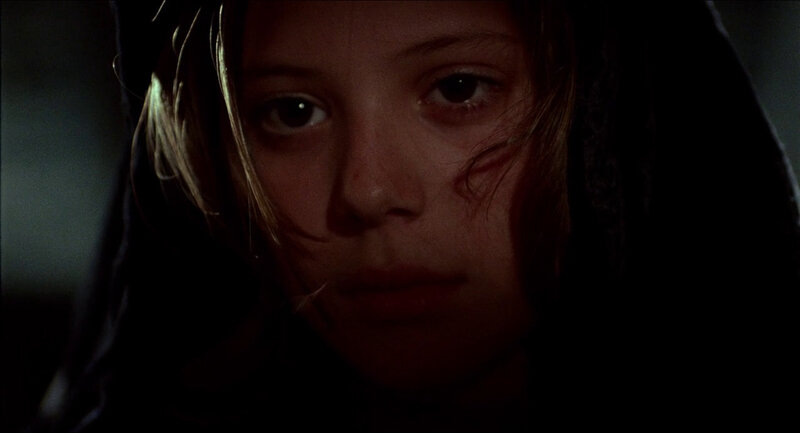
Set in a small German village around the beginning of the 20th century, the story follows Laurin, a young girl whose father spends long stretches at sea. After her mother dies under horrifying circumstances, Laurin is left with her increasingly unreliable grandmother and begins experiencing visions connected to missing children. A black dog wanders through the village. A mysterious figure appears in the distance. Frightened faces materialize behind windows, and the line between Laurin’s dreams and the world grows increasingly difficult to separate.
Sigl rarely treats Laurin’s visions as conventional. They arrive as incomplete warnings assembled from color, movement, sound, and objects whose meanings remain just beyond her understanding. A black kite circling overhead can feel as threatening as anything in the unknown. A music box becomes a threat that announces something has entered the room. Water, mirrors, windows, dolls, costumes, and locked spaces keep returning as though Laurin’s mind is reorganizing the village into something that only she can understand.
That is where the film earns much of its reputation. Cinematographer Nyika Jancsó turns the Hungarian locations into a place that appears both real and detached from ordinary time. Fog softens the landscape without hiding its details. Candles carve faces out of the darkness, while reds and greens transform Laurin’s nightmares into something more impactful than the period setting surrounding them. Nearly every room seems to contain a concealed passage, an unnoticed observer, or even something worse.
The images are so carefully arranged that the narrative sometimes appears to be following them instead of leading. Laurin doesn’t always move forward in the ways we expect. It circles memories, repeats warnings, and allows Laurin to drift between the schoolroom, the cemetery, and the nearby woods. Sigl is less interested in tightening a mystery than in creating the sensation that the answer has been present from the beginning, buried beneath the village’s manners and Laurin’s limited ability to interpret adult behavior.
Dóra Szinetár carries that approach with an unusually quiet performance. Laurin doesn’t spend the movie screaming or even explaining what she sees. She watches. Her silence makes the adults appear even more careless because several of them speak around her as though she isn’t capable of understanding anything. Szinetár gives Laurin curiosity without turning her into some sort of child detective. She recognizes danger before she can explain it, which is far closer to how children often experience the failures of adults.
Her friendship with Stefan brings a little warmth into a movie otherwise defined by isolation. Both children occupy uncertain positions within the village, and their scenes together suggest a world shaped through play, secrets, and shared questions. Their connection also introduces questions about gender, shame, and the way adults force their own fears onto children. Those ideas are present throughout the film, though Sigl doesn’t always dig into them as deeply as I would have preferred.
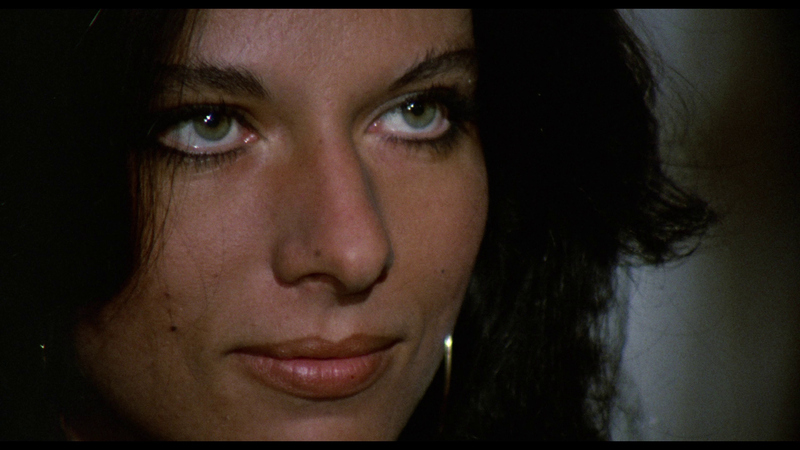
Károly Eperjes gives the most unsettling adult performance as Van Rees, the returning son of the local pastor who becomes the village schoolteacher. His behavior shifts between sensitivity, cruelty, and an attention toward Laurin that becomes increasingly uncomfortable. Eperjes doesn’t play him as the type of monster that jumps off the screen. He appears emotionally stunted, trapped inside unresolved childhood injuries and a religious household that values appearances over honesty. That complexity doesn’t excuse anything he does, but it places the violence inside a longer chain of repression and abuse.
Hans Jansen and Jacques Zwart’s electronic score occasionally drones and sharp bursts of sound intensify Laurin’s visions, but the music can feel too aggressively modern against the graveyards, cottages, and candlelit rooms. At its best, that separation makes the movie feel displaced from history. At other points, the score appears to be insisting upon menace that Sigl’s imagery has already established more effectively.
The closing brings Laurin into the physical space where childhood, fantasy, and violence collide. Toys and costumes no longer offer escape. Objects seen earlier acquire practical meaning, and the film briefly abandons its distance for something bloodier and more immediate. The way the story wraps up isn’t groundbreaking, but the strength comes from watching Laurin recognize that no adult is about to enter and restore order. Survival requires her to act inside a world whose rules have failed her.
Visual Vengeance’s Collector’s Edition gives the film an unusually generous release. The director-approved 2K transfer preserves the texture of the original 35mm photography while allowing the production design, lighting, fog, and carefully placed background details to register. Having both English and German versions is particularly valuable for a film whose multinational production has always complicated its dialogue and performance style.
The supplements treat Laurin as a production worth documenting rather than merely an obscurity being rescued. Robert Sigl receives space to discuss the film at length. In contrast, the archival making-of material, interviews with Szinetár, Barnabás Tóth, and Jancsó, the VHS rough cut, short films, galleries, commentary, and physical extras provide a substantial record of its creation and rediscovery. The rough cut is especially revealing because the set-recorded voices expose how much the finished film’s strange texture was shaped during postproduction.
Calling Laurin a forgotten horror classic would ignore that it’s too loose to sustain all the symbolism Sigl places inside it, and its emotional distance sometimes becomes plain detachment. The images remain difficult to dismiss. Sigl made a world in which innocence isn’t destroyed by the discovery of evil so much as by the realization that the adults have known about it, participated in it, or simply declined to look. That insight gives this beautiful, frustrating film a darkness deeper than its murder mystery.
Bonus Materials:
Director-approved 2K HD transfer from the original 35mm film elements, complete and uncut, in both English- and German-language versions
Feature-length audio commentary by film historian Troy Howarth, author of Innocence Lost: Robert Sigl and the Curse of Laurin
Updated subtitle translations for the German version assisted by Robert Sigl
Original VHS rough cut of Laurin from Sigl’s private collection, featuring set-recorded audio allowing viewers to hear the actors’ real voices prior to overdubbing
Laurin c’est moi: New Interview with Director Robert Sigl.
Two award-winning short films by Robert Sigl: The Christmas Tree (Der Weihnachtsbaum, 1983, 20 min.) and Coronoia 21: It Comes with the Snow (2021, 10 min.)
The Making of Laurin archival documentary
Interview with actress Dóra Szinetár
Interview with actor Barnabás Tóth
Interview with cinematographer Nyika Jancsó
Film historian Jonathan Rigby Interview
Optional German language audio track
Robert Sigl Bavarian Film Awards Presentation
8 photo galleries featuring never-before-seen images from Robert Sigl’s personal archives.
Collectible folded mini-poster.
Blu-ray sleeve featuring original home video art.
6-page liner notes essay by Tony Strauss of Weng’s Chop magazine – FIRST PRESSING ONLY
Limited Edition mini-postcard set reproduced from German promotional materials – FIRST PRESSING ONLY
‘Stick your own’ VHS sticker sheet – FIRST PRESSING ONLY
Optional English Language Closed Captions
Limited Edition O-CARD by Justin Coons – FIRST PRESSING ONLY
Original Trailer
Visual Vengeance Trailers
Please visit https://linktr.ee/overlyhonestr for more reviews.
You can follow me on Letterboxd, Instagram, Twitter, and YouTube. You can also find my social media accounts on most platforms by searching for 'Overly Honest Reviews'.
I’m always happy to hear from my readers; please don't hesitate to say hello or send me any questions about movies.
[photo courtesy of VISUAL VENGEANCE, MVD ENTERTAINMENT]
DISCLAIMER:
At Overly Honest Movie Reviews, we value honesty and transparency. Occasionally, we receive complimentary items for review, including DVDs, Blu-rays, CDs, Vinyl Records, Books, and more. We assure you that these arrangements do not influence our reviews, as we are committed to providing unbiased and sincere evaluations. We aim to help you make informed entertainment choices regardless of our relationship with distributors or producers.
Amazon Affiliate Links:
Additionally, this site contains Amazon affiliate links. If you purchase through these links, we may receive a commission. This affiliate arrangement does not affect our commitment to honest reviews and helps support our site. We appreciate your trust and support as you navigate these links.


Happy
0 %

Sad
0 %

Excited
0 %

Sleepy
0 %

Angry
0 %

Surprise
100 %
 1
1
 0
0

Average Rating