The Performer Beneath the Jumpsuit
Read Time:7 Minute, 29 Second
MOVIE REVIEW
EPiC: Elvis Presley in Concert
 –
– 

Genre: Documentary, Music
Year Released: 2025, 2026
Runtime: 1h 36m
Director(s): Baz Luhrmann
Where to Watch: available August 11, 2026; pre-order your copy here: www.moviesunlimited.com or www.amazon.com
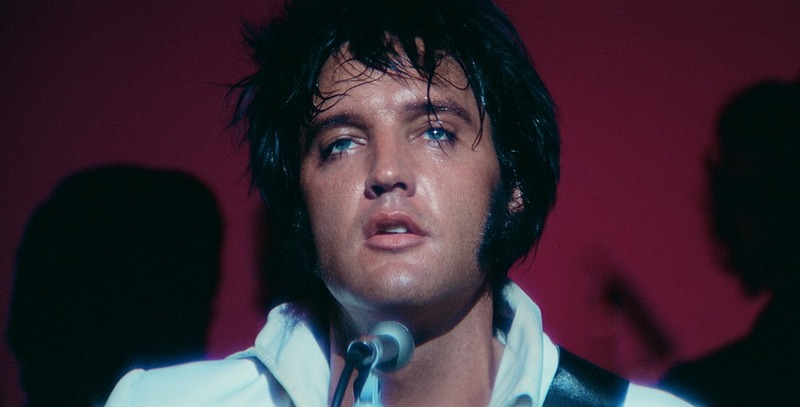
RAVING REVIEW: I’ve always loved the way Baz Luhrmann approaches a movie as a complete sensory experience. His use of color, framing, music, editing, and production design doesn’t just add recreation to the story; it determines how the audience experiences it. That unmistakable imagination made ELVIS one of the most exciting studio productions of 2022. With EPiC: ELVIS PRESLEY IN CONCERT, Luhrmann brings the same eye for spectacle to archival material without trying to overpower it. His fingerprints remain visible in the scale, cadence, and emotion, but he understands that the most compelling image available is Elvis himself. No actor could reproduce Presley’s combination of humor, sensuality, energy, and absolute command of an audience.
EPiC: ELVIS PRESLEY IN CONCERT is assembled primarily from footage captured for ELVIS: THAT’S THE WAY IT IS and ELVIS ON TOUR, including material that sat unseen for decades. Rare 16mm film segments, Graceland home movies, concert outtakes, rehearsal footage, and a candid audio interview are shaped into something that falls somewhere between a concert film and an autobiography. Elvis is allowed to provide much of the narration himself, speaking about his childhood, career, Hollywood years, live performances, and the burden of maintaining the image that had formed around him.
The distinction between Elvis the person and Elvis the product gives the film its foundation. He understands that audiences expect something larger than life when he enters a room. They expect the hair, the clothes, the gyrations, the voice, and the overwhelming confidence of someone who has been turned into an American symbol. His recorded comments reveal a man aware that the symbol has begun competing with the human being required to perform it.
The opening portion runs through Elvis’ rise, military service, movie career, 1968 television comeback, and return to live performance in a rush of images and fragments. It’s energetic, but the compression has the familiar feeling of a filmmaker afraid that allowing one moment to breathe might cause the audience to look away.
That restless introduction also makes the film resemble an abbreviated version of the 2022 feature. Anyone familiar with Elvis’ career will learn little from its rapid history lesson, while newcomers may receive events faster than they can understand. The movie finds its purpose once it reaches the rehearsals and performances. Luhrmann no longer has to manufacture momentum because Elvis creates it simply by walking toward a microphone.
The restored footage captures Presley at a particularly revealing period. This isn’t the young performer whose hips caused television directors to frame him from the waist up, nor is it the exhausted man whose final years have often overwhelmed public memory. The Elvis seen here has already survived the Hollywood musicals that consumed much of the 1960s and has returned to the stage with something to prove.
His confidence is immediately striking, though the greater revelation is how actively he controls the music. Elvis listens to the band, redirects arrangements, tests the tempo, interrupts himself, jokes through mistakes, and reacts to whatever catches his attention. He is working with those around him, pushing them, and responding to the sound they create together.
Guitarist James Burton, pianist Glen D. Hardin, bassist Jerry Scheff, drummer Ronnie Tutt, rhythm guitarist John Wilkinson, and the surrounding singers give the performances enormous impact. The band can move from gospel to country, blues, rock, and grand romantic ballads without making Elvis sound like a stranger in any of them. Luhrmann recognizes that the musicians deserve to be seen as participants rather than background decoration, even if the film inevitably keeps returning to the man everyone came to watch.
Elvis’ relationship with his audience is equally fascinating. He teases people near the stage, kisses strangers, laughs at and with himself, and occasionally behaves as though the enormous production around him is all just a coincidence. His humor punctures the formality of the venue while making his control over the room even more apparent. He can present himself as approachable without ever becoming ordinary. Elvis appears loose enough to follow a whim, yet nothing about the audience’s attention feels accidental. He knows when to delay, when to turn his head, and when a small movement will produce a louder reaction than an entire orchestra. The camera catches him reading the room and adjusting in real time, showing the intelligence behind behavior that could easily be dismissed as instinct.
The film is especially persuasive when reconsidering the Las Vegas period. Decades of caricature have reduced this stage of Elvis’ career to jumpsuits, capes, exaggerated impersonations, and jokes about his eventual physical decline. The footage reminds us that the early version of that was driven by a performer whose voice still carried strength and whose actions could shift a room in seconds.
“Suspicious Minds” becomes a display of endurance and communication rather than a familiar song being performed again. “Polk Salad Annie” lets Elvis attack the stage with his entire body, while “Bridge Over Troubled Water” and the gospel selections expose the seriousness underneath his joking demeanor. He may play with the crowd between songs, but he approaches the singing with an intensity that makes the surrounding excess feel justified.
The sound restoration gives the music considerable weight without burying the original performances beneath processing. There are moments when the audio feels almost too full for the age and condition of the accompanying image, creating a slight separation between what we see and what we hear. The overall presentation allows details in the band, backing vocals, and Elvis’ phrasing to emerge with unusual clarity.
Image quality naturally shifts between sources. The sharpest material looks remarkable, particularly in close-ups where sweat, concentration, and fleeting expressions become visible. Smaller-format home movies and damaged archival clips retain their rougher feel. Luhrmann wisely resists forcing every source into uniformity, allowing the changes in film stock to preserve some sense of time and discovery.
The absence of outside commentators helps the movie avoid the usual documentary parade of experts explaining why someone mattered. It also leaves Elvis’ own contradictions largely unquestioned. EPiC wants to remove the layers placed between the audience and the performer, not investigate every difficult part of the history surrounding him. For this project, that limitation is easier to accept because the performance footage makes its own argument. Elvis’ importance doesn’t need to be asserted by musicians, historians, friends, or admirers when we can watch him seize control of a room. The excitement comes from seeing choices made rather than hearing accomplishments listed.
A quieter sadness eventually emerges beneath the excitement. Elvis talks about wanting to travel, experience other countries, and perform for people beyond the places he’s been. Luhrmann presents the film as a version of the international tour that never happened, extending those performances to an audience Elvis couldn’t reach while alive. His enormous fame created access to nearly anything while restricting the one thing he appeared to crave, the ability to share himself with the world. The Las Vegas showroom becomes both a stage built for his abilities and another enclosure within a career controlled by commercial demands. Watching him command that space makes the confinement harder to ignore.
EPiC: ELVIS PRESLEY IN CONCERT doesn’t need to settle every argument about the man, the myth, or his legacy. It places him back onstage, watches him look toward the audience, and lets us understand why no impersonation has ever come close.
Please visit https://linktr.ee/overlyhonestr for more reviews.
You can follow me on Letterboxd, Instagram, Twitter, and YouTube. You can also find my social media accounts on most platforms by searching for 'Overly Honest Reviews'.
I’m always happy to hear from my readers; please don't hesitate to say hello or send me any questions about movies.
[photo courtesy of MOVIES UNLIMITED, ALLIANCE HOME ENTERTAINMENT, NEON]
DISCLAIMER:
At Overly Honest Movie Reviews, we value honesty and transparency. Occasionally, we receive complimentary items for review, including DVDs, Blu-rays, CDs, Vinyl Records, Books, and more. We assure you that these arrangements do not influence our reviews, as we are committed to providing unbiased and sincere evaluations. We aim to help you make informed entertainment choices regardless of our relationship with distributors or producers.
Amazon Affiliate Links:
Additionally, this site contains Amazon affiliate links. If you purchase through these links, we may receive a commission. This affiliate arrangement does not affect our commitment to honest reviews and helps support our site. We appreciate your trust and support as you navigate these links.


Happy
0 %

Sad
0 %

Excited
0 %

Sleepy
0 %

Angry
0 %

Surprise
0 %
 0
0
 0
0

Average Rating