
An Arcade Machine Built for Murder
Read Time:6 Minute, 56 Second
MOVIE REVIEW
Harbinger
 –
– 

Genre: Horror, Supernatural Horror
Year Released: 2026
Runtime: 1h 23m
Director: James Crow
Writers: Simon Cluett, Harry Boxley
Cast: Jeanine Nerissa Sothcott, Peter Woodward, Gary Webster, Tony Sands, Johnny Palmiero, Anna Arthur, Carole Ann Ford, Nick Nevern
Where to Watch: on digital in the US August 11, 2026, and in the UK August 10 from Miracle Media
RAVING REVIEW: A fortune-telling cabinet has something about it that makes it real; there’s a texture, and the stale unease of something that has watched generations feed coins into it. The eerily, almost mechanical face, glowing eyes, off-putting gestures, and ominous cards make the Harbinger look like a forgotten fairground attraction that should have remained locked inside an abandoned arcade. Whenever the film places that object in the room and allows everyone to wonder whether it’s alive, it finds the strange charm it’s been chasing. Think of it as if Zoltar from the 1988 film BIG had something deeper and darker to it.
There was good reason to approach HARBINGER cautiously. This style of film tends to have marketable concepts, familiar performers, and unapologetically old-fashioned genre influences without always turning those ingredients into satisfying movies. This one has a stronger foundation than most. The threat is recognizable, and the rules give the story a natural countdown. A satanic serial killer has transferred his soul into a fortune-telling machine, and he needs six victims before he can return to the living. A little twist of CHILD’S PLAY vibes with the back story, but once the film takes on its own life, it’s a very different experience.
Writers Harry Boxley and Simon Cluett build the story around Julia, played by Jeanine Nerissa Sothcott, the sole survivor of Henry Decker’s murder spree. Five years after escaping, Julia remains consumed by what happened and has moved back in with her mother, Sue, played by Carole Ann Ford. Her life hasn’t restarted because surviving Decker never became something she could place in the past. Gary Webster’s Mike Craggs sees that unresolved trauma as material for a paranormal television program and persuades Julia to return to Decker’s former home alongside his production crew, ghost hunters, psychics, and occult specialists.
Mike isn’t merely reopening a haunted house. He’s packaging someone else’s suffering as entertainment, surrounding Julia with cameras and strangers who need her worst memories to become an episode of television. HARBINGER recognizes the darkness of that arrangement, particularly in the way Julia’s reluctance is treated as another obstacle for the production to overcome. The movie could have pushed much harder into that exploitation, questioning whether the crew is any less predatory than the forces waiting inside the house.
Instead, Julia’s trauma often becomes a functional way of returning everyone to the location. Her psychological condition gives the opening emotional weight, although the screenplay becomes more interested in the machine’s rules once the group arrives. That shift is understandable in a movie selling itself on death cards and old-school gore, though it leaves Julia suspended between survivor and conventional final-girl. The story repeatedly reminds us that she carries the consequences of Decker’s violence without giving her enough room to exist apart from him.
The crowded supporting cast creates something of a problem. A ghost-hunting program needs presenters, producers, camera operators, psychics, and assorted experts. Yet, several of them enter the house already feeling like names waiting to be crossed off a list. The Harbinger can predict a horrible fate for each person, but a prediction means more when the person receiving it has a life beyond the next scene. HARBINGER introduces enough personalities to maintain a body count without developing enough relationships for every loss to register.
Peter Woodward’s Henry Decker remains the source of everything happening, even when the machine becomes the face of the threat. That occasionally works against the movie’s attempt to create a new horror icon. The Harbinger has a memorable appearance, a distinct method, and the potential for inventive mythology. Decker is a more familiar satanic murderer whose presence keeps reminding us that the machine is technically his vessel. The object is imaginative enough that it doesn’t need a human killer constantly standing behind it.
Nick Nevern’s vocal performance helps give the Harbinger a personality separate from Decker, while the design provides the film with its most convincing source of menace. It looks like a real object that could occupy a corner of an old building, collecting dust until someone became foolish enough to switch it on. The limited movement works in its favor. A machine that barely needs to move feels less desperate for attention than a villain constantly chasing people through hallways.
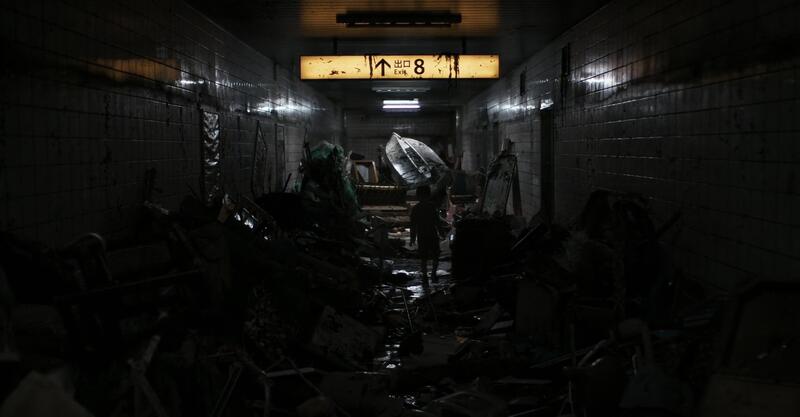
James Crow largely embraces the confined location rather than pretending the production has resources it doesn’t. Dark rooms, narrow corridors, and the Harbinger itself provide the surroundings with a suitably worn appearance. The movie wants the feeling of an old horror program expanded to feature length, complete with supernatural rules and violence that has no interest in appearing respectable. Its small scale becomes part of that identity rather than an embarrassment to disguise.
The promised gore gives the second half some enthusiasm. The deaths are designed around the cards delivered by the machine, which allows the film to vary the punishment instead of repeating one method. Their straightforward construction fits the throwback approach, even when the execution can’t always match the gruesome image being suggested. HARBINGER is less interested in producing sustained fear than delivering brief displays of supernatural cruelty. The result is closer to a macabre carnival game than an oppressive haunted-house story.
The press materials cite WISHMASTER, BIG, and classic British horror as points of comparison, an odd combination that accurately describes the film’s collection of influences. BIG supplies the recognizable fortune-teller image, stripped of innocence and repurposed as a vessel for murder. WISHMASTER provides the basic appeal of an entity governed by rules, collecting victims while moving toward a larger goal.
WISHMASTER understood that a new monster needed a theatrical personality, not merely an effective appearance. The Harbinger has the appearance, voice, and method, but the character’s mythology remains closely tied to Decker. Declaring something a new genre icon before audiences have even met it places unnecessary pressure on a modest production. Horror icons aren’t created through marketing language. They emerge because people leave the movie wanting to see them again.
The machine is memorable, several of the supernatural ideas are entertaining, and the willingness to favor physical design over digital spectacle deserves credit. The human story surrounding it is thinner, the ensemble is a little overfilled, and Julia’s trauma receives less attention once the deaths begin. A stronger screenplay could have turned this into an effective collision between paranormal television, survivor exploitation, and occult horror. The version that exists is simpler and easier to enjoy when treated as a bloody late-night diversion.
Please visit https://linktr.ee/overlyhonestr for more reviews.
You can follow me on Letterboxd, Instagram, Twitter, and YouTube. You can also find my social media accounts on most platforms by searching for 'Overly Honest Reviews'.
I’m always happy to hear from my readers; please don't hesitate to say hello or send me any questions about movies.
[photo courtesy of MIRACLE MEDIA]
DISCLAIMER:
At Overly Honest Movie Reviews, we value honesty and transparency. Occasionally, we receive complimentary items for review, including DVDs, Blu-rays, CDs, Vinyl Records, Books, and more. We assure you that these arrangements do not influence our reviews, as we are committed to providing unbiased and sincere evaluations. We aim to help you make informed entertainment choices regardless of our relationship with distributors or producers.
Amazon Affiliate Links:
Additionally, this site contains Amazon affiliate links. If you purchase through these links, we may receive a commission. This affiliate arrangement does not affect our commitment to honest reviews and helps support our site. We appreciate your trust and support as you navigate these links.


Happy
0 %

Sad
0 %

Excited
0 %

Sleepy
0 %

Angry
0 %

Surprise
0 %
 0
0
 0
0


Average Rating