Grief Refuses to Follow the Script
Read Time:5 Minute, 26 Second
MOVIE REVIEW
Still Life
 –
– 

Genre: Comedy, Drama, Short
Year Released: 2026
Runtime: 11m
Director(s): Sophie King
Writer(s): Kate Radcliffe
Cast: Ophelia Lovibond, Jacob Anderson, Jordan Alexandra, Phoebe Pryce, Alex Bhat, Felicity Montagu
Where to Watch: shown at the 2026 HollyShorts Film Festival
RAVING REVIEW: People become unusually talkative in times of grief. They reach for reassurance, advice, optimism, or a story about someone else, often because sitting with another person’s pain feels unbearable. STILL LIFE understands how those attempts at comfort can leave a grieving person feeling even more alone, especially when everyone around them seems desperate to steer the conversation toward something simpler.
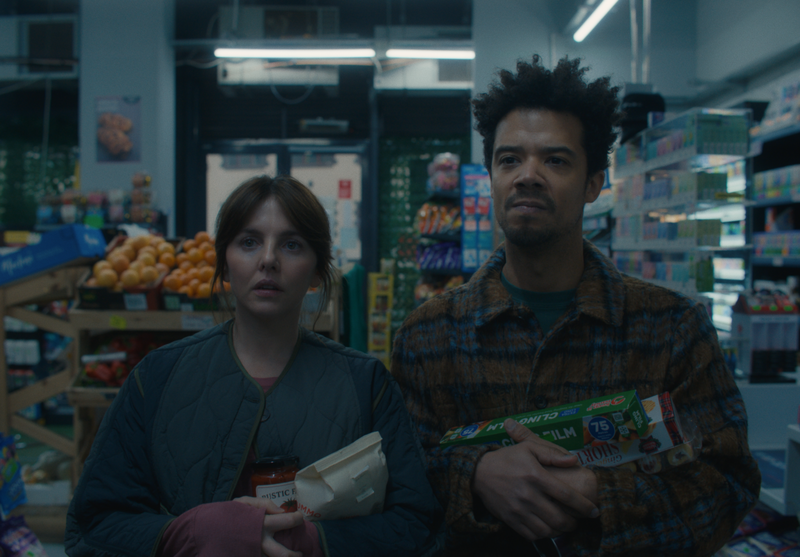
Jess and Max expected to bring their son home. Instead, his stillbirth at 24 weeks leaves them trying to understand what parenthood means when their child is no longer there, but every part of their life has already changed around him. Kate Radcliffe’s screenplay doesn’t treat the loss as a single devastating moment followed by recovery. It follows the smaller conflicts that come afterward, when ordinary appointments, family gatherings, casual remarks, and other people’s pregnancies become reminders that arrive without warning.
The film is most discerning in those aftershocks. Grief isn’t confined to crying behind closed doors, and it doesn’t excuse Jess from answering the phone, leaving the house, or encountering people who have no idea what happened. The world keeps making demands while she remains caught between the mother she became and the future she was supposed to have. Even kindness can sting when it carries the assumption that the worst part is over.
Radcliffe draws from her own experience, and that connection is felt in the screenplay’s refusal to make Jess infinitely patient, polite, and grateful. She can be devastated, angry, detached, funny, and painfully aware of how uncomfortable she makes other people. Those reactions aren’t organized into a reassuring progression. They overlap, contradict one another, and sometimes appear during moments when she’d rather feel nothing at all.
The humor matters because it doesn’t aim to protect the audience from the subject. It grows from the behavior that grief exposes. The professional who follows a familiar script, the acquaintance who says exactly the wrong thing, or the well-meaning person who mistakes forced positivity for support. Director Sophie King lets these encounters become uncomfortable enough to be funny without turning Jess’ pain into the setup for a joke. The laughter catches in the throat because the situation remains brutal even when human awkwardness makes it ridiculous.
Ophelia Lovibond carries a difficult balance through a performance built around restraint rather than constant collapse. Jess often seems to be measuring how much of herself she can safely reveal before the person across from her retreats, panics, or tries to repair something that can’t be fixed. Lovibond finds the exhaustion beneath her responses, allowing anger to register as part of love rather than a rejection of it. Her quieter moments are equally affecting because they suggest a mind continually returning to the same absence, regardless of the conversation around her.
Jacob Anderson gives Max a gentler, more protective presence. He’s grieving too, although much of his energy goes toward keeping daily life from breaking apart around Jess. Anderson avoids making him an impossibly composed partner, showing the strain beneath his attempts to remain useful. Their relationship feels strongest when the film acknowledges that shared loss doesn’t produce the same kind of grief, and loving someone can’t give you access to the exact place where they’re hurting.
Some supporting characters function somewhat as examples of social discomfort rather than as people with lives of their own. The yoga instructor, medical professionals, relatives, and others each reveal a different way the outside world can mishandle bereavement, giving the experience depth of understanding. King’s direction prevents that structure from becoming a parade of lessons. The compact framing keeps Jess close while suggesting how little space she has to escape reminders of the pregnancy. Domestic settings and ordinary social environments don’t become sentimental memorials; they remain recognizable places made unfamiliar by what has happened.
Felicity Montagu, Jordan Alexandra, Phoebe Pryce, and Alex Bhat help create the couple's social surroundings without overwhelming the brief runtime. Their characters aren’t necessarily cruel, which is important. STILL LIFE is more interested in the harm caused by ineptitude, panic, and misplaced reassurance than in giving Jess an obvious antagonist. Nobody has to behave monstrously for an encounter to become another wound.
A longer version could explore Max in greater depth and give the couple’s broader relationships additional texture, thereby explaining how the material could continue beyond a single short. Within eleven minutes, STILL LIFE argues that grief is allowed to stay complicated. Jess doesn’t have to become inspiring, agreeable, or healed before the credits arrive.
Most loss stories eventually ask for proof that healing has begun. STILL LIFE refuses that checkpoint. Jess may laugh, snap, survive another encounter, or let Max stand beside her, and none of those moments means she has moved on. They only mean she is still here. For a film about a life interrupted, that distinction carries more truth than any comforting speech could.
Please visit https://linktr.ee/overlyhonestr for more reviews.
You can follow me on Letterboxd, Instagram, Twitter, and YouTube. My social media accounts can also be found on most platforms by searching for 'Overly Honest Reviews'.
I’m always happy to hear from my readers; please don't hesitate to say hello or send me any questions about movies.
[photo courtesy of 19TH STREET PRODUCTIONS]
DISCLAIMER:
At Overly Honest Movie Reviews, we value honesty and transparency. Occasionally, we receive complimentary items for review, including DVDs, Blu-rays, CDs, Vinyl Records, Books, and more. We assure you that these arrangements do not influence our reviews, as we are committed to providing unbiased and sincere evaluations. We aim to help you make informed entertainment choices regardless of our relationship with distributors or producers.
Amazon Affiliate Links:
Additionally, this site contains Amazon affiliate links. If you purchase through these links, we may receive a commission. This affiliate arrangement does not affect our commitment to honest reviews and helps support our site. We appreciate your trust and support as you navigate these links.


Happy
0 %

Sad
0 %

Excited
0 %

Sleepy
0 %

Angry
0 %

Surprise
0 %
 0
0
 0
0


Average Rating