Waiting for Everyone to Come Home
Read Time:9 Minute, 16 Second
MOVIE REVIEWS
House of Wind (La maison du vent)
 –
– 


Genre: Drama
Year Released: 2026
Runtime: 1h 42m
Director: Auguste Bernard Kouemo Yanghu
Writer: Auguste Bernard Kouemo Yanghu
Cast: Josette Kwanya, Edwige Tatiana Moudjeu Pouadeu, Adrien Jolivet, Babetida Sadjo, Tatiana Rojo, Martin Poulibe
Where to Watch: shown at the 2026 Venice International Film Festival
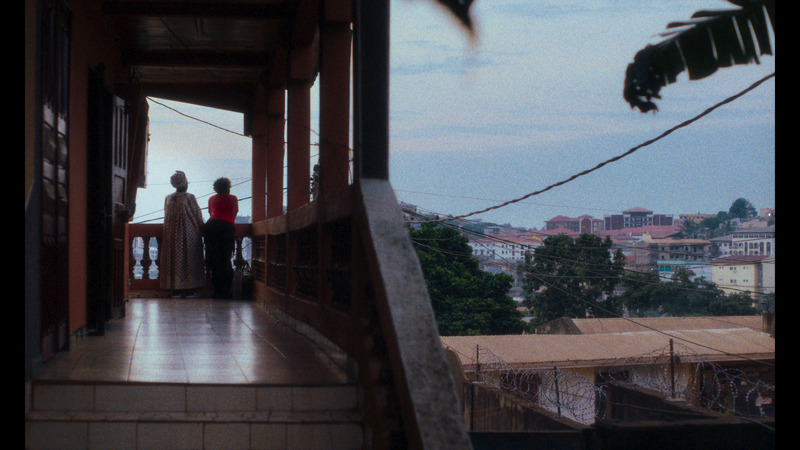
RAVING REVIEW: The most affecting thing about HOUSE OF THE WIND is how much meaning it gives to an ordinary home. For Josette, the house in Yaoundé isn't simply where she lives after her children have moved to Europe. It has become a place where she's storing the expectation that they might eventually return, and every space seems connected to a future she hasn't stopped believing in. Auguste Bernard Kouemo Yanghu builds his first feature around that waiting rather than treating it as background for a larger story.
Josette Kwanya plays the 80-year-old mother whose children have all left Cameroon for lives in the West. She encourages them to build houses back home, presenting construction as a practical investment while quietly hoping bricks and walls might accomplish what phone calls haven't. If they own something here, perhaps they'll come back to occupy it. That belief gives HOUSE OF THE WIND an immediately understandable emotional foundation without reducing migration to a simple question of whether leaving was right or wrong.
Kouemo Yanghu is more interested in the person who remains after everyone else has gone. Stories about immigration naturally tend to follow the person making the journey, adapting to another country and negotiating what has been gained or lost along the way. HOUSE OF THE WIND turns around and looks at the mother standing in the place they left behind. Josette's life hasn't stopped because her children moved away, although parts of it have gradually become organized around their absence.
That perspective carries additional weight, given that the story grew out of Kouemo Yanghu's relationship with his own mother. After he and his siblings settled abroad, she remained alone in their large family house in Yaoundé, surrounded by rooms that once belonged to children she expected might someday return. The personal origin doesn't make the film sentimental by default. Instead, it helps explain why Josette's longing is met with sympathy without being automatically deemed reasonable.
The arrival of Sarah, a younger woman from the neighborhood, changes the shape of Josette's isolation. Edwige Tatiana Moudjeu Pouadeu doesn't enter the story merely as a convenient replacement daughter, and the age difference allows their relationship to develop beyond simple companionship. Sarah gives Josette access to a life happening directly around her rather than one being maintained across continents. Josette, in return, has decades of experience and a desire to care for someone who has nowhere obvious to go.
Their connection becomes more complicated because Josette has spent so much time defining herself through responsibility to her children. HOUSE OF THE WIND understands that loneliness can make affection possessive without turning the person experiencing it into a villain. Someone who has spent years waiting for people to return can become frightened when another meaningful relationship seems likely to end as well. The film finds its harder emotional questions in the space between caring for someone and trying to hold on to them.
Kwanya carries much of that tension without turning Josette into a symbol of abandoned motherhood. She's stubborn, affectionate, funny, controlling, and vulnerable at different points, sometimes within the same interaction. Her loneliness matters because the character surrounding it feels complete. The performance also avoids asking for sympathy in every scene, which allows Josette's less generous choices to remain part of the person rather than something the movie has to excuse.
Pouadeu provides an important counterweight. Sarah has her own expectations, relationships, and future, so the friendship can't exist solely according to what Josette needs from it. Their age difference could have pushed the film toward familiar surrogate-family territory, where each woman conveniently fills the exact emotional hole in the other's life. Kouemo Yanghu is more interested in what happens when a bond is genuine, but the people involved don't necessarily understand it in the same way.
The house itself gradually feels inseparable from those questions. It represents family to Josette, although family has become increasingly theoretical when the people she associates with it live thousands of miles away. Construction becomes an attempt to turn that idea into something physical. A house can be completed, owned, and pointed to, while belonging is considerably harder to manufacture.
Eva Sehet's cinematography gives those spaces room to register without making them artificially picturesque. Interiors feel inhabited by history even when Josette is the only person occupying them, while Yaoundé remains an active world outside her walls rather than scenery surrounding a private drama. Kouemo Yanghu also varies the camera's relationship with Josette rather than committing to a single visual approach. More controlled movement can give way to handheld tension when her sense of security changes, creating a subtle difference between watching Josette's routine and being pulled into her anxiety.
That visual patience suits a project that initially took shape as a documentary. Kouemo Yanghu eventually moved toward fiction, but traces of observational filmmaking remain in the way ordinary behavior is allowed to matter. HOUSE OF THE WIND doesn't constantly push forward in search of dramatic incidents. Time spent inside Josette's routines explains her isolation in ways that another conversation about missing her children wouldn't accomplish as well.
The measured approach is also where the film occasionally tests its own limits. Some passages linger after their emotional point has become clear, and Josette's waiting can become repetitive because repetition is precisely what her life has become. There's a difference between deliberately making an audience feel routine and allowing that routine to slow the drama too much, and HOUSE OF THE WIND doesn't always land on the same side of that line. A few sections could move with more urgency without betraying the quiet character study Kouemo Yanghu is making.
Sarah could also stand on more equal footing with Josette earlier than she sometimes does. The film is unquestionably Josette's story, but the relationship becomes richer whenever Sarah's wants exist independently of the older woman's interpretation of them. Giving her slightly more space would make some of the conflict between them hit harder because we'd understand exactly what each woman believes this relationship has become. Pouadeu does a lot with what she's given, particularly when Sarah's patience begins colliding with Josette's fear of being left again.
The film's ideas about migration become more interesting because Kouemo Yanghu refuses an easy nostalgia for home. Returning to Cameroon isn't presented as the obvious moral answer for Josette's children, nor is leaving presented as an uncomplicated escape toward something better. Time changes the people who go and the people who stay. Eventually, the home everyone remembers may no longer be the same place, and the family waiting there may no longer know the people they expect to return.
That creates one of HOUSE OF THE WIND's more painful observations. Josette believes physical houses can preserve a connection that distance has been altering for years. At the same time, the film keeps asking whether a structure can really hold a family together when everyone's understanding of home has changed. The answer isn't delivered as a grand declaration. It emerges as Josette gradually confronts the possibility that her responsibilities, expectations, and identity as a mother can't remain frozen simply because she's stayed in the same place.
Blick Bassy and Michel Duprez's music supports that introspective quality without trying to manufacture emotion that isn't already there. Sound matters throughout because Josette's solitude isn't represented as complete silence; life continues around her, sometimes emphasizing how removed she feels from it. The movie knows loneliness doesn't always mean being physically alone. It can mean occupying a crowded neighborhood while waiting for the particular voices that no longer come through the door.
HOUSE OF THE WIND arrives at Venice's Orizzonti competition as Kouemo Yanghu's feature debut after years of short filmmaking, and there's confidence in how narrowly he keeps the story focused. He isn't trying to make Josette responsible for explaining migration, generational conflict, African identity and the relationship between Europe and Cameroon all at once. Those ideas grow naturally from one mother, one young woman and a house carrying far more expectations than any building reasonably should.
The film could use a little tightening, and some of its emotional ideas repeat themselves before they deepen. Its restraint works considerably more often than it doesn't, especially because Kwanya gives Josette enough personality to prevent quiet observation from becoming empty stillness. Kouemo Yanghu has made a film about immigration by looking at someone who barely moves at all, and that reversal gives HOUSE OF THE WIND its strongest perspective.
By the end, the question isn't simply whether Josette's children will come home. It's whether Josette can imagine a life that isn't built entirely around waiting for them to do so. HOUSE OF THE WIND understands the difference between preserving a home and preserving the version of a family that once lived inside it, finding something moving in the moment when those two ideas can no longer be treated as the same thing.
Please visit https://linktr.ee/overlyhonestr for more reviews.
You can follow me on Letterboxd, Instagram, Twitter, and YouTube. My social media accounts can also be found on most platforms by searching for 'Overly Honest Reviews'.
I’m always happy to hear from my readers; please don't hesitate to say hello or send me any questions about movies.
[photo courtesy of LA MANSARDE CINEMA, HORIZON D'AFRIQUE, STEEL FISH PICTURES, MERVEILLES PRODUCTION, NATIXIS COFICINÉ]
DISCLAIMER:
At Overly Honest Movie Reviews, we value honesty and transparency. Occasionally, we receive complimentary items for review, including DVDs, Blu-rays, CDs, Vinyl Records, Books, and more. We assure you that these arrangements do not influence our reviews, as we are committed to providing unbiased and sincere evaluations. We aim to help you make informed entertainment choices regardless of our relationship with distributors or producers.
Amazon Affiliate Links:
Additionally, this site contains Amazon affiliate links. If you purchase through these links, we may receive a commission. This affiliate arrangement does not affect our commitment to honest reviews and helps support our site. We appreciate your trust and support as you navigate these links.


Happy
0 %

Sad
0 %

Excited
0 %

Sleepy
0 %

Angry
0 %

Surprise
0 %
 0
0
 0
0

Average Rating