When the Slasher Stops Apologizing
Read Time:6 Minute, 38 Second
MOVIE REVIEW
Teenage Sex and Death at Camp Miasma
 –
– 

Genre: Comedy, Horror, Romance
Year Released: 2026
Runtime: 1h 52m
Director(s): Jane Schoenbrun
Writer(s): Jane Schoenbrun
Cast: Hannah Einbinder, Gillian Anderson, Amanda Fix, Arthur Conti, Eva Victor, Zach Cherry, Sarah Sherman, Patrick Fischler, Dylan Baker, Jasmin Savoy Brown, Quintessa Swindell, Kevin McDonald, Jack Haven
Where to Watch: in select theaters August 7, 2026
RAVING REVIEW: Before the killer rises from the lake, the merchandise has already built a mythology around the corpse. VHS boxes, action figures, board games, posters, sequels, and increasingly desperate attempts to keep the Camp Miasma name alive pass before us as evidence of a franchise that has been exploited far beyond its natural lifespan. Writer/director Jane Schoenbrun understands that horror fans don’t merely remember movies. We remember how they were packaged, where we found them, what the cover promised, and the private meanings we attached to something dismissed by everyone else as disposable.
That obsessive opening is funny, affectionate, and essential to everything that follows. CAMP MIASMA isn’t simply a fictional slasher series. It’s a cultural memory assembled from video-store artwork, compromised sequels, problematic archetypes, fear, adolescent curiosity, and the thrill of watching something you knew you probably weren’t supposed to see. Schoenbrun recreates that history with such specificity that the invented franchise feels like one audiences might argue about its existence online, complete with a sacred original, embarrassing follow-ups, and fans convinced that one forgotten entry deserves rehabilitation.
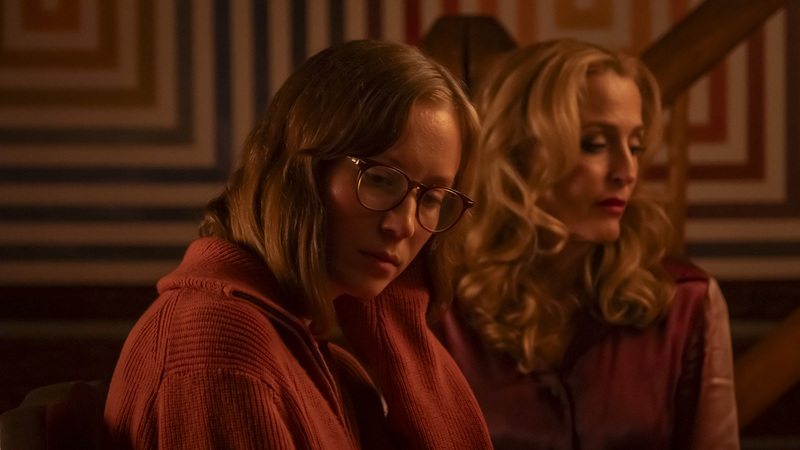
Kris, played by Hannah Einbinder, is an eager young filmmaker handed the dubious opportunity to resurrect an exhausted property for people who value its market recognition more than its artistic possibilities. Kris believes she can uncover something meaningful beneath decades of repetition. However, her confidence is mixed with the anxiety of someone who has spent too much time explaining what she intends to make and not enough time confronting why she needs to make it.
Her research leads to Billy, the reclusive star of the original movie and one of the genre’s forgotten final girls. Gillian Anderson enters with the artificiality of someone who has spent years transforming isolation into performance. Billy lives near the abandoned camp in glamorous clothing completely unsuited to the wilderness, carrying herself like an actress who refuses to let obscurity end the production. Every entrance feels rehearsed, every silence measured, and every room arranged to support the legend she has created around herself.
Anderson could have turned Billy into a campy collection of old-Hollywood mannerisms. Instead, the performance slowly reveals how much loneliness and self-protection are hidden inside. Billy knows the effect she has on Kris and initially treats fascination as another resource to control. The confidence is real, though it exists beside years of hurt, anger, and unresolved questions about what happened when her younger self became an object for filmmakers, audiences, and the franchise that survived longer than her public career.
Einbinder provides an ideal counterweight. Kris begins as the relatively rational person trying to keep her project and professional ambitions intact while everything around her slips into hysteria. Her comic timing makes that discomfort funny, especially when she attempts to apply industry logic to circumstances that have moved well beyond contracts, casting discussions, or brand management.
Schoenbrun takes the genre’s old equation of sex followed by death and asks what might happen if pleasure were allowed to survive. The result isn’t a rejection of slashers. It’s an attempt to recover the excitement, transgression, and uncertainty buried beneath decades of moral judgment and uglier ideas about gender. The sex scenes are among the movie’s most emotionally demanding passages. They’re intimate without becoming tender, provocative without collapsing into exhibition, and often structured around the distance between a person’s body and their awareness of it. Kris can’t simply step into a fantasy and become liberated. She carries hesitation, self-consciousness, and the habit of observing herself when she should be experiencing herself.
Production designers Brandon Tonner-Connolly and Matt Hyland fill the movie with tactile evidence of a mythology that shouldn’t exist. The props aren’t background jokes waiting for attentive viewers to pause the frame. They create the afterlife that trapped Billy inside one performance while giving Kris the raw material for her own obsession. The franchise has spent decades selling Billy’s trauma back to audiences as entertainment.
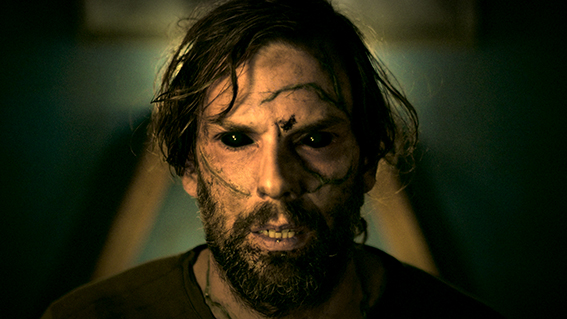
Little Death, the series’ spear-wielding killer, emerges from that. Jack Haven’s physical performance rejects the predictability usually associated with masked murderers. Little Death can be frightening, ridiculous, graceful, angry, and unexpectedly liberating.
Sarah Sherman, Zach Cherry, Eva Victor, Patrick Fischler, Dylan Baker, and the larger supporting cast inhabit different levels of absurdity, from recognizable entertainment-industry desperation to characters who seem to have wandered in from one of CAMP MIASMA’s worse sequels. Schoenbrun lets this collide without demanding that everyone acknowledge how strange the world has become. That crowded ensemble also creates one of the film’s shortcomings. Several performances arrive with enough personality to suggest entire side stories, then disappear once Kris and Billy retreat deeper into their shared fantasy. The industry satire is sharpest early on, when the reboot is being discussed as both a creative opportunity and a product nobody truly respects. As the movie turns inward, some of that supporting material feels abandoned rather than completed.
CAMP MIASMA doesn’t deconstruct the slasher by standing outside it and pointing out what makes one work and not work. It crawls inside the form, accepts the shameful and exhilarating feelings found there, and tries to redirect their energy. The movie loves horror too much to pretend its history is harmless. It also refuses the idea that troubling art must be discarded before anything valuable can be recovered from it.
TEENAGE SEX AND DEATH AT CAMP MIASMA is bloody, horny, ridiculous, tender, and occasionally too pleased with the cleverness of its own mythology. It’s also alive in a way few franchise commentaries manage to be. Schoenbrun doesn’t ask viewers to feel guilty for loving the wrong movies, responding to the wrong images, or discovering themselves through art created without them in mind.
The deeper challenge is deciding what to do with that love after recognizing the harm mixed into it. Kris doesn’t save Camp Miasma by making the past respectable. She enters its fantasy, confronts what has been hiding beneath the surface, and discovers that reclamation should be allowed to feel good. The final girl has spent long enough surviving someone else’s story. Here, she gets to decide what pleasure comes after survival.
Please visit https://linktr.ee/overlyhonestr for more reviews.
You can follow me on Letterboxd, Instagram, Twitter, and YouTube. You can also find my social media accounts on most platforms by searching for 'Overly Honest Reviews'.
I’m always happy to hear from my readers; please don't hesitate to say hello or send me any questions about movies.
[photo courtesy of MUBI, PLAN B ENTERTAINMENT, SCYTHIA FILMS, THE MATCH FACTORY]
DISCLAIMER:
At Overly Honest Movie Reviews, we value honesty and transparency. Occasionally, we receive complimentary items for review, including DVDs, Blu-rays, CDs, Vinyl Records, Books, and more. We assure you that these arrangements do not influence our reviews, as we are committed to providing unbiased and sincere evaluations. We aim to help you make informed entertainment choices regardless of our relationship with distributors or producers.
Amazon Affiliate Links:
Additionally, this site contains Amazon affiliate links. If you purchase through these links, we may receive a commission. This affiliate arrangement does not affect our commitment to honest reviews and helps support our site. We appreciate your trust and support as you navigate these links.


Happy
0 %

Sad
0 %

Excited
0 %

Sleepy
0 %

Angry
0 %

Surprise
0 %
 0
0
 0
0

Average Rating