A Mean, Messy, Unforgettable Underworld
Read Time:6 Minute, 57 Second
MOVIE REVIEW
The Devil Queen (A Rainha Diaba)
 –
– 

Genre: Crime, Drama, Thriller
Year Released: 1974, 2026 4K Restoration
Runtime: 1h 39m
Director(s): Antônio Carlos da Fontoura
Writer(s): Antônio Carlos da Fontoura, Plínio Marcos
Cast: Milton Gonçalves, Odete Lara, Stepan Nercessian, Nelson Xavier, Wilson Grey, Yara Cortes
Where to Watch: opens June 12, 2026, in NYC at Alamo Lower Manhattan and June 17 in LA at Alamo Downtown LA, with 25+ markets nationwide to follow
RAVING REVIEW: THE DEVIL QUEEN barges back into view covered in blood, color, sweat, powder, smoke, bad intentions, and the kind of arrogance that makes most modern crime films look timid by comparison. Antônio Carlos da Fontoura’s 1974 Brazilian pulp exploration arrives from a different cinematic climate, one shaped by dictatorship, censorship, underground survival, queerness, and a willingness to make every room feel like it could turn into a funeral, a party, or a knife fight without warning. Its restoration doesn’t make the film feel “cleaned up” in the safe, respectable sense. It just makes the danger easier to see.
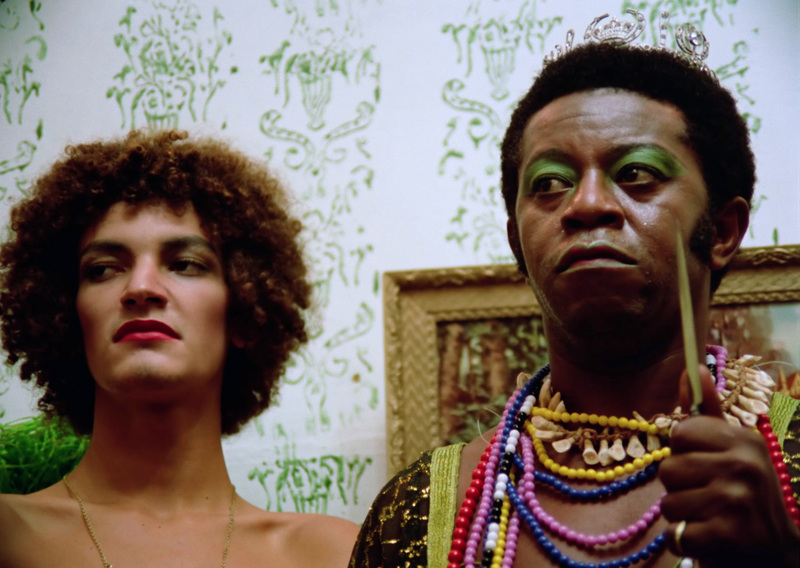
Set within Rio de Janeiro’s criminal underworld, THE DEVIL QUEEN follows Diaba, a feared drug boss played by Milton Gonçalves, with such control that the film almost seems to rearrange itself because of their presence. Diaba operates from the back room of a brothel, ruling through loyalty, fear, performance, and punishment. When pressure from law enforcement threatens someone close, a plan forms to sacrifice someone else in their place. That could’ve been a straightforward gangster betrayal story, but Fontoura isn’t interested in anything that orderly. The film turns criminal hierarchy into theater, social exile into power, and gender presentation into a weapon sharpened against everyone foolish enough to mistake flamboyance for weakness.
Gonçalves gives the film its pulse, its danger, and much of its darker humor. Their Diaba isn’t created for easy admiration or flattened into a symbol of resistance. They can be alluring, cruel, petty, affectionate, terrifying, ridiculous, and commanding within the same stretch of screen time. THE DEVIL QUEEN understands that representation doesn’t always need to be shown as respectability. Sometimes the more radical act is letting a queer figure be powerful, frightening, contradictory, stylish, and morally rotten without begging the audience for approval. Gonçalves plays that contradiction with startling force, making Diaba feel both larger-than-life and dangerously rooted in the world around them.
The film’s queer energy is inseparable from its criminal energy, but not in a simplistic or moralizing way. THE DEVIL QUEEN is fascinated by people pushed outside bourgeois comfort, then forced to create their own structures of survival, dominance, and betrayal. Drag queens, sex workers, gangsters, pimps, dealers, and desperate opportunists all move through a world where respectability has already rejected them. What remains is performance as armor, violence as currency, beauty as provocation, and loyalty as something everyone demands while almost no one deserves it. The film’s underworld isn’t presented as liberation, but it isn’t treated as disposable filth either.
THE DEVIL QUEEN is loud in the way a warning sign is loud. The colors don’t simply pop; they fight each other in a way that feels like an argument happening all around. Rooms feel painted in defiance. Costumes seem chosen not to flatter but to challenge whoever looks at them. The film’s interiors have a deliberately artificial feeling, yet the grime underneath never disappears. This mixture of theatricality and street-level nastiness gives the movie a strange power. It can look absurd and still feel unsafe. It can lean into camp without losing its bite. It can seem playful right before it turns vicious.
The crime plot itself isn’t the film’s strongest element, though that almost feels beside the point. There are betrayals, false loyalties, reversals, and shifting alliances, but THE DEVIL QUEEN is more a pressure cooker of personalities. Bereco, played by Stepan Nercessian, becomes one of the film’s more human points of entry, not because they’re admirable, but because the small-time ambition and fear give the larger power games a more pathetic texture. Nelson Xavier brings menace to Catitu, while Odete Lara gives Isa a weary sadness that cuts through the film’s more exaggerated surfaces. Their scenes remind you that beneath all the color and violence, people are still being used, cornered, bought, beaten, and discarded.
Its depiction of brutality, especially against women and vulnerable figures within this underworld, can feel harsh enough to challenge the film’s own sense. There are moments when the movie’s appetite for cruelty threatens to overtake its critique of cruelty. That doesn’t make the film less important, but it does make it harder to treat as pure cult entertainment. The same qualities that make it thrilling can also make it abrasive. Fontoura’s film pushes hard, sometimes with precision and sometimes with force, and the result is a work that’s alive precisely because it hasn’t been smoothed into tastefulness.
The political context matters, even when the film refuses to behave like a traditional political statement. Made during Brazil’s military dictatorship, THE DEVIL QUEEN turns its attention toward bodies, identities, and communities that authoritarian cultures often try to erase, mock, or control. Its defiance doesn’t come through speeches. It comes through excess, gender, criminal pageantry, bloodletting, and the insistence that marginalized people can occupy the center of the frame with danger and glamour intact. The film’s queerness isn’t tucked into subtext. It walks in, takes the room, applies makeup, and dares anyone to laugh for the wrong reason.
As a restored experience, THE DEVIL QUEEN feels especially valuable because it complicates the perceived version of cult cinema history. This isn’t just an oddity being pulled from obscurity for novelty value. It’s a Brazilian crime film, a queer pulp artifact, a political provocation, and a performance showcase that still has enough personality to make contemporary rediscovery feel necessary rather than nostalgic. Its edges remain visible, and they should. The plotting can be uneven, the tonal shifts can be jagged, and some of its provocations land more than others. But a smoother film would almost certainly be less interesting.
THE DEVIL QUEEN is vile, funny, stylish, confrontational, and sometimes graceless, but it’s never anonymous. It has the confidence of a film that knows beauty can be threatening, and power can look ridiculous right up until someone bleeds. Gonçalves’ performance alone makes it essential viewing for anyone interested in queer cinema, Brazilian film history, or crime stories that refuse the usual rules. The restoration gives the film renewed visibility, but its real force comes from how little it seems to care about behaving. THE DEVIL QUEEN remains unruly in all the ways that matter, a cult film with a crown, a blade, and no interest in asking permission.
Please visit https://linktr.ee/overlyhonestr for more reviews.
You can follow me on Letterboxd, Instagram, Twitter, and YouTube. My social media accounts can also be found on most platforms by searching for 'Overly Honest Reviews'.
I’m always happy to hear from my readers; please don't hesitate to say hello or send me any questions about movies.
[photo courtesy of KINO LORBER, KINO LORBER REPETORY]
DISCLAIMER:
At Overly Honest Movie Reviews, we value honesty and transparency. Occasionally, we receive complimentary items for review, including DVDs, Blu-rays, CDs, Vinyl Records, Books, and more. We assure you that these arrangements do not influence our reviews, as we are committed to providing unbiased and sincere evaluations. We aim to help you make informed entertainment choices regardless of our relationship with distributors or producers.
Amazon Affiliate Links:
Additionally, this site contains Amazon affiliate links. If you purchase through these links, we may receive a commission. This affiliate arrangement does not affect our commitment to honest reviews and helps support our site. We appreciate your trust and support as you navigate these links.


Happy
0 %

Sad
0 %

Excited
0 %

Sleepy
0 %

Angry
0 %

Surprise
0 %
 0
0
 0
0



Average Rating