Childhood Meets the Sales Target
Read Time:9 Minute, 33 Second
MOVIE REVIEW
Cookie Queens
G – 

Genre: Documentary
Year Released: 2026
Runtime: 1h 31m
Director(s): Alysa Nahmias
Cast: Ara, Shannon Elizabeth, Nikki, Olive
Where to Watch: in theaters on August 7, 2026
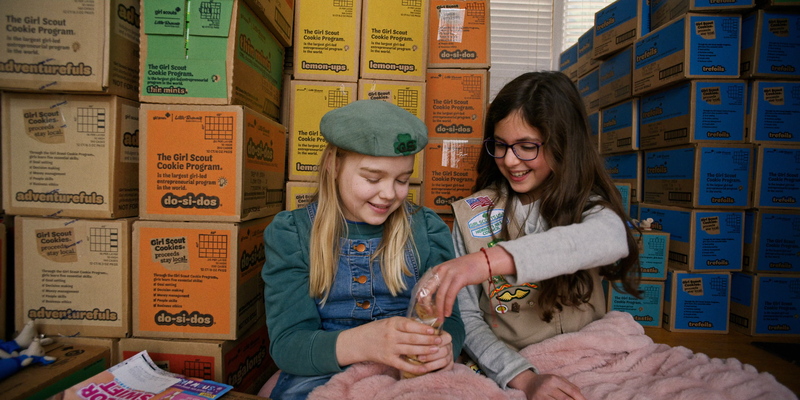
RAVING REVIEW: A wagon filled with cookies may look like a symbol of childhood initiative, but director Alysa Nahmias understands how quickly a sales goal can turn excitement into pressure. COOKIE QUEENS spends a Girl Scout Cookie season following four girls whose ambitions range from modest to staggering, revealing a tradition where confidence, family pride, community, competition, and commerce are packed together as tightly as the cases of cookies filling their homes.
Nahmias could have treated the subject as uncomplicated sweetness. The girls are funny, determined, and immediately endearing, while the colorful boxes and familiar product names practically sell the movie themselves. She could just as easily have made an angry investigation into an enormous operation that depends on children and unpaid labor. COOKIE QUEENS chooses a more thoughtful position between those extremes, celebrating the confidence these girls develop without ignoring the system asking them to attach goals, prizes, and status to every sale.
The documentary begins with the refusal to make all four girls versions of the same type of carbon copy entrepreneurs. Ara, Shannon Elizabeth, Nikki, and Olive enter the season with different personalities, resources, family dynamics, and definitions of success. One girl’s goal may represent a major personal achievement. At the same time, another has been raised in a world where selling thousands of boxes feels less like a fantasy than an expectation. Nahmias allows those differences to remain visible rather than forcing everyone into one inspirational story.
Ara is the youngest and an immediate source of delight, approaching customers with the unpredictable logic and sincerity of the child she is. Her interactions reveal a mind already questioning what the adults around her have learned to accept. When a customer raises a health concern, Ara begins thinking about why the product lineup doesn’t accommodate everyone. She isn’t reciting a predetermined answer or trying to steer the conversation back toward a purchase. She sees a problem and wonders why nobody has fixed it. Her modest ambition gives the documentary one of its best reminders that success means something different at five years old. Ara doesn’t need a warehouse, an international trip, or a record-setting total for the season to matter. She needs enough independence to feel that the effort belongs to her. Her father’s determination not to hijack the process becomes so meaningful, especially when compared with families where the adults’ involvement has become almost indistinguishable from the child’s campaign. Ara’s determination, mixed with her energy, makes her story so enjoyable to follow!
Nikki’s experience carries the weight of family history. Her older sisters have already established themselves as formidable sellers, leaving her with a ready-made example of what achievement looks like and an uncomfortable standard against which she measures herself. The trophies, badges, and stories from previous seasons represent pride, but they also create a legacy Nikki must either continue or feel like she’s disappointing. Her pursuit of the Cookie Queen title is about far more than outperforming nearby troops. Nikki wants entry into the world her sisters built before her. The film recognizes that longing without dismissing her competitive spirit as borrowed ambition. She enjoys the challenge and understands the rewards, though the title also promises a chance to be closer with people she admires. Selling becomes her way of proving that she belongs in the same story.
Shannon Elizabeth faces a deeper relationship between sales and opportunity. Cookie season isn’t merely about collecting another prize or reaching an impressive total tally up; the money connected to her troop activities affects what experiences are available to her. That need makes her determination admirable while adding tension to every stack of inventory brought into the family home. Her parents’ commitment exposes how thoroughly this girl-led program can become a household undertaking. Cases have to be ordered, transported, stored, tracked, and sold. Money is placed at risk before every sale has been logged. Long days spent outside stores may belong to the Scout standing beside the display. All while adults calculate inventory, arrange transportation, and worry about what happens when optimism collides with unsold boxes. COOKIE QUEENS doesn’t use those concerns to undermine Shannon Elizabeth’s effort. Her work is real, as are the confidence and communication skills she develops while doing it. The tension comes from watching a child’s enthusiasm become tied to calculations large enough to make her parents nervous. Achievement is supposed to feel empowering, but the scale of the commitment raises an unavoidable question about how much responsibility a child should be encouraged to carry.
Olive appears most comfortable inside the machinery of this juggernaut. She understands pitches, goals, customer reactions, and the organizational language surrounding the program. Her experience allows her to advise younger Scouts, plan efficiently, and approach the season with the confidence of someone who has already seen hard work turn into recognition. That competence doesn’t protect her from pressure. Olive is old enough to recognize contradictions that younger participants may not notice, including the distance between the money customers spend and the amount that reaches the troops. She can embrace the skills she’s acquired while questioning the structure that rewards them. Her awareness gives COOKIE QUEENS a deeper expression of how quickly girlhood becomes preparation for an adult world filled with unequal arrangements.
Nahmias trusts the girls to notice these contradictions themselves. No narrator is hovering above them to explain capitalism, childhood labor, or the economics of nonprofit organizations. Parents and other adults enter when their decisions affect the girls, but the documentary doesn’t hand them control of the story. We hear the children calculate, negotiate, complain, celebrate, and reconsider what they thought they wanted. That approach keeps the film from treating its young subjects as just pieces to the story. They’re allowed to be insightful in one scene and completely distracted in the next. They sing outside stores, invent sales pitches, lose their patience, worry about their totals, and return home to siblings, hobbies, and routines that have nothing to do with moving inventory. Their intelligence doesn’t require them to behave like adults every minute.
Some of the funniest scenes come from that friction. The girls have been placed inside a highly organized sales program built around goals, motivational language, and measurable results, yet they remain children capable of changing priorities without warning. A carefully prepared pitch may be interrupted by excitement over a prize, a pet, or something across the parking lot. COOKIE QUEENS doesn’t laugh at their lack of professionalism. It finds relief in every reminder that professionalism shouldn’t define them yet.
COOKIE QUEENS isn’t interested in trying to determine which family has found the “correct” level of ambition. The parents who push hardest aren’t reduced to monsters, and those who step back aren’t automatically presented as wiser. Everyone is trying to support a child while navigating a program designed to make bigger numbers feel like greater commitment. That doesn’t prevent the documentary from showing how adult expectations can become a child’s internal voice. Several girls apply pressure to themselves before a parent needs to say anything. They’ve already absorbed the idea that lowering a goal resembles failure, even when the original goal was unrealistic. A prize designed as encouragement can become evidence that they didn’t work hard enough to deserve it.
Nahmias gives the Girl Scouts program credit for teaching communication, planning, money management, and resilience. We watch shy children speak to strangers, recover from rejection, adjust their approach, and become more confident in their decisions. Those lessons have genuine value, and the girls’ pride when they recognize their own growth is too sincere to dismiss as organizational messaging. COOKIE QUEENS also asks whether empowerment must be expressed through selling. The girls are learning to speak, lead, and advocate for themselves, but they’re doing so inside a system where the clearest proof of improvement is increased revenue.
The program’s size hangs over the movie, but the organization remains somewhat abstract. We see its impact through financial anxiety, reward charts, and troop activities rather than through the people who design those systems. That choice preserves intimacy, though it allows larger decisions to remain outside the frame. The documentary recognizes the machinery without really asking who benefits most from keeping it running this way.
The overwhelming warmth remains earned rather than manufactured. Nahmias doesn’t need to tell us that these girls are the future or present every setback as the beginning of a leadership lesson. Ara, Shannon Elizabeth, Nikki, and Olive are compelling because they’re unfinished works in progress. Their goals matter today and may look completely different to them a year later. That understanding makes COOKIE QUEENS unusually respectful toward childhood. It celebrates ambition without insisting that children must already be working on their résumés. It admires determination without treating exhaustion as evidence of character. It recognizes that disappointment can teach something while refusing to suggest that every difficult experience was secretly beneficial.
Nahmias ultimately leaves the definition of a Cookie Queen open. The title may belong to the girl with the highest total, but the documentary finds something more valuable in the moments when each child decides what her own effort means. Winning isn’t presented as irrelevant. It simply isn’t allowed to become the only measure that matters.
The cookies make the story accessible, and the girls make it unforgettable. COOKIE QUEENS sees the humor and excitement in an American tradition without looking away from the burden hidden beneath those bright boxes. Every sale brings a girl closer to a prize, but the film’s real achievement is showing why growing up shouldn’t be reduced to reaching the largest number on the chart.
Please visit https://linktr.ee/overlyhonestr for more reviews.
You can follow me on Letterboxd, Instagram, Twitter, and YouTube. You can also find my social media accounts on most platforms by searching for 'Overly Honest Reviews'.
I’m always happy to hear from my readers; please don't hesitate to say hello or send me any questions about movies.
[photo courtesy of ROADSIDE ATTRACTIONS, AJNA FILMS, ARCHEWELL PRODUCTIONS, ARTEMIS RISING FOUNDATION, BEAUTIFUL STORIES, GOOD GRAVY FILMS]
DISCLAIMER:
At Overly Honest Movie Reviews, we value honesty and transparency. Occasionally, we receive complimentary items for review, including DVDs, Blu-rays, CDs, Vinyl Records, Books, and more. We assure you that these arrangements do not influence our reviews, as we are committed to providing unbiased and sincere evaluations. We aim to help you make informed entertainment choices regardless of our relationship with distributors or producers.
Amazon Affiliate Links:
Additionally, this site contains Amazon affiliate links. If you purchase through these links, we may receive a commission. This affiliate arrangement does not affect our commitment to honest reviews and helps support our site. We appreciate your trust and support as you navigate these links.


Happy
0 %

Sad
0 %

Excited
0 %

Sleepy
0 %

Angry
0 %

Surprise
0 %
 0
0
 0
0



Average Rating