A Fashion Revolution With Staying Power
Read Time:7 Minute, 21 Second
MOVIE REVIEWS
Twiggy: The Woman Behind The Icon
 –
– 

Genre: Documentary, Biography
Year Released: 2024, 2026 DVD
Runtime: 1h 30m
Director: Sadie Frost
Where to Watch: available now; order your copy here: www.cleorecs.com, www.mvdshop.com, or www.amazon.com
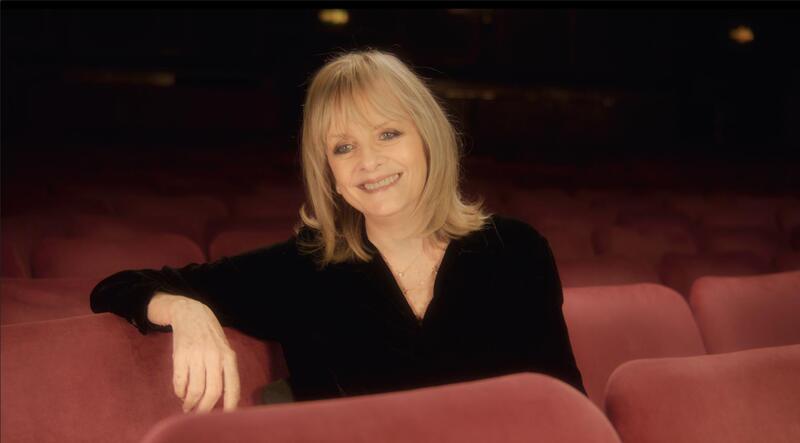
RAVING REVIEW: It would be easy for a documentary about Twiggy to spend its runtime admiring photographs. There are enough famous images, magazine covers, hairstyles, clothes, and heavily copied poses to build an entire movie around how a teenager came to represent a particular moment in the 1960s. Sadie Frost’s TWIGGY is much more interested in the woman who somehow remained herself while everyone else was busy turning her into that image.
There’s a distinction that becomes so important almost immediately because Twiggy is a wonderful storyteller. She doesn’t have any of the self-importance that could easily come with talking about a career this significant, and she often seems amused that the teenager in those photographs became such a massive cultural figure. Frost gives her plenty of room to talk rather than constantly interrupting her with explanations of why every moment mattered.
Born Lesley Hornby, she was only 16 when everything changed. The transformation into Twiggy happened so quickly, and the documentary captures how strange it must have been to go from an ordinary working-class teenager to being proclaimed the “face of ’66.” By 17, she was appearing on the covers of major magazines while photographers, designers, journalists, and eventually an international audience tried to understand what had suddenly changed their world.
Looking at the photographs today, it’s easy to forget how disruptive her appearance was then. The enormous eyes, short hair, and androgynous qualities have been copied so many times that they’re now part of the visual identity of the 1960s. TWIGGY restores some of the surprise by showing how dramatically she differed from the established image of glamorous female models who came before her.
Frost doesn't only celebrate that without considering what it meant for the teenager inside. Twiggy was suddenly being discussed as a body, a look, a fashion statement, and an ideal before she was old enough to control the conversation. Old interviews can be especially revealing because questions that were apparently acceptable at the time now sound astonishingly condescending.
One exchange with Woody Allen is particularly memorable. He approaches Twiggy assuming he can expose the intellectual limitations of a teenage model, only for her to turn the questioning back on him. It's funny because Twiggy doesn't need it to be a dramatic confrontation to handle herself; she simply refuses to play the role he tried to assign to her.
Moments like that are far more valuable than another person explaining how influential Twiggy was. Frost gathered an impressive group of contributors, including Paul McCartney, Dustin Hoffman, Joanna Lumley, Brooke Shields, Stella McCartney, Sienna Miller, Tommy Tune, and Pattie Boyd. The recognizable names never overwhelm the person they're there to discuss. They add perspective while Twiggy remains in control of her own story. Celebrity profiles often mistake fame for importance. TWIGGY doesn't need Paul McCartney to convince us that Twiggy mattered. His presence is interesting because he belongs to the same enormous cultural moment, letting the film show how music, fashion, photography, and celebrity collided during that period.
Frost understands that Twiggy's story didn't end when the 1960s did. That's probably the most important choice in the documentary because reducing her to those first few years would repeat the same mistake popular culture has been making for decades. Modeling made her famous, but TWIGGY gradually becomes a story about someone learning that being identified with one thing doesn't mean you're required to be in that moment forever.
Her move into acting, music, stage productions, television, and other parts of entertainment reveals someone much more adaptable than the image most people remember. The documentary doesn't treat each career move like another box to check. Instead, those changes gradually alter the meaning of the title itself, because “Twiggy” becomes less a character invented by the fashion world and more a name Lesley learned to mold and flex into everything that followed.
Darker experiences also appear, though Frost rarely shifts the documentary's overall mood to focus on them. Twiggy discusses men who tried to control or underestimate her, relationships complicated by fame, and encounters that still sound frightening decades later. One story involving Phil Spector is particularly unsettling, precisely because it's told without turning the entire film into a dramatic reconstruction of the incident. We see and understand those moments, but I do wish the film had given them a little more focus.
That relatively light touch is both a strength and the main reason the documentary stops short of becoming something even more substantial. Frost could press harder on subjects like the fashion industry's treatment of Twiggy's body, the effect her image had on beauty standards, and the power dynamics surrounding a teenage girl who suddenly became valuable, not for who she was but for what she meant to certain people.
Its affection for Twiggy is never difficult to see either. This isn't an aggressive examination looking for contradictions or attempting to dismantle the mythology surrounding her. Frost clearly likes her subject, and nearly everyone appearing in the documentary seems to share that feeling. I think that’s why it’s so easy to overlook the lack of focus on the darker parts of her rise.
Normally, that could make for a documentary that's too polished or protective, but Twiggy herself keeps the film from becoming empty praise. Her humor, lack of pretension, and willingness to laugh at some of the absurd situations she found herself in keep the movie grounded. She doesn't seem particularly interested in reminding everyone that she's important, which ironically makes it easier to understand why people have stayed interested in her for so long.
The 90-minute runtime is another smart decision. Some areas could support considerably more detail, but Frost avoids turning this personality into an exhaustive history lesson. The pace matches the person we're watching. Stories, connections, another unexpected chapter, and the movie keeps moving without constantly stopping to underline its own significance.
That makes TWIGGY accessible even for viewers who know little beyond the haircut and eyelashes. Fashion enthusiasts will obviously find plenty to appreciate, but the film doesn't require any special attachment to that world. There's something much deeper in watching a 16-year-old become internationally famous almost overnight and then spend the following decades refusing to let the first version of herself become the only one people were allowed to know.
Frost could have made a documentary about a famous model and filled it with equally famous images. Instead, TWIGGY becomes more interesting whenever it moves away from the iconography and lets Lesley Lawson speak. The pictures explain why the world noticed her, but her humor, resilience, curiosity, and ability to keep reinventing herself explain why we're still talking about her. The documentary ultimately does exactly what its subtitle promises. It finds the woman behind an image that became larger than the person who created it. Twiggy may forever be remembered as the face of ’66, but TWIGGY makes a convincing case that the far more interesting story is everything she did after the world decided it already knew who she was.
Please visit https://linktr.ee/overlyhonestr for more reviews.
You can follow me on Letterboxd, Instagram, Twitter, and YouTube. You can also find my social media accounts on most platforms by searching for 'Overly Honest Reviews'.
I’m always happy to hear from my readers; please don't hesitate to say hello or send me any questions about movies.
[photo courtesy of CLEOPATRA ENTERTAINMENT, MVD ENTERTAINMENT]
DISCLAIMER:
At Overly Honest Movie Reviews, we value honesty and transparency. Occasionally, we receive complimentary items for review, including DVDs, Blu-rays, CDs, Vinyl Records, Books, and more. We assure you these arrangements do not influence our reviews, as we are committed to unbiased, sincere evaluations. We aim to help you make informed entertainment choices regardless of our relationship with distributors or producers.
Amazon Affiliate Links:
This site also contains Amazon affiliate links. If you purchase through these links, we may receive a commission. This affiliate arrangement does not affect our commitment to honest reviews and helps support our site. We appreciate your trust and support as you navigate these links.


Happy
100 %

Sad
0 %

Excited
0 %

Sleepy
0 %

Angry
0 %

Surprise
0 %
 2
2
 0
0

Average Rating